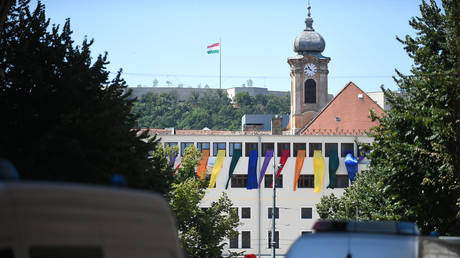
The media landscape is currently patting itself on the back because Humen Media Group is launching Hungary’s first LGBTQ-focused television channel. The narrative is predictably stale: it is a "victory for visibility," a "bold defiance of Orbán’s propaganda machine," and a "new era for representation."
It is actually none of those things.
In reality, launching a linear television channel dedicated to queer content in the current Hungarian political climate is a strategic blunder that serves the ruling Fidesz party far more than it serves the community. It provides a static, easily targetable bullseye for regulators, creates a closed-loop echo chamber that stops actual persuasion, and ignores the fundamental shift in how people actually consume subversive media in 2026.
The Visibility Trap
The common consensus assumes that visibility is a linear path to acceptance. If people see us, they will understand us. If they understand us, they will vote for our rights.
I have spent fifteen years watching media conglomerates burn through venture capital trying to prove this "Exposure Theory" of social change. It rarely works in a vacuum. In a "soft autocracy" like Hungary, visibility is not a shield; it is a liability.
By centralizing LGBTQ content into a single, identifiable broadcast entity, the community is handing the Media Council a centralized point of failure. Unlike the decentralized, hydra-headed nature of social media or encrypted streaming, a television station requires a license. It requires physical infrastructure. It requires a relationship with cable providers who are often one phone call away from government-aligned oligarchs.
This isn’t "defiance." It’s "containment."
The Echo Chamber Architecture
Most people think a dedicated channel broadens the conversation. It does the opposite.
When queer narratives are integrated into mainstream programming—a gay character in a popular soap opera, a trans expert on a talk show—you reach the "persuadable middle." You reach the grandmother in Debrecen who doesn't think she knows any gay people until she sees one on her favorite show.
When you silo that content into a dedicated "LGBTQ Channel," you are effectively building a digital ghetto. The only people watching are those who already agree with the message, and the only other people tuned in are government monitors looking for "protection of minors" violations to fine the station out of existence.
The Regulatory Suicide Mission
Let’s talk about the 2021 "Child Protection Act." The law is intentionally vague. It prohibits the "display and promotion" of homosexuality to minors.
The competitor's reporting on this launch frames the channel as a workaround. It isn't. It is a litigation magnet.
- The Fine Cycle: The Hungarian Media Council doesn't need to ban the channel. They just need to fine it $25,000 every time a kiss happens before 10:00 PM.
- The Advertising Ghost Town: Multinational brands are notoriously risk-averse. In a market where the government controls the lion's share of ad spend and has the power to audit any company that "promotes" deviance, who is going to buy spots?
- The Cable Blockade: Getting on a basic tier package in Hungary is a political act. If the channel is relegated to an expensive, opt-in premium tier, its "visibility" vanishes.
Imagine a scenario where a local distributor is told their entire permit is at risk unless they drop one "troublesome" niche channel. The business math is brutal. The niche channel loses every time.
Data Proves Linear TV is the Wrong Battlefield
The "lazy consensus" ignores the demographics of the Hungarian LGBTQ community and their allies.
The people this channel claims to serve are Gen Z and Millennials. They don't own televisions. They don't browse channel guides. They live on TikTok, YouTube, and Telegram.
Launching a linear channel in 2026 is like bringing a musket to a drone fight. It’s an archaic medium chosen for its symbolic value rather than its actual utility. It feels like "doing something" because it’s big and shiny, but it’s actually a retreat into a legacy format that the government already knows how to censor and control.
The Accidental Gift to Fidesz
The most bitter pill to swallow is how this launch serves Viktor Orbán’s narrative.
For years, the government has argued that "LGBTQ ideology" is being "forced" upon Hungarians by well-funded external interests. A shiny new TV station is the perfect prop for their next campaign. They can point to it and say, "See? We aren't oppressive. They have their own channel! But because they have their own channel, we must protect the 'normal' channels even more strictly."
It allows the state to perform a "tolerance theater" for the EU while simultaneously using the channel’s existence to galvanize their base against a perceived cultural invasion. It’s a win-win for the censors.
The Strategy for Real Disruption
If you actually want to change the hearts and minds of a nation under a populist regime, you don't build a monument that can be torn down. You become a virus.
- Ghost Content: Distribute high-quality, high-production value stories through non-branded channels.
- Platform Agnosticism: Forget the "TV" label. Focus on localized, hyper-niche micro-content that bypasses the Media Council’s jurisdiction.
- Economic Integration: Focus on building queer-friendly business networks that are too profitable to touch, rather than media outlets that are too easy to fine.
Visibility is a trap when you don't have the power to protect those who are visible. By cheering for a television channel, the media is cheering for a target.
Stop mistaking a PR stunt for progress. Stop buying into the idea that a "first" is always a "forward." Sometimes, the first one through the door is just the first one to get shot.
If the goal is survival and eventual victory, you don't ask for a seat at the table they own. You build a different room entirely. One that doesn't require a government-issued broadcast license to enter.