The fluorescent lights in the Hwaseong cleanroom never truly turn off, humming at a frequency that eventually settles into the bones of the engineers who walk the floor. If you press your gloved hand against the thick glass separating the observation corridor from the lithography bays, you can feel a faint, rhythmic vibration. That hum is the heartbeat of the South Korean economy. For three decades, it has paid for the gleaming high-rises in Gangnam, funded the pensions of factory workers in Ulsan, and turned a war-torn peninsula into an indispensable pillar of the modern digital world.
Down on that floor, microscopic cities of silicon are etched onto wafers no wider than a dinner plate, destined to become the memory chips inside your smartphone, the servers powering cloud computing, and the massive data centers training artificial intelligence. Samsung Electronics and SK Hynix built an empire here by mastering a brutal, unforgiving craft: making memory smaller, faster, and cheaper than anyone else on earth.
Now, listen closely to the tone of that hum. It is changing.
Across the Yellow Sea, in the sprawling industrial hubs of Hefei and Wuhan, two companies—ChangXin Memory Technologies (CXMT) and Yangtze Memory Technologies Corp (YMTC)—are running their own cleanrooms around the clock. Until recently, executives in Seoul viewed these Chinese rivals with a mixture of polite curiosity and quiet confidence. They were seen as scrappy beginners, years behind the technological frontier, confined to making cheap chips for domestic budget phones and low-end thumb drives. That comforting illusion has evaporated. Today, industry analysts and policy advisors are issuing urgent warnings to Seoul: the fortress is under siege, and the battle is no longer about mere survival—it is about protecting the profit margins that keep the entire South Korean tech miracle alive.
To understand why a shift in memory chip market share feels like an existential tremor in Seoul, consider a hypothetical character we will call Ji-hoon. Imagine Ji-hoon is a senior process engineer in his late forties, standing in a cafeteria in Pyeongtaek, staring at a cup of lukewarm barley tea after a twelve-hour shift. Twenty years ago, when Ji-hoon started his career, South Korea was the hungry challenger, wresting the memory crown away from Japanese giants like NEC and Toshiba through sheer grit, massive capital expenditure, and sleepless nights. Back then, the enemy was visible, and the rules of engagement were clear: out-invest the competition during market downturns, drive prices down until rivals bled out, and harvest the profits when demand rebounded.
Ji-hoon’s anxiety today comes from realizing that his old playbook has been stolen, rewritten, and funded with a blank check.
Memory chips—specifically DRAM, which handles short-term data processing in computers, and NAND flash, which stores data permanently—are notoriously cyclical commodities. Think of them like barrels of crude oil or bushels of wheat, except each new generation requires tens of billions of dollars in factory construction before a single chip rolls off the line. When supply is tight, Samsung and SK Hynix print money. When supply floods the market, prices crater, and even the giants bleed billions in a single quarter.
For years, South Korea tolerated these terrifying roller-coaster rides because the peaks were extraordinarily high. Those peak profits funded the next generation of research and development, keeping Seoul safely ahead of the pack. That is the exact mechanism CXMT and YMTC are now threatening to break.
The Architecture of a Slow-Motion Ambush
To grasp how China’s memory champions closed a gap that experts swore would take a decade, you have to look past the headlines about trade wars and export controls. When the United States slapped sweeping restrictions on advanced chipmaking equipment bound for China, many observers in Washington and Seoul assumed the race was over. Deprived of extreme ultraviolet lithography machines from Dutch giant ASML and restricted from buying top-tier tools from American suppliers, how could Chinese firms possibly compete?
Necessity, it turns out, is a ruthless engineer.
YMTC, based in Wuhan, decided that if it could not build taller skyscrapers of memory cells using conventional methods, it would build two separate halves and glue them together. In technical terms, they pioneered a technique called Xtacking. Rather than fabricating the memory array and the peripheral logic circuits on the same wafer—a process that subjects the delicate logic components to blistering heat—YMTC manufactures them on two separate wafers and bonds them together at the microscopic level.
Think of it like building a house by constructing the foundation and the roof simultaneously in two different factories, then fusing them seamlessly on-site. When teardowns of commercial solid-state drives revealed YMTC’s 232-layer 3D NAND chips functioning reliably inside consumer devices, the shockwaves hit Seoul immediately. They had bypassed the blockade through sheer architectural ingenuity.
Meanwhile, in Hefei, CXMT was executing a parallel maneuver in the DRAM market. While Samsung and SK Hynix poured their brightest minds and deepest pockets into High Bandwidth Memory (HBM)—the ultra-fast, stacked memory chips essential for Nvidia’s AI processors—CXMT quietly flooded the market for older, legacy DRAM like DDR4.
Here is where the invisible trap snaps shut.
In the semiconductor business, you cannot simply abandon older products overnight to focus exclusively on glamorous AI chips. Legacy DRAM and standard NAND flash still account for massive volumes of global shipments. They go into mid-range laptops, automotive dashboards, smart appliances, and standard enterprise servers. Historically, the steady cash flow from these workhorse chips subsidized the eye-watering research costs of tomorrow’s breakthroughs.
CXMT began aggressive capacity expansion, churning out millions of DDR4 wafers and pricing them significantly below South Korean equivalents. Backed by colossal state subsidies and patient domestic capital, CXMT did not need to turn a neat quarterly profit to satisfy restless shareholders on the Korea Exchange. Their mandate was market share, self-sufficiency, and scale.
By the time analysts tallied the numbers, CXMT’s global DRAM market share had climbed from virtually zero to roughly five percent, with projections pointing toward ten percent or more within a remarkably short window. In a commodity market where a two-percent oversupply can trigger a price collapse, a state-backed competitor grabbing ten percent of the pie is not a minor irritation. It is a structural earthquake.
When Margins Vanish, the Future Stalls
Let us return to our hypothetical engineer, Ji-hoon, and look at what happens inside a boardroom in Seoul when those numbers hit the projector screen.
The executives are not panicking about losing the crown in cutting-edge AI memory tomorrow morning. SK Hynix currently dominates the HBM3E market, supplying the lifeblood of the global artificial intelligence boom, while Samsung is furiously refining its own next-generation stacks. On paper, South Korea’s technological lead in high-end memory remains intact—roughly two to three years ahead of Chinese rivals in DRAM, and perhaps a year or two in advanced NAND.
Yet the urgent warnings echoing from think tanks in Seoul, such as the Korea Institute for Industrial Economics and Trade, are focused on a far more insidious threat: the erosion of profitability.
Imagine running a high-end bakery that sells exquisite, multi-tiered wedding cakes for five hundred dollars each, alongside thousands of everyday loaves of sourdough bread for eight dollars. The wedding cakes bring you fame and prestige, sure, but the daily sourdough sales pay the rent, cover the electricity bill, and buy the exotic ingredients you need to invent next year's wedding cake designs. Now imagine a competitor opens across the street, backed by a billionaire patron who does not care about losing money for five years, and starts selling decent sourdough loaves for three dollars.
Suddenly, your bread business stops making money. You still sell wedding cakes, and you are still the best baker in town, but your cash reserves begin to dry up. You have to delay buying new ovens. You hesitate before hiring apprentice bakers. Slowly, imperceptibly, your edge begins to dull.
This is the exact predicament facing South Korea’s semiconductor giants. As CXMT and YMTC aggressively capture market share in legacy DRAM and mid-tier NAND, global prices for standard memory are suppressed. Even worse, China is the world’s largest consumer of semiconductors. Chinese smartphone makers, PC manufacturers, and server companies are increasingly under quiet—and sometimes explicit—pressure from Beijing to source their components domestically. Every wafer YMTC sells to a Chinese data center is a wafer Samsung or SK Hynix loses forever.
And the squeeze does not stop at China's borders. As Chinese domestic demand gets absorbed by local suppliers, excess capacity threatens to spill into Southeast Asia, India, and Europe, dragging down global average selling prices. When profitability shrinks, South Korean chipmakers face an agonizing mathematical reality: the cost of building a single state-of-the-art semiconductor fabrication plant now exceeds twenty billion dollars. Without fat profit margins during boom cycles, how do you fund the next fab?
The Vulnerability of a One-Engine Economy
I remember walking through the bustling electronics markets of Yongsan in Seoul a few years ago, watching vendors stack boxes of solid-state drives and memory modules like bricks. At the time, the mood was invincible. Semiconductors accounted for roughly twenty percent of South Korea’s entire export economy. When chip exports boomed, the Korean won strengthened, tax revenues swelled, and consumer confidence rippled through every coffee shop and department store from Busan to Incheon.
That concentration of wealth is both South Korea’s greatest triumph and its deepest vulnerability. Unlike the United States, which boasts a diversified tech ecosystem spanning software, cloud services, biotech, and aerospace, or Taiwan, which built an unmatched moat around logic foundry manufacturing through TSMC, South Korea’s crown jewels are heavily concentrated in memory.
Memory is a brutal arena because the product is standardized. An Apple iPhone processor designed on TSMC’s foundry lines is bespoke architecture; you cannot simply swap it out for another brand. A stick of DDR5 RAM or a terabyte of NAND flash, however, is built to universal industry specifications. If a Chinese chipmaker can achieve acceptable yield rates—meaning the percentage of usable chips per silicon wafer crosses the threshold of commercial viability—buyers will inevitably ask why they should pay a premium for a Korean brand.
Recent industry intelligence suggests CXMT has pushed its yields on older DRAM nodes past seventy or eighty percent, while rapidly migrating toward newer 17-nanometer and even sub-15-nanometer processes. They are not standing still. Every time they sell a batch of legacy chips, they gather data, refine their chemical mixtures, train a new generation of local engineers, and reinvest the proceeds into climbing the technology ladder.
How Seoul Must Rewrite the Rules of Survival
If South Korea cannot out-subsidize Beijing, and cannot rely indefinitely on American export controls to freeze Chinese innovation in place, what is left? The answer requires a painful psychological shift for an industry raised on volume and brute-force scale. Seoul must stop playing the commodity game and start acting like a bespoke luxury house.
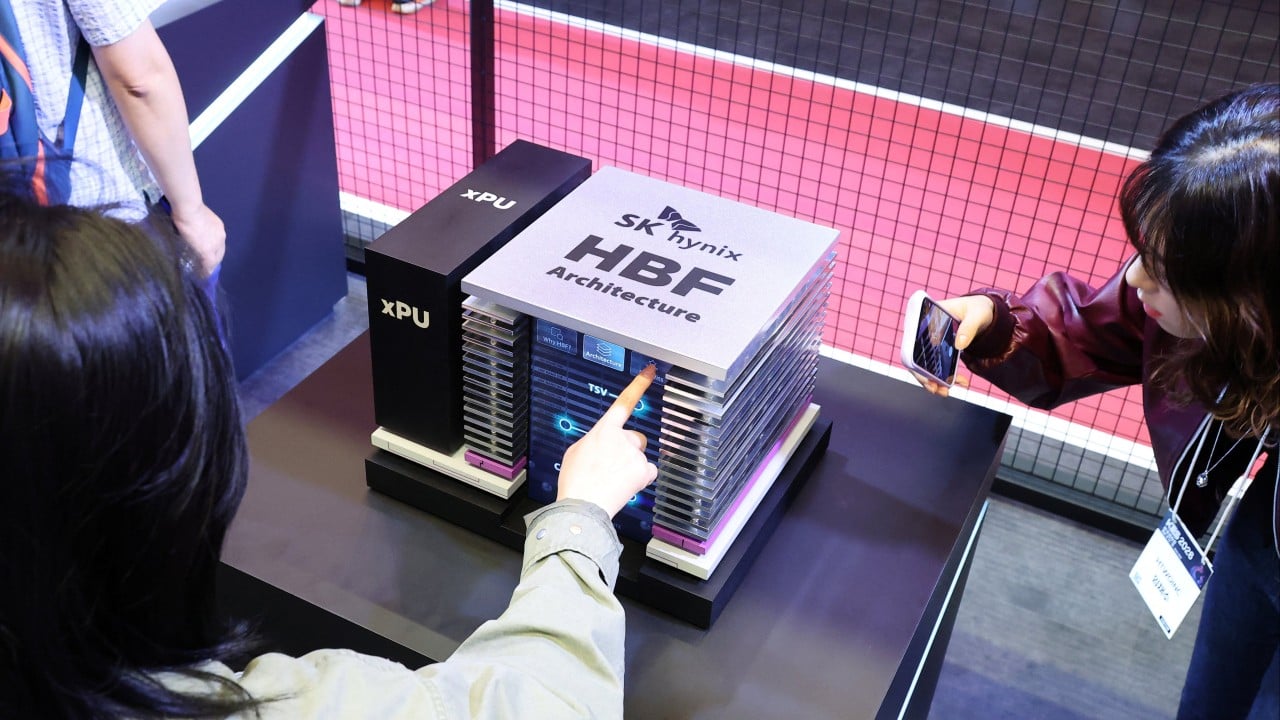
First, the migration toward high-value, customized memory must accelerate at breakneck speed. The rise of artificial intelligence has fundamentally changed what memory does. In traditional computers, memory was a passive warehouse; the processor did all the thinking, fetching data back and forth across tiny copper highways. In AI systems, moving data back and forth consumes too much power and takes too long. The industry is moving toward "processing-in-memory" and custom High Bandwidth Memory, where the memory chip itself is tailored directly to the specific architecture of a client’s AI accelerator.
When memory becomes custom-built rather than off-the-shelf, the commodity trap breaks. A customer like Nvidia, Google, or Microsoft cannot simply switch suppliers overnight to save ten percent on cost if the memory chip is co-designed alongside their proprietary processor. SK Hynix’s early lead in HBM proved how lucrative this shift can be, shielding the company from the worst of the recent memory downturn while competitors suffered massive losses. Seoul must pour every available resource into owning the next generations of HBM—HBM4 and beyond—where the base die of the memory stack essentially becomes a logic chip itself.
Second, South Korea must ruthlessly prune its exposure to low-margin legacy products before they become financial anchors. Holding onto aging production lines in hopes of squeezing out one last cycle of profit is a losing bet against state-backed competitors who do not play by capitalist accounting rules. Transitioning older fabs toward specialty applications—such as ultra-reliable automotive memory that can withstand extreme heat and vibration, or low-power memory tailored for on-device AI in smartphones—creates defensive niches that take years of rigorous safety certification to enter.
Third, the South Korean government has to recognize that corporate heroism is no longer enough. For decades, Seoul largely left Samsung and SK Hynix to fight their own battles, occasionally stepping in with modest tax breaks. Meanwhile, Washington poured tens of billions of dollars into the CHIPS Act, Tokyo revived its domestic semiconductor industry with aggressive state backing, and Beijing deployed hundreds of billions through its National Integrated Circuit Industry Investment Fund.
South Korea’s National Assembly has debated expanding tax credits for semiconductor facilities and streamlining environmental and zoning approvals for the massive Yongin mega-cluster—a planned hub set to become the largest semiconductor complex in the world. Yet bureaucratic friction, power grid bottlenecks, and water supply disputes still slow down construction timelines. In an industry where a six-month delay in bringing a fab online can cost billions in lost market share, red tape is just as dangerous as a foreign competitor.
The Human Equation Behind the Silicon
It is easy to talk about wafer starts, yield curves, and capital expenditure ratios as if they were moves on a sterile chessboard. They are not.
Behind every percentage point of lost market share are thousands of human decisions made in quiet rooms. It is the university graduate in Daejeon deciding whether to pursue a PhD in materials science or take an easier, higher-paying job in software. It is the mid-level manager in Suwon weighing whether to accept a lucrative, discreetly offered consulting contract from an overseas shell company—a persistent brain-drain threat that has forced South Korean prosecutors to treat semiconductor trade secrets as matters of national security.
Consider our hypothetical engineer, Ji-hoon, once more. When he looks at the younger recruits entering the cleanroom today, he sees brilliant minds who grew up in an affluent, hyper-connected nation. They did not experience the visceral hunger of the 1980s and 1990s, when building a chip industry felt like a patriotic crusade to lift the country out of poverty. Yet they are being asked to work just as relentlessly to defend what their parents built against rivals armed with boundless state capital and fierce national ambition.
The pressure is immense, and there is no guarantee of victory. History is littered with industrial titans who mistook past dominance for permanent immunity. Eastman Kodak invented the digital camera, yet died clinging to the high margins of film. Nokia ruled mobile phones until software ecosystems rewrote the rules of value overnight.
South Korea’s semiconductor leaders are nowhere near that fate today. Their cleanrooms remain marvels of human precision, capable of manipulating matter at the scale of individual atoms. When you hold a modern smartphone or prompt an artificial intelligence model to write a line of code, you are touching the invisible architecture built in Hwaseong, Pyeongtaek, and Icheon.
Still, the warning bells ringing across Seoul carry an unmistakable urgency. Profitability in the chip business is never a trophy you win and place on a shelf; it is oxygen. Cut off the supply, even slightly, and the strongest runner eventually slows down.
Night falls over Gyeonggi Province, and outside the gated perimeters of the semiconductor campuses, thousands of cars begin the slow commute back toward Seoul, their taillights blurring into red ribbons against the asphalt. Inside the cleanrooms, the shift changes. New engineers step through the air showers, sealing their hoods, adjusting their goggles, and walking back onto the floor. The yellow lights glow steady, the machines hum their relentless rhythm, and millions of microscopic circuits continue to take shape in the dark—racing against a clock that never stops ticking.


