Seven euros. That is the exact difference between buying the salmon fillets on Friday night and putting them back into the chilled display case at a Carrefour outside Lyon.
Consider a hypothetical Tuesday evening in that very suburb. Let us call her Claire. She is forty-two, an administrative assistant at a logistics firm, and she has spent the last twenty minutes doing mental arithmetic in the fluorescent glare of aisle four. Two cartons of milk. A bag of pasta. Apples for her son’s school lunch. She is not destitute. She has a steady job, a modest apartment, and a reliable commuter train. Yet, over the past four years, the invisible tax of inflation and stagnant real wages has shaved away the margins of her life until a seven-euro package of fish feels like a reckless luxury.
Across the English Channel and across the Atlantic, financial headlines treat economic policy as an abstract chessboard of bond yields, debt-to-GDP ratios, and central bank interest rates. In Paris, however, those numbers have a pulse, a temperature, and a sharp edge. And into that quiet, simmering frustration steps a familiar, thunderous voice promising to flip the entire board over.
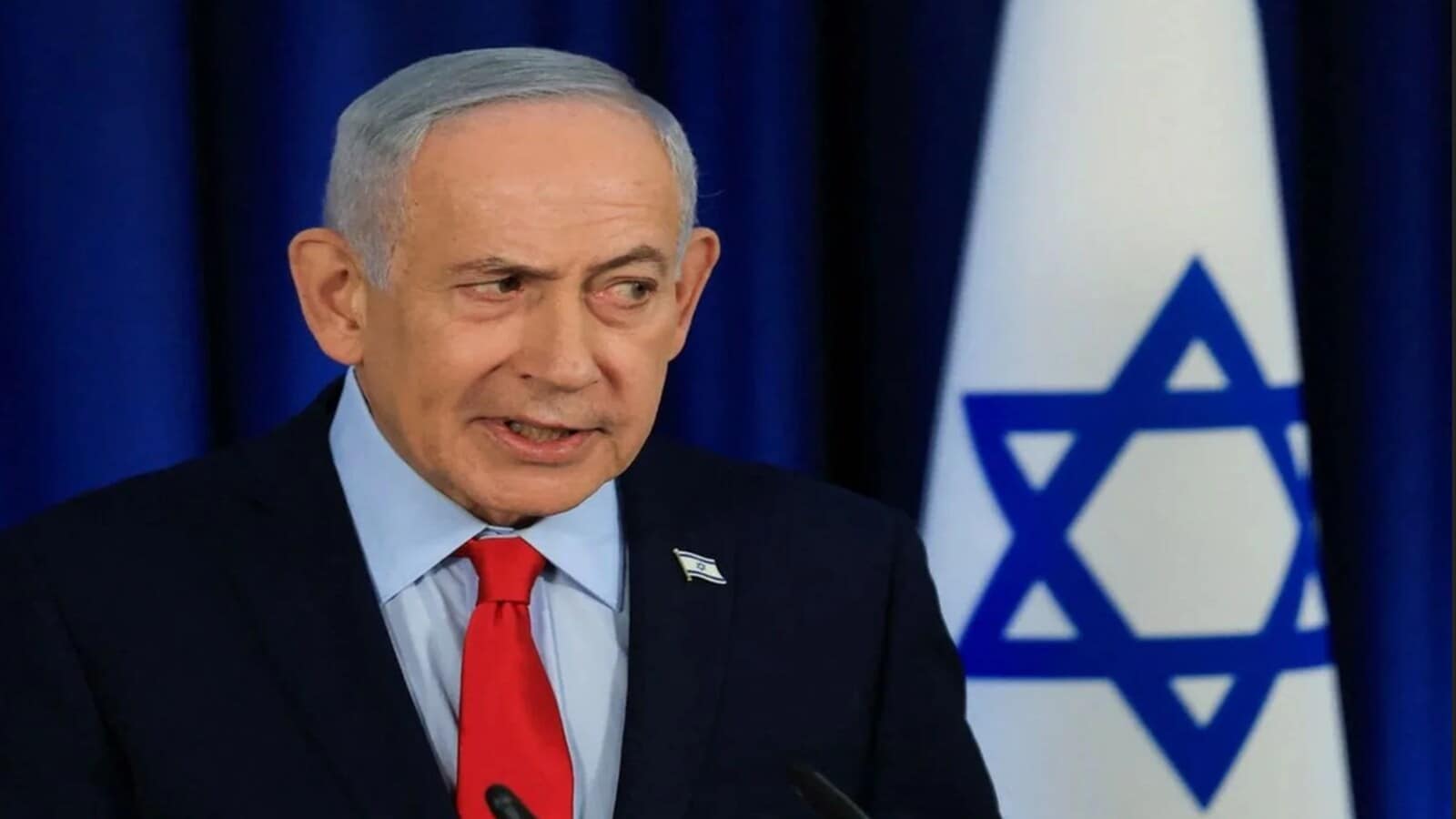
Jean-Luc Mélenchon, the veteran firebrand of the French hard left and founder of La France Insoumise, is once again positioning himself at the center of France’s political earthquake. According to his campaign platform and public addresses ahead of the 2027 French presidential race, Mélenchon is anchoring his bid on two seismic pillars: a massive, state-driven economic stimulus designed to inject purchasing power directly into working households, and a renewed, uncompromising call for France to withdraw from NATO.
To dismiss this twin platform as mere political theater is to misunderstand the deep, historical current running beneath modern France. It is a current fueled by kitchen-table anxiety on one side and a centuries-old obsession with national sovereignty on the other.
The Architecture of a Stimulus Gamble
To understand why Mélenchon’s economic pitch lands with such force among voters like our hypothetical Claire, you first have to understand the French relationship with the state. In the American imagination, the government is often viewed as an intrusive referee; in the French imagination, the state is historically the builder of bridges, the guarantor of dignity, and the shield against the cruelty of the unbridled market.
When Mélenchon pledges a sweeping economic stimulus, he is not talking about subtle tax tweaks or corporate incentives. His program, rooted in the left-wing L'Avenir en commun (A Shared Future) blueprint, calls for a massive Keynesian shock to the system. The proposals include raising the monthly net minimum wage (the SMIC) to 1,600 euros, freezing prices on essential goods like fuel and basic foodstuffs, lowering the retirement age back to 60, and launching billions of euros in public investment aimed at ecological transition and industrial renewal.
Think of the French economy right now like an old, heavy locomotive sitting at the bottom of a steep grade. Orthodox economists and centrist policymakers in Paris—as well as bond vigilantes in Frankfurt—argue that the train is already carrying too much debt. France’s public debt stands above 110 percent of its Gross Domestic Product, and its budget deficit has repeatedly breached European Union ceilings, drawing formal reprimands from Brussels. To these economists, piling more spending onto the engine will cause the boilers to explode in a crisis of soaring borrowing costs.
Mélenchon’s camp looks at the exact same locomotive and draws the opposite conclusion. They argue the train is stalled because the workers shoveling the coal are starving.
Their logic rests on the multiplier effect. If you give a billionaire a tax cut, that money often disappears into offshore accounts, luxury real estate, or speculative stock buybacks. If you give a cashier in Marseille or a warehouse worker in Lille an extra two hundred euros a month, that money does not sit still. By Friday afternoon, it is spent at the local bakery, the neighborhood mechanic, and the corner grocer. The baker buys more flour; the mechanic buys more parts; tax receipts flow back into the treasury through value-added taxes.
It is an intoxicating theory. It is also a high-wire act without a net.
I remember watching the aftermath of François Mitterrand’s 1981 stimulus experiment—not in real time, of course, but through the yellowing newspaper archives and the bitter recollections of older French economists who lived through it. When Mitterrand nationalized major industries, raised the minimum wage, and expanded social benefits in the early 1980s, the immediate burst of consumer joy was real. So was the hangover. Within two years, capital fled the country, the French franc collapsed three times, inflation surged past ten percent, and Mitterrand was forced into the infamous tournant de la rigueur—a humiliating U-turn into strict austerity.
Critics point to 1983 as proof that Mélenchon’s stimulus would trigger capital flight and a standoff with the European Central Bank. Mélenchon’s supporters counter that refusing to act is a slower, quieter form of ruin—one where public hospitals crumble, schools lack teachers, and the social contract rots from within.
The Ghost of De Gaulle and the NATO Question
If Mélenchon’s economic stimulus is designed to rescue the French wallet, his foreign policy is aimed squarely at the French psyche.
While he speaks of raising wages, he simultaneously renews a demand that sends shivers through Washington, Brussels, and Warsaw: France must leave NATO. Specifically, he advocates withdrawing first from NATO’s integrated military command, and ultimately from the alliance itself.
To an outsider, calling for a NATO exit while a major land war grinds on in Eastern Europe looks baffling, even reckless. Why would one of Europe’s premier military powers—and the European Union’s only nuclear-armed state—walk away from the collective defense umbrella that has anchored Western security since 1949?
The answer lies in a word that carries almost mystical weight in French politics: indépendance.
In 1966, President Charles de Gaulle—a conservative general who stood at the opposite end of the ideological spectrum from Mélenchon—stunned the world by pulling France out of NATO’s integrated military command and ordering American troops off French soil. De Gaulle believed that tying France’s military destiny to an alliance dominated by Washington meant surrendering French sovereignty. France would build its own nuclear deterrent, the Force de Frappe, and decide for itself when and where to fight. For forty-three years, France remained outside that command structure, until President Nicolas Sarkozy brought the country back in 2009.
Mélenchon is reaching directly into that Gaullist tradition and twisting it for a modern, multipolar world.
His argument is straightforward, even if its consequences are perilous. According to his speeches and foreign policy statements, remaining inside NATO forces France to align its diplomatic and military posture with American strategic interests, dragging Paris into confrontations it did not choose and limiting its ability to act as an independent mediator. He argues that France should pursue a policy of "non-alignment"—maintaining its independent nuclear deterrent while refusing to be locked into military blocs.
Consider what happens next if such a doctrine becomes reality.
Imagine a diplomatic crisis in the South China Sea, or a sudden escalation along NATO’s eastern border. Under current treaties, France is deeply woven into allied intelligence sharing, joint command planning, and collective defense commitments. If a President Mélenchon were to sever those ties, the shockwaves would hit every military headquarters in Europe. Germany, Poland, and the Baltic states would suddenly wonder whether Europe’s strongest military power would stand with them in a crisis. The European Union’s dream of "strategic autonomy"—a concept championed even by President Emmanuel Macron, albeit within the transatlantic alliance—could fracture overnight into mutual suspicion.
Yet, when Mélenchon makes this case at rallies in Toulouse or Nantes, the crowds do not recoil. They roar.
Why? Because for millions of disillusioned voters, NATO has become shorthand for a globalized order that feels distant, expensive, and unaccountable. They see billions of euros flowing toward defense budgets and geopolitical rivalries while the emergency room in their hometown closes on weekends for lack of nurses. In their eyes, foreign entanglement and domestic neglect are two sides of the same coin.
The Invisible Stakes Between Two Worlds
It is easy to analyze Mélenchon’s platform as two separate policy papers—one filed under "Economics," the other under "Defense." That would be a mistake. In the lived reality of modern France, they are fused together by a single, burning question: Who is in charge of our lives?
When global supply chains dictate the price of wheat, when European Union fiscal rules dictate how much Paris can spend on railways, and when transatlantic military alliances dictate France’s posture toward global conflicts, ordinary citizens begin to feel like passengers on a train they cannot steer.
That feeling of powerlessness is the most potent fuel in democratic politics. It does not stay neatly contained inside left-wing rallies or right-wing town halls. It seeps into every conversation at the factory gate, every quiet worry over a child’s future, every moment of hesitation in a supermarket aisle.
There is genuine uncertainty here, and anyone claiming to know the exact outcome of Mélenchon’s blueprint is selling certainty they do not possess. Would a massive stimulus spark a renaissance of French industry and lift millions out of quiet desperation, or would it trigger a sovereign debt crisis that forces France to its knees before international lenders? Would leaving NATO restore France’s voice as an independent diplomatic force for peace, or would it dangerously weaken European security at the exact moment unity is most vital?
Even economists who study fiscal multipliers and diplomats who have spent decades inside NATO headquarters admit that modern history rarely runs clean experiments. Everything depends on how markets react, how allies retaliate, and how ordinary citizens respond when the bill eventually comes due.
Back in that hypothetical supermarket outside Lyon, Claire does not spend her evening debating Keynesian multipliers or the diplomatic legacy of Charles de Gaulle. She stands by the checkout belt, watching the digital display climb euro by euro as the scanner beeps. She pays with her debit card, packs her canvas bags, and walks out into the cool evening air toward the commuter train, carrying the exact weight of what she could afford today—and wondering what tomorrow will cost.