Maps are clean. They are neat little geometries of ink and paper, where borders sit quietly like well-behaved fences, never bleeding, never screaming in the night, never smelling of wet ash and diesel fuel.
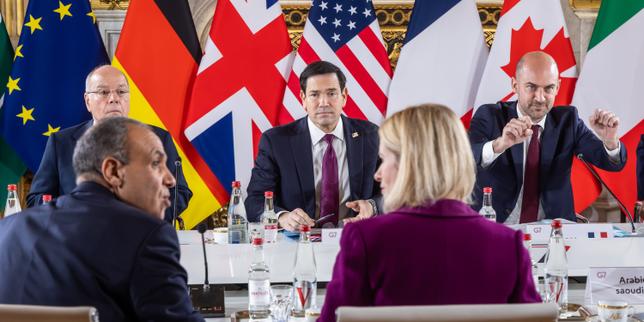
In Washington, a senior American official recently stood before reporters and uttered a single, clinically sanitized word that has sent a tremor through diplomatic backchannels from Kyiv to Brussels. Flexibility. According to the briefing, both Russia and Ukraine are finally showing signs of flexibility regarding territory. Meanwhile, you can find other developments here: Why Everyone Calling the 2028 Charlie Kirk Trial Date a Delay Is Completely Wrong.
Read that word again. Flexibility.
In the sterile air of a State Department press room, flexibility sounds like yoga. It sounds like two reasonable neighbors adjusting a shared driveway so both can park their sedans without scratching the paint. It sounds like progress. To understand the complete picture, check out the excellent report by The New York Times.
Out in the mud of the Donbas, however, flexibility has a very different texture.
The Kitchen Table in Kramatorsk
To understand what a diplomatic concession actually weighs, stop looking at satellite maps and consider a hypothetical woman named Olena. Let us place her in a third-floor apartment in Kramatorsk, roughly twenty miles west of the current front lines.
Olena is fifty-eight. She has spent the last three winters taping thick plastic sheeting over blown-out window frames, listening to the dull, rhythmic thud of outgoing artillery rattle the teacups in her hutch. Her husband, a former rail worker, is buried in a municipal cemetery two miles north of her building. Her son is twenty-six, currently serving in a mechanized brigade near Pokrovsk, sending her a single green thumbs-up emoji every forty-eight hours on Signal just to prove his heart is still beating.
When a diplomat in Washington mentions "territorial flexibility," Olena does not hear a geopolitical breakthrough. She hears a question that no white paper can answer.
If the line freezes here, does her son come home, or does he spend the next decade staring through binoculars across a mined trench at an enemy waiting to reload? And if the line shifts twenty miles west to satisfy a negotiating framework, does she pack two suitcases, leave her husband's grave behind an impassable razor-wire border, and become a permanent stranger in her own country?
Diplomats trade in square kilometers. Human beings live in square feet.
The Anatomy of a Diplomatic Whisper
We have seen this exact choreography before, though the costumes change with every century. History rarely ends wars with triumphant parades; far more often, conflicts grind down into exhaustion, where the sheer mathematical cost of gaining another hundred meters of pulverized forest forces leaders to look for an exit ramp they can sell to their own public as survival.
Consider the cold ledger that has driven both Moscow and Kyiv toward this quiet shift in posture.
For over four years, the official position from Kyiv was absolute: total restoration of the 1991 borders, including Crimea and every inch of the four eastern and southern oblasts Russia claimed to annex in 2022. Anything less was framed not merely as a strategic loss, but as an existential betrayal. Meanwhile, Moscow demanded total capitulation—the demilitarization of Ukraine, permanent neutrality, and full legal recognition of Russian sovereignty over territories its army did not even fully control.
Both positions were brick walls. Neither side could move without shattering its own political foundation.
Then reality intervened, as it always does, with an invoice neither nation could easily pay. Ukraine has faced an acute, grinding shortage of infantry—men who have been in the trenches since 2022 without rotation, fighting an adversary with a population more than three times larger. At the same time, Western ammunition pipelines have sputtered, subject to the shifting winds of domestic elections in the United States and Europe.
Russia, despite projecting an aura of endless imperial patience, is bleeding out its future in slow motion. Hundreds of thousands of casualties have hollowed out its working-age male population. Interest rates in Moscow have climbed to staggering heights to choke off war-driven inflation, turning a civilian economy into a brittle, state-subsidized munitions factory that cannot run forever without snapping.
Exhaustion. That is the real negotiator sitting at the table.
How You Bend Without Breaking
When the U.S. official spoke of flexibility, they were not describing a sudden burst of goodwill between Volodymyr Zelenskyy and Vladimir Putin. Nobody is shaking hands. Nobody is forgiving anything.
Instead, diplomats are quietly testing the difference between de facto control and de jure recognition.
Think of it like a stolen house. Suppose someone breaks into your home, changes the locks, and refuses to leave, armed to the teeth. You do not have the strength to kick down the door without burning the entire neighborhood to the ground. So, through a mediator standing on the sidewalk, you agree to stop throwing bricks through the windows. You accept the ugly reality that the intruder is sleeping in your living room for now.
That is de facto control.
What you refuse to do—what you will never do—is go down to the county courthouse and sign over the deed to the house. That would be de jure recognition.
In the quiet rooms where peace frameworks are drafted, this distinction is the only thread holding the conversation together. For Kyiv, "flexibility" means signaling a willingness to accept a temporary freeze along the current line of contact, acknowledging that occupied territories might have to be recovered through diplomacy over decades rather than through artillery shells this summer. For Moscow, flexibility means quietly dropping the demand that Ukraine hand over major cities like Zaporizhzhia or Kherson that Russian troops have failed to capture on the battlefield.
It is an ugly, asymmetric compromise. It leaves roughly a fifth of Ukraine under foreign occupation. It leaves millions of Ukrainian citizens trapped behind an iron curtain where their children are taught from rewritten history textbooks and their passports are replaced by force.
The Trap of the Frozen Conflict
I remember standing near the demarcation line in eastern Ukraine years ago, long before the full-scale invasion, during the era of the Minsk agreements. On paper, a ceasefire was in effect. International monitors drove around in white armored SUVs, writing polite reports about "localized violations."
In reality, people died every single week. Snipers hunted soldiers across abandoned coal fields. Villages sat without running water because shelling had severed a pipeline that neither side trusted the other enough to repair. An entire generation of children grew up thinking the sound of mortar fire was just bad weather.
This is the invisible danger lurking inside the word flexibility.
A ceasefire without ironclad security guarantees is not peace. It is merely an intermission. If Ukraine agrees to pause the fighting and leave its territory in limbo, what stops Russia from spending the next four years rebuilding its tank divisions, replenishing its missile stockpiles, and launching a third invasion when Western attention drifts to another crisis?
Nothing. Unless the price of restarting the war is made impossibly high.
That is why the territorial conversation is inextricably welded to security guarantees. If Kyiv is going to swallow the bitter pill of territorial compromise, it demands something concrete in return—whether that means NATO membership for the unoccupied eighty percent of the country, permanent deployments of European peacekeeping forces, or long-term bilateral defense treaties backed by automatic weapons deliveries.
Moscow, predictably, views any Western military presence in Ukraine as a non-starter. And so the diplomatic Rubik's cube twists again: every time one side aligns, the other side shifts out of place.
The Weight of Unanswered Questions
We have to be honest about how murky this moment truly is. Diplomatic trial balloons are launched for dozens of reasons, and not all of them are sincere. Sometimes an administration leaks news of "progress" to reassure nervous voters back home that their tax dollars are moving toward an endgame. Sometimes one warring party feigns flexibility solely to make the other side look like the obstinate warmonger when the talks inevitably collapse.
Could this be a genuine turning point? Yes. Both sides are staring into an abyss of diminishing returns, where another year of war promises tens of thousands more graves in exchange for a few ruined villages.
Could it also be a mirage? Just as easily. Vladimir Putin has repeatedly demonstrated that he views Ukrainian sovereignty itself as a historical error, not a border dispute to be settled with a ruler and a pen. And no Ukrainian president can sign an agreement that looks like surrender without risking political collapse—or worse—at home.
We are watching two nations try to solve an equation where every variable is soaked in blood.
What Remains After the Ink Dries
Return for a moment to Olena in Kramatorsk.
Suppose the diplomats succeed. Suppose, six months from now, cameras flash in a neutral European capital as envoys sign a thick leather-bound document establishing a demilitarized zone, an international monitoring mission, and a fragile, uneasy quiet along the front.
The headlines around the world will celebrate the end of Europe's largest land war since 1945. Markets will rally. Politicians will claim credit for averting catastrophe.
The next morning, Olena will wake up in her apartment. She will walk over to the window, peel back a corner of the cloudy plastic sheeting she taped over the glass three winters ago, and look east toward the horizon.
The guns will be silent. For the first time in years, the air will not vibrate with the distant thunder of war. She will boil water for tea, pick up her phone, and wait for a green thumbs-up emoji from her son, knowing that the line drawn by men in suits a thousand miles away has saved his life, even as it severed her country in two.
She will breathe a sigh of relief. And she will never, for the rest of her days, look at a map the same way again.