Two percent.
On a spreadsheet, two percentage points look like a rounding error, the kind of statistical static a tired campaign manager squints at over lukewarm coffee at two in the morning. Yet in the sprawling, sun-baked sprawl of Los Angeles, where four million lives collide daily against a backdrop of towering glass, crumbling asphalt, and stubbornly expensive rent, a widening gap in the race for City Attorney is anything but trivial.
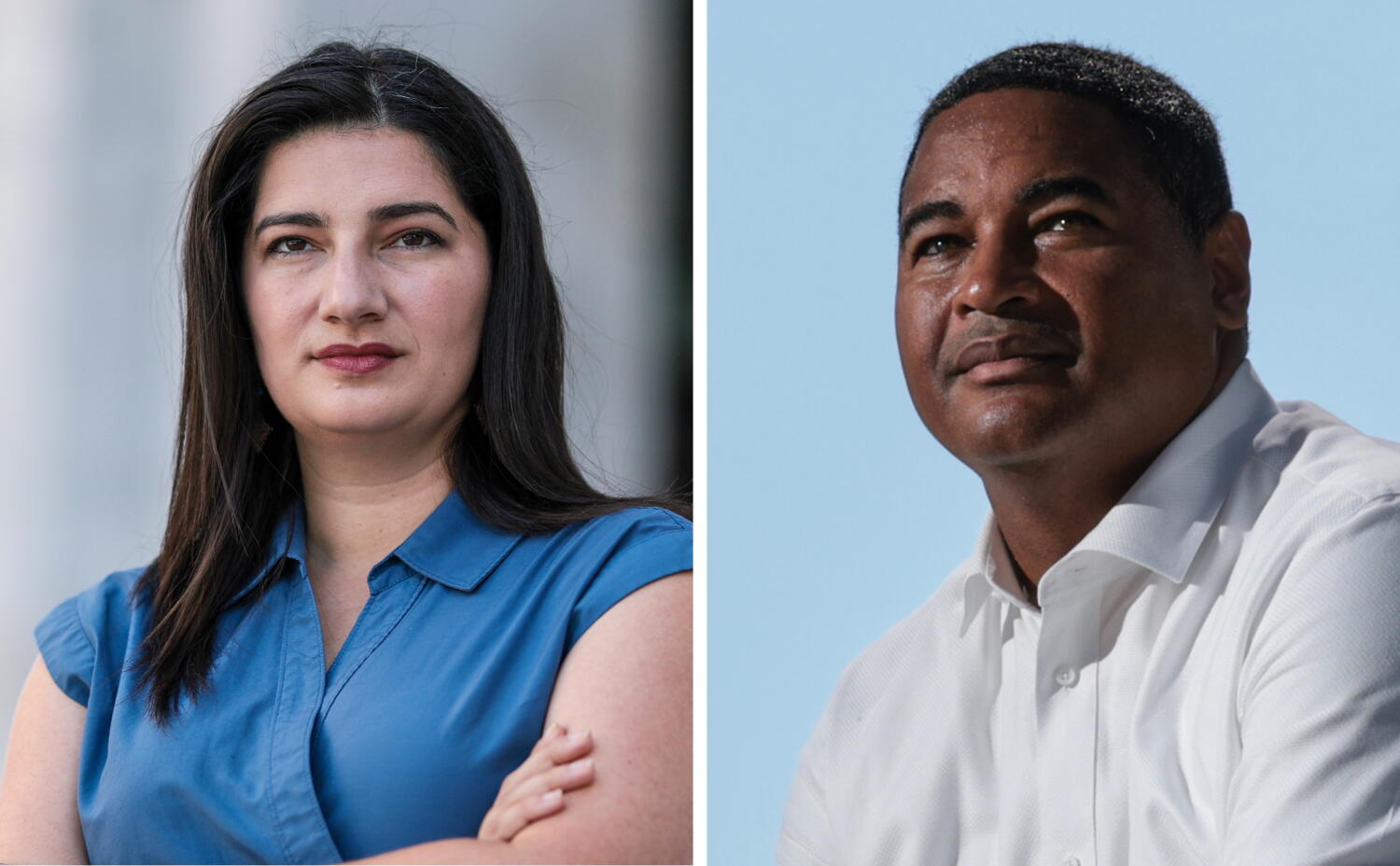
Recent polling shows Marissa Roy pulling further ahead of John McKinney in the contest to become the city’s top lawyer.
Most people will scroll right past that headline. They will save their outrage for the mayor’s race, their hope for the City Council, and their exhaustion for national politics. That is a mistake. Because while the mayor sets the vision and the council writes the rules, the Los Angeles City Attorney holds the pen that decides whether those rules actually have teeth—or whether they dissolve into expensive, taxpayer-funded dust.
The Invisible Hand on the Steering Wheel
To understand why this poll matters, you have to step out of the glossy campaign mailers and walk down a residential block in, say, Westlake or Van Nuys.
Consider a hypothetical scenario—one that mirrors thousands of real case files sitting in municipal cabinets right now. Meet Elena. She works double shifts at a clinic off Wilshire, pays two thousand dollars a month for a one-bedroom apartment with a leaking ceiling, and has spent six months begging her corporate landlord to fix the black mold creeping behind her kitchen sink. When she finally withholds rent in desperation, she gets an eviction notice.
Elena doesn't care about political endorsements. She doesn't care about partisan litmus tests. She cares about whether the City Attorney’s office will haul a negligent slumlord into court or shrug and tell her it is a civil matter.
Now flip the coin. Walk three miles east to a family-owned hardware store that has survived two recessions and a pandemic, only to have its front window shattered four times in six months. Meet David, the owner. He sweeps up the safety glass before dawn, pays his insurance deductible out of his daughter’s college fund, and watches the same repeat offenders walk out of custody before he has even finished boarding up the storefront. David doesn't want a theoretical debate on criminal justice reform. He wants to know if the City Attorney will prosecute chronic misdemeanors or treat his livelihood as collateral damage.
Elena and David are the twin poles of the Los Angeles electorate. And right now, the battle between Marissa Roy and John McKinney is a referendum on whose pain gets prioritized when the law goes to work.
Two Philosophies, One Broken Machine
For decades, the Office of the Los Angeles City Attorney operated like a sleepy legal backwater, a place where mid-career litigators went to draft municipal contracts and defend the city against trip-and-fall lawsuits. Those days are dead. Over the last ten years, the role has mutated into one of the most consequential—and contentious—offices in California.
The job itself is a bizarre legal hybrid. Think of the City Attorney as a combination of a corporate general counsel, a public defender of the city’s wallet, and a local district attorney rolled into one exhausted human being. With a staff of roughly a thousand employees and a budget running into the hundreds of millions, this single official decides which laws get enforced, which city policies get defended in federal court, and which corporate bad actors get sued into submission.
That dual mandate is precisely why the race between Roy and McKinney has hardened into such a sharp ideological clash.
Marissa Roy represents a distinctly modern vision of municipal power. A former deputy state attorney general and appellate lawyer, she views the City Attorney’s office not merely as a reactive shield for City Hall, but as an affirmative sword for public accountability. Her pitch to voters leans heavily on using the city’s massive legal muscle to take on systemic threats—predatory landlords, wage theft, environmental polluters, and corporate price-gouging. To her supporters, the law isn't a neutral set of traffic cones; it is an instrument meant to balance the scales when ordinary Angelenos get crushed by institutional weight.
John McKinney offers a starkly different diagnosis. A veteran prosecutor who spent decades in the Los Angeles County District Attorney’s office, McKinney approaches the role through the lens of courtroom grit and traditional public safety. His campaign is built on a straightforward premise: a city cannot thrive if basic order collapses on its sidewalks and in its storefronts. To McKinney’s backers, the current legal establishment has lost the plot, trading practical deterrence for ideological experiments while small businesses and working families pay the price in broken glass and stolen catalytic converters.
It is easy to caricature both positions. Critics paint Roy as an ivory-tower activist who will go soft on street crime while chasing splashy civil lawsuits. Critics paint McKinney as a throwback prosecutor who wants to arrest the city’s way out of deep social crises. Neither caricature tells the whole truth, yet both tap into very real anxieties humming beneath the surface of daily life in L.A.
What the Numbers Are Actually Whispering
When a candidate’s lead expands in a municipal race—especially one that typically suffers from low voter information—seasoned political watchers look past the top-line margin and examine the undercurrents.
I have watched enough local elections in Southern California to know that voters here are deeply skeptical, notoriously distracted, and surprisingly pragmatic when they finally sit down with their ballots. Early in a campaign cycle, name recognition and broad ideological labels carry the day. A voter sees "prosecutor" and thinks of safety; another sees "civil rights and consumer protection" and thinks of fairness.
The fact that Marissa Roy is widening her advantage over John McKinney suggests something more specific is happening in living rooms across the San Fernando Valley, the Westside, and South L.A.
First, it points to the enduring power of institutional alignment in a heavily Democratic city. Even as frustration over homelessness, retail theft, and quality-of-life issues has pushed parts of the electorate toward tougher-on-crime rhetoric, voters remain deeply wary of approaches that feel punitive without solving root causes. Roy’s background in the Attorney General’s office gives her a crucial buffer: she can talk about systemic reform without sounding naive about the law. She knows how to argue before appellate judges, and voters seem to trust that she knows how to wield the machinery of government without breaking it.
Second, the polling movement reflects a shifting definition of what "safety" actually means to an Angeleno in 2026.
Safety used to mean one thing: violent crime rates. Today, if you sit at a diner counter in Koreatown or wait for a bus in Boyle Heights, safety feels much broader and far more fragile. It means not losing your housing to an illegal eviction. It means not having your paycheck shaved by an employer who knows you can't afford a private lawyer. It means knowing the city won't bleed millions of dollars in preventable legal settlements because the police department or city agencies ignored constitutional guardrails.
Roy’s rising numbers indicate that her message—framing consumer protection, housing enforcement, and government accountability as core pillars of public safety—is landing with undecided voters who might otherwise have defaulted to a traditional law-and-order candidate.
The Cost of Getting It Wrong
Still, polling is a snapshot, not a prophecy. And anyone who treats a growing lead as an inevitability misunderstands the volatility of Los Angeles politics.
The central tension of this race hasn't gone away just because one candidate is pulling ahead. Whoever takes the oath of office will immediately inherit a legal dockets’ worth of impossible choices, with zero margin for error.
Consider the sheer financial bleed currently facing the city. Over the past several years, Los Angeles has shelled out hundreds of millions of dollars in legal payouts—settlements over police misconduct, neglected sidewalks, whistleblower retaliation, and bungled city contracts. Every dollar spent paying off a preventable lawsuit is a dollar stripped from tree trimming, pothole repair, after-school programs, and library hours.
The City Attorney sits right at the choke point of that financial hemorrhage.
If the next City Attorney acts as a rubber stamp for City Hall’s worst impulses, defending indefensible agency practices out of political loyalty, the taxpayers keep bleeding. Conversely, if the office becomes paralyzed by internal ideological battles, basic municipal operations grind to a halt. Look at the historical pattern in major American cities: whenever a municipal law department loses the trust of either the rank-and-file workforce or the broader public, gridlock follows. Police officers hesitate, housing inspectors back off, and city councilmembers start hiring expensive outside counsel just to get basic ordinances drafted.
That is the tightrope both Roy and McKinney are trying to walk, and it is why the nuance of their backgrounds matters so much.
McKinney’s strength has always been his fluency in the high-pressure reality of criminal courtrooms. He understands how cases fall apart when evidence isn't properly gathered or when prosecutors lack clear direction from the top. For voters like our hypothetical hardware store owner, David, McKinney’s presence offers the reassurance that someone at City Hall actually understands the mechanics of accountability on the street.
Roy’s strength lies in her command of complex civil and constitutional litigation. She understands how power hides behind corporate shell companies and bureaucratic red tape. For voters like Elena, fighting mold and an illegal eviction, Roy represents the possibility that the city’s vast legal apparatus might finally show up in her corner rather than shrugging from the sidelines.
Why Your Cynicism Is Exactly What Bad Actors Want
There is a temptation, whenever local polling headlines flicker across our screens, to treat the whole thing like a horse race. Who is up? Who is down? Whose campaign raised more money this quarter? Whose endorsements look shinier on a glossy postcard?
That framing is comfortable because it keeps us at a safe distance. If politics is just a spectator sport, we don't have to reckon with the fact that the outcome quietly dictates the texture of our daily lives.
Let’s be honest about why so many people tune out the City Attorney’s race. The title itself sounds dry, bureaucratic, almost allergic to drama. Unlike a mayor, the City Attorney rarely cuts ribbons. Unlike a district attorney, they don't prosecute high-profile murder trials that dominate evening news broadcasts. Most of their work happens in windowless conference rooms, in dense legal briefs, and in quiet settlement negotiations that never make the front page.
Yet obscurity is precisely where real power thrives.
When nobody is watching, the City Attorney decides whether to join a multistate lawsuit against a pharmaceutical company poisoning local neighborhoods, or whether to sit it out. When nobody is watching, they decide whether to enforce the city’s minimum wage laws aggressively or let complaints gather dust in a backlog. When nobody is watching, they advise the City Council on whether a bold new tenant protection ordinance will survive a constitutional challenge—advice that can kill a policy before the public ever gets to debate it.
Marissa Roy’s growing lead over John McKinney is an early signal that a critical mass of Los Angeles voters is starting to connect those invisible dots. They are beginning to see that the person who holds the city’s legal power shapes the moral and economic boundaries of the entire metropolis.
But a poll is only a rough draft of the public will. Between now and the moment the final ballots are counted, the real test won't be conducted by pollsters calling landlines and cell phones. It will happen on cracked sidewalks, in crowded housing court hallways, and behind the counters of struggling neighborhood shops.
The numbers say Marissa Roy is pulling away. The streets of Los Angeles are still waiting to see if anyone at City Hall can actually make the law feel like justice.