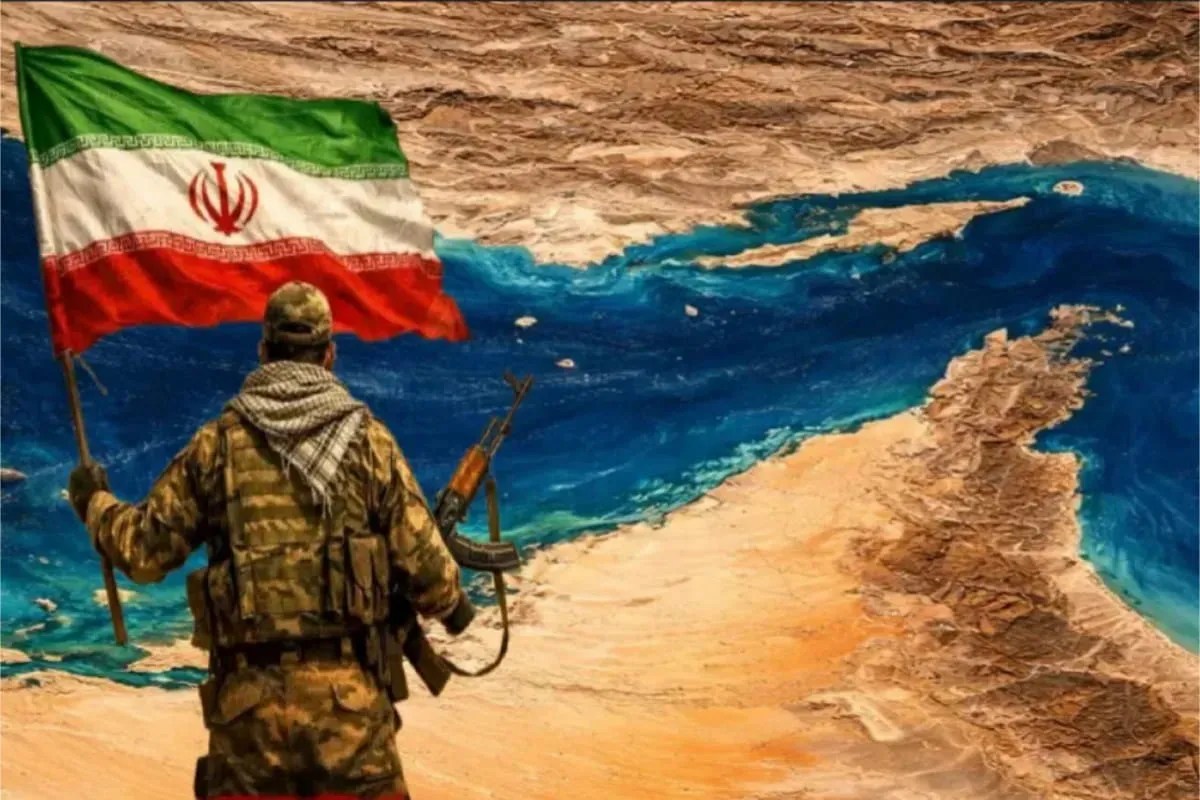
Heat rises off black asphalt in waves that bend the horizon before dawn even breaks. Across the Arabian Peninsula, energy infrastructure hums in the dark, while far to the south, rugged mountains and narrow coastal plains echo with the hum of cheap drones and long-range missiles.
When analysts speak of regional geopolitics, they often reach for tidy abstractions. Proxy conflict. Deterrence. Buffer zones. Words like these keep the mind at a safe distance. They turn real roads, real pipelines, and real human decisions into colored arrows on a map.
Yet for decades, the rivalry between Iran and Saudi Arabia has shaped the price of fuel at pumps from Tokyo to Frankfurt, the security of maritime shipping lanes, and the fragile calculations of rulers sitting in palaces and command bunkers. And in that long contest, Yemen's Houthi movement has become far more than a local faction fighting a civil war. It has become a vital instrument through which Tehran can press on Saudi Arabia without absorbing the full shock of a direct clash.
A Hypothetical Morning at the Pump
Consider a hypothetical scenario to see how distant friction travels. Suppose Tariq—a hypothetical logistics manager working near a Gulf port—wakes at 4:30 a.m. to the sound of a notification chime rather than an alarm clock. A shipping route has been rerouted. A refinery schedule has shifted. Nothing in his immediate street has collapsed, yet the rhythm of his entire workday has already been bent by events hundreds of miles away.
Scale that small ripple outward. When maritime passage near the Red Sea and the Bab el-Mandeb strait becomes perilous, freighters slow down, detour, or pay soaring insurance premiums. Tankers carrying crude and refined products face longer journeys and tighter margins. Even when Saudi energy facilities are not directly struck, the threat of disruption hangs over every barrel and every contract.
Threat. That is the currency of leverage.
A state does not always need to conquer territory to constrain a rival. If it can raise the cost of calm—forcing air defenses to stay on hair-trigger alert, compelling investors to price in risk, and keeping border provinces tense—it turns its adversary's own vulnerabilities into a lever. For Iran, supporting the Houthis with weapons, technical know-how, intelligence, and diplomatic cover offers a way to project pressure onto Saudi Arabia's southern flank while keeping plausible deniability intact.
Why Geography Makes Saudi Arabia a Sensitive Target
Saudi Arabia sits at the center of global energy trade and regional diplomacy, yet its geography creates sharp pressure points. Vast expanses of desert separate major population centers and industrial hubs. Along the southern border lie steep, rugged highlands adjacent to Yemen, where terrain favors irregular fighters who know every wadi and ridge.
Farther north and east lie the lifelines of the Saudi economy: oil fields, export terminals, desalination plants, and processing complexes. Desalination deserves special mention because water is life in an arid land. In cities across the Gulf, millions of people rely on desalinated seawater for drinking, bathing, and daily survival. Any credible threat to critical infrastructure—whether energy, power, or water—carries weight far beyond its immediate physical footprint.
I have stood in desert air where the silence feels heavy enough to press against your eardrums, broken only by wind against corrugated metal or a distant generator. In places like that, you realize how thin the margin can be between ordinary routine and sudden disruption. You do not need Hollywood explosions to grasp the stakes; you just need to imagine a power grid flickering at noon in July.
To be honest, watching Middle Eastern crises unfold from afar can feel bewildering. Alliances shift. Truces form and fray. Officials in Riyadh and Tehran speak in public of de-escalation one month and trade sharp warnings the next. Anyone trying to follow every twist without a compass can easily lose the thread.
Still, a simple analogy helps clarify the core dynamic. Think of a heavyweight boxer whose arms are tied to a heavy bag, while a nimble opponent circles just outside reach, throwing jabs at the ribs. The heavy bag does not win the bout on its own, yet every jab drains stamina, forces the boxer to shift weight, and narrows the space to breathe.
That is how asymmetric pressure works. The Houthis are not an identical copy of Iran's regular forces, nor are they mindless puppets without their own domestic ambitions and grievances in Yemen. They have their own political project, their own survival instincts, and their own local power base. Yet their interests and Tehran's frequently align: both want to weaken Riyadh's regional clout, test Saudi defenses, and extract concessions without paying the price of an all-out war between two major powers.
The Architecture of Indirect Pressure
How does a movement rooted in northern Yemen become a strategic headache for Saudi Arabia on behalf of Iran? It happens through a combination of hardware, geography, and timing.
Over the past several years, the Houthis have expanded their arsenal from basic rockets and artillery to long-range drones, ballistic missiles, and anti-ship systems. Military analysts have repeatedly pointed to design features, components, and operational patterns consistent with Iranian assistance. Whether through smuggled parts, maritime routes, or shared expertise, the result is a force capable of reaching targets far beyond Yemen's borders—including Saudi territory and vital Red Sea shipping lanes.
Let's pause and be clear about a common misunderstanding. Saying that Iran uses the Houthis to pressure Saudi Arabia does not mean the Houthis have no agency of their own. Far from it. The Houthis fought their way to dominance in Sanaa and much of northwestern Yemen long before their cross-border strikes made international headlines. They govern millions of people in harsh economic conditions and pursue their own ideological and political goals.
Yet alignment does not require total control. When two actors share a rival, cooperation can be transactional, opportunistic, and deeply effective. Iran gains reach along the Red Sea and a persistent thorn in Saudi Arabia's side. The Houthis gain funding, advanced weaponry, diplomatic backing, and a larger stage on which to project power.
For Saudi Arabia, this creates a difficult dilemma. Responding with overwhelming force risks getting bogged down in a costly, protracted conflict with severe humanitarian consequences and international scrutiny. Absorbing hits—or even near-misses—erodes the image of invulnerability that every state guards closely. Meanwhile, pursuing talks and regional understandings can lower immediate tension, yet it rarely erases the underlying capability sitting across the border.
A Hypothetical Evening in a Coastal Control Room
Imagine another hypothetical scene—this one inside a dimly lit operations room overlooking a stretch of coastline. A duty officer watches radar feeds and maritime advisories as a merchant vessel passes through a narrow corridor. Every routine transit requires coordination, vigilance, and readiness.
Even when nothing happens for weeks, readiness is exhausting. Patrols run. Sensors stay active. Budgets stretch to cover interceptors that cost far more than the drones they shoot down.
That cost asymmetry is one of the quietest truths of modern conflict. A relatively inexpensive drone or missile can force a defender to fire high-value air-defense munitions or scramble aircraft. Over time, attrition becomes financial and psychological as much as military. A country can shoot down ninety-nine percent of threats and still feel the strain of the one percent that gets through or the sheer expense of keeping the shield raised.
And when you add maritime risk in the Red Sea, the pressure reaches straight into global trade. Container ships and oil tankers form the arteries of the world economy. When vessels avoid the canal route and sail around southern Africa instead, transit times lengthen by weeks. Supply chains tighten. Goods arrive late. Manufacturers scramble. Consumers thousands of miles away feel a faint nudge upward in prices without ever connecting it to a coastal ridge in Yemen.
Diplomacy, Fatigue, and Shifting Calculations
History shows that rivalries rarely move in a straight line. Over the past few years, Riyadh and Tehran have experimented with diplomatic channels—most notably through Chinese-brokered talks—aimed at reducing direct friction and managing regional flashpoints. Saudi Arabia has also sought off-ramps from the Yemen quagmire, recognizing that endless military entanglement drains resources needed for domestic transformation and economic diversification.
Fatigue is a powerful teacher. Years of conflict leave scars on treasuries, societies, and reputations. Leaders in Riyadh have poured enormous energy into reshaping their economy and projecting a modern, forward-looking image to the world. Persistent security threats from the south complicate that ambition at every turn.
At the same time, diplomacy does not magically erase entrenched distrust or dismantle weapons networks overnight. A pause in one arena can coexist with tension in another. Truces hold until a miscalculation, a regional shock, or a shift in leverage tests them again.
I do not pretend to know every secret calculation made behind closed doors in Riyadh, Tehran, or Sanaa. Anyone who claims complete certainty in Middle Eastern politics is selling an illusion. Uncertainty is part of the terrain. What is clear, however, is that the Red Sea corridor and the Yemen border remain central hinges of regional stability.
What Is Really at Stake
Why should someone living far from the Arabian Peninsula care about how the Houthis help Iran turn Saudi Arabia into a pressure point?
Because modern stability is interconnected. Energy markets link a Gulf pipeline to a factory floor in Asia and a commuter train in Europe. Maritime corridors link Red Sea waters to supermarket shelves across continents. When a chokehold tightens on one link in the chain, the tension travels along the whole line.
More importantly, this dynamic reveals how power is exercised in an era where open, full-scale war between major regional players is often too costly or risky. Instead of a single decisive clash, pressure is applied in increments: a drone flight here, a shipping warning there, a diplomatic signal backed by military reach.
Sand drifts across desert roads, erasing footprints within an hour, yet deep beneath the surface, pipelines, cables, and shipping lanes carry the weight of a restless world—and out on the dark water, every passing hull moves through a quiet test of nerve.