The grease under a mechanic’s fingernails doesn't wash off with cheap soap, and the dust from a dry October harvest doesn't leave the back of your throat until December.
If you have ever stood inside a machine shed in central Iowa at five in the morning, listening to the tin roof pop as the frost settles, you know that farming is mostly an exercise in delayed terror. You borrow half a million dollars in March to bury seeds in the dark. You pray the sky doesn't split open with hail in July. You pray the combine doesn't throw a bearing in October. And then, when the grain is finally sitting in the steel bins, you look at a screen and realize that a trade dispute three thousand miles away just erased your profit margin before you even turned the key in the ignition. In similar news, take a look at: Why Back-to-Back Cyclones in India Hit So Hard and What Evacuations Miss.
Wait.
That is the part the headlines miss. When Washington announces a fifteen-billion-dollar rescue package for American agriculture in the final, breathless weeks before a midterm election, the numbers sound abstract. Billions. Subsidies. Aid. To someone reading a news ticker in a subway car, it looks like a line item on a federal ledger or a calculated political maneuver. NPR has analyzed this fascinating topic in extensive detail.
To the person sitting at a kitchen table covered in yellow legal pads and unpaid seed invoices, fifteen billion dollars smells like diesel fuel and feels like another six months of breathing room.
The Kitchen Table Ledger
Let us build a hypothetical kitchen to see how this money actually moves, because the real kitchens are too private for strangers to enter uninvited.
Meet Arthur. Arthur is fifty-eight, farms twelve hundred acres of corn and soybeans outside Fort Dodge, and has knees that predict rain better than the local meteorologist. In a normal year, Arthur operates on margins so thin you could read a newspaper through them. Farming at this scale is not a quaint lifestyle; it is a high-wire capital-intensive manufacturing business without a roof.
This year, Arthur’s input costs—the fertilizer, the diesel, the seed, the interest rate on his operating loan—stayed stubbornly high. Meanwhile, the price of soybeans dropped like a stone in a well. Why? Because global markets are skittish, retaliatory tariffs choke off export pipelines, and South American competitors have been planting fence-row to fence-row to capture the buyers America used to own.
By late September, Arthur did the math. Every bushel of beans he pulled out of the dirt was costing him forty cents more to grow than the local grain elevator was willing to pay. Multiply forty cents by sixty bushels an acre, across six hundred acres, and you are staring at a fifteen-thousand-dollar hole just for showing up to work.
Then comes the announcement from the White House. Fifteen billion dollars. Emergency relief.
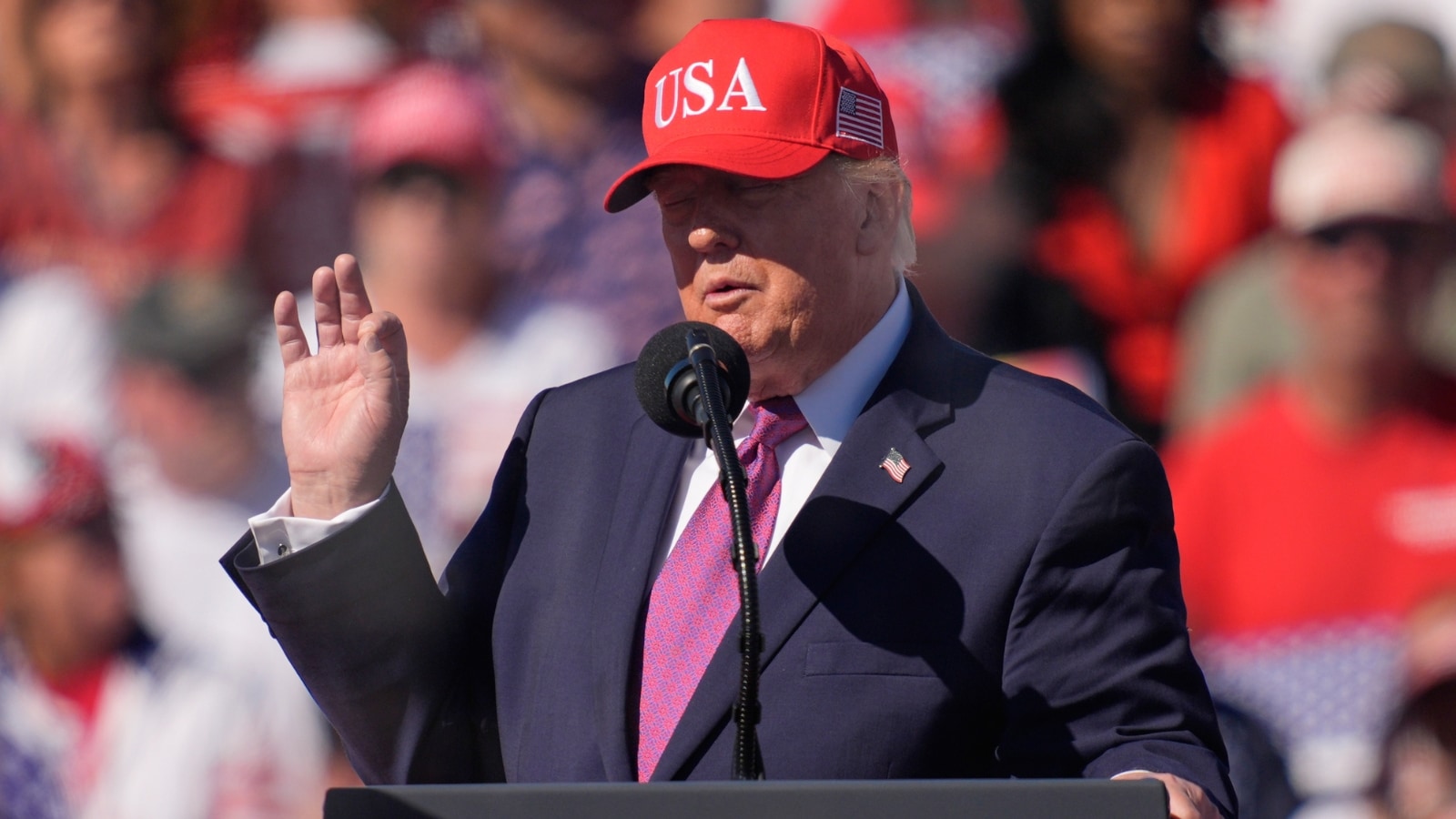
Suddenly, the phone in the local co-op starts ringing. The tone in the diner shifts from grim silence to cautious, skeptical calculation. When the Trump administration rolls out a massive aid package right before voters head to the polls, the political timing is obvious to anyone with a calendar. Midterm elections are won and lost in the margins of rural districts—places where a few thousand votes decide who holds the gavel in the House of Representatives.
You do not need a degree in political science to see the transactional beauty of the timing. The administration needs the farm belt to hold the line. The farm belt needs cash before the bankers start calling in operating notes in January.
A Familiar Playbook
If this feels like déjà vu, it is because we have watched this exact movie before.
Think back to 2018 and 2019. When the first wave of aggressive tariffs slammed into Chinese agricultural purchases, American soybean exports to China plummeted by more than seventy percent in a single season. Bins overflowed. Prices cratered. To keep the rural economy from collapsing—and to keep rural voters from abandoning the Republican ticket—the administration bypassed traditional congressional appropriations and tapped the Commodity Credit Corporation, a Depression-era financial institution inside the Department of Agriculture.
They pumped roughly twenty-eight billion dollars into the farm economy over two years through the Market Facilitation Program.
I remember talking to grain elevator operators during that stretch. They described the checks arriving in farm mailboxes like a sudden rainstorm after a four-month drought. Farmers used the money to pay down equipment loans, buy new tires for grain trucks, and settle up with local fertilizer dealers. In some counties, government payments accounted for nearly forty percent of net farm income.
It worked, politically and financially, in the short term. The bankruptcies slowed down. The rural counties stayed fiercely loyal at the ballot box.
Yet if you sat with those same farmers over black coffee at six in the evening, away from the television cameras, you heard a different story. Almost none of them wanted the check. Pride runs deep in dirt that has been in the same family for four generations. Farmers want to make their money from the market, not from the Treasury. They view government bailouts the way a carpenter views a splint on a broken arm: necessary so the bone heals straight, but a miserable substitute for having two good hands.
The Anatomy of a Bailout
How does fifteen billion dollars actually leave Washington and land in a checking account in Nebraska or Kansas?
To understand the mechanism, imagine the federal government has a massive, pre-approved credit card tucked away specifically for agricultural emergencies. That is essentially what the Commodity Credit Corporation is. Created in 1933 during the depths of the Dust Bowl and the Great Depression, it was designed to stabilize farm income and prices without waiting for Congress to debate a bill for six months.
When the Secretary of Agriculture activates this fund, the money doesn't get distributed equally like a stimulus check. It is calculated through complex formulas based on acreage, historical yields, and the estimated financial damage caused by trade disruptions or depressed commodity prices.
Here is where the friction begins.
Large commercial operations—the mega-farms that run ten thousand acres with fleets of GPS-guided tractors—naturally receive the lion's share of the payout because they produce the most bushels. Meanwhile, the smaller family farm, the guy milking eighty cows or farming four hundred acres on the side while working a night shift at the local manufacturing plant, often gets a check that barely covers a single repair bill on a hydraulic pump.
There is also the ghost in the machine: land rent.
When Washington reliably steps in to cushion every price drop, landowners notice. Cash rents—the price a farmer pays to lease ground they don't own—refuse to come down, even when crop prices fall. Seed companies and chemical manufacturers keep their prices elevated because they know the farmer’s bottom line has an invisible federal safety net underneath it. In a strange, perverse twist of economics, the emergency aid meant to save the farmer often passes straight through the farmer’s hands and ends up in the bank accounts of landlords, chemical conglomerates, and equipment lenders.
The farmer becomes a middleman for their own rescue.
The Invisible Stakes
Step outside the tractor cab for a moment and look at what happens if that fifteen billion dollars doesn't show up.
When a farm goes under, it does not die alone. Rural America is an ecosystem built on interlocking debt. If Arthur cannot pay his bill at the local seed dealership, the dealer cannot pay the truck driver who hauls the pallets. If the truck driver loses hours, his family stops eating Friday night fish fries at the town cafe. Within eighteen months, the cafe closes, the school district loses three families, the volunteer fire department struggles to find daytime responders, and the local bank gets swallowed by a regional conglomerate three states away.
Economists call this the multiplier effect. People who live in small towns just call it watching the lights go out on Main Street.
This is why the debate over pre-election farm aid always feels so dishonest when it is framed purely as cynical politics. Yes, dropping fifteen billion dollars weeks before an election is a blatant exercise in political self-preservation. Any administration facing a tight midterm map would be tempted to pull that lever if they had their hand on it. Critics in urban districts rightly ask why taxpayers are repeatedly subsidizing an industry hurt by the very trade policies those same rural voters overwhelmingly supported.
That is a fair question. It deserves a straight answer, not a campaign slogan.
The answer is that food security is national security, and agricultural markets do not behave like software companies. If a tech startup goes bankrupt, another one buys its code and launches six months later. If fifty thousand family farms liquidate their machinery and sell their land to institutional investment funds, you never get those farmers back. Once the skill, the generational knowledge, and the rural infrastructure vanish, they are gone for good.
The Uncertainty Nobody Admits
I will be honest with you: nobody really knows how this ends.
Even the sharpest agricultural economists in land-grant universities are quietly scratching their heads right now. We have entered an era where global trade is no longer governed by predictable rules of supply and demand. Geopolitics dictates who buys American pork, who tariffs American soybeans, and whether a shipping lane in the Black Sea or the South China Sea stays open next Tuesday.
In that kind of environment, farming stops being a test of agronomy and becomes a high-stakes bet on presidential temperament.
Think about what that does to a twenty-five-year-old trying to decide whether to come back to the family farm after college. You look at your father’s ledger. You see the sixty-hour weeks during planting, the eighty-hour weeks during harvest, the constant ache in his lower back, and the terrifying reality that his entire livelihood depends on whether a politician in Washington decides to sign an executive order in October.
Would you sign up for that?
Most young people look at that equation and take a job in Chicago or Minneapolis instead. The average age of the American farmer is now hovering near sixty. Every year, the tractor cabs get emptier, the farms get consolidated into massive corporate holdings, and the distance between the people who grow the food and the people who eat it stretches a little wider.
The Check in the Mailbox
Back in our hypothetical kitchen in Fort Dodge, the afternoon mail arrives just as the sun drops behind the grain bins, turning the gravel driveway the color of rusted iron.
Arthur walks down to the road in his worn Carhartt jacket, his breath puffing white in the crisp November air. Inside the metal box, tucked between a seed catalog and an electric bill, is an envelope from the United States Department of Agriculture.
He stands by the roadside and tears it open with a calloused thumb.
The numbers on the paper are clean, printed in crisp black ink. They will cover the interest on the operating note. They will pay off the diesel tank out behind the barn. They will keep the wolves away from the porch until spring planting begins again in April.
Arthur folds the letter carefully, slides it into his breast pocket, and walks back toward the house. Behind him, the giant steel bins hum quietly in the evening wind, filled to the brim with grain that nobody wants to buy at a fair price, sitting on land that costs too much to rent, waiting for a market that no longer makes sense.
He pulls the screen door open, steps into the warmth of the kitchen, and sets the paper down next to his coffee mug. The relief is real. The gratitude is real. And so is the quiet, nagging certainty that next October, he will be standing by that exact same mailbox, waiting to see who needs his vote enough to save him again.