Paper has a very specific sound when it is being sorted at two in the morning.
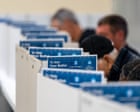
It is not the crisp, celebratory snap of a freshly printed novel, nor the dull thud of junk mail hitting a kitchen counter. It is a dry, rhythmic whisper—envelope sliding against envelope, a high-speed scanner humming like an overworked refrigerator, the occasional metallic click of a rubber stamp. If you have ever volunteered in a county registrar’s office three days after an election, you know that sound lives in your teeth long after you drive home in the dark. For an alternative view, check out: this related article.
Inside one of those beige envelopes sits a single sheet of heavy cardstock. Let us give the person who filled it out a name, though the envelope itself is designed specifically to strip that name away before the vote is ever read. Call her Elena.
Elena is a hypothetical figure—a composite of millions of real Californians—who works swing shifts at a logistics warehouse in the Inland Empire. On the morning of Election Day, her four-year-old woke up with a fever that spiked to 103. By the time her sister arrived to take over childcare, the shift whistle was blowing, and by the time Elena clocked out, the fluorescent lights at her neighborhood polling place were already flickering off. So she did what California law explicitly invited her to do. She sat at her kitchen table, filled in the ovals with a black ballpoint pen, signed the back of the return envelope, and dropped it into the blue collection box outside the post office at 7:45 PM. Related reporting on this trend has been published by NBC News.
Her envelope was postmarked on Election Day. It arrived at the county elections office four days later, slowed down by regional mail consolidation that had nothing to do with her, her candidate, or her civic diligence.
For months, a legal battle fought thousands of miles away in Washington, D.C., threatened to take Elena’s envelope—and hundreds of thousands just like it—and lock them in a legal purgatory, segregated from the rest of the electorate like contaminated evidence.
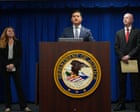
When the United States Supreme Court declined Donald Trump’s emergency bid to force California to set aside late-arriving mail-in ballots, the headlines treated it like another routine procedural skirmish. A dry docket entry. A three-line wire dispatch.
They missed the point entirely.
The Anatomy of an Invisible Quarantine
To understand why the Supreme Court’s refusal matters, you have to understand what "setting aside" ballots actually does in the real world of election administration.
On paper, the request sounded almost benign, even cautious. The legal challenge aimed at California’s election rules argued that federal law establishes a single, uniform Election Day—the first Tuesday after the first Monday in November—and that counting ballots received after that date violates federal statutes, even if those ballots were cast and postmarked on or before Election Day. Until the courts could fully resolve that constitutional argument, the emergency application asked the Supreme Court to intervene and force California election officials to segregate those post-Election Day arrivals, keeping them in a separate pile, uncounted or provisionally quarantined.
Think of it like this. Imagine you pay your taxes on April 15. You stand at the post office counter, watch the clerk stamp the date onto the envelope, and hand it over. Three weeks later, the IRS informs you that because a regional sorting hub was backed up, your check arrived on April 20, and therefore your payment has been placed in a separate vault while a committee debates whether you are a delinquent. You followed every rule written on the form, yet your compliance was retroactively transformed into a technicality.
In California, state law allows mail-in ballots postmarked on or before Election Day to be counted if they arrive within seven days after the polls close. This is not an obscure loophole slipped into a midnight budget bill. It is the backbone of how the nation’s most populous state conducts democracy. Roughly four out of five California voters cast their ballots by mail. In a state stretching from the foggy redwood coasts of Del Norte County to the desert grids of Imperial County, mail transit times are uneven by nature. A ballot dropped in a rural mailbox in the Sierra foothills does not travel at the same speed as one handed directly to a clerk in downtown Los Angeles.
When a legal petition demands that those ballots be set aside, it does not merely create extra filing cabinets for county clerks. It creates two classes of citizens.
The Ghost in the Machine
I once spent an autumn observing local canvass boards—the bipartisan teams of ordinary citizens who sit across from one another at folding tables, verifying signatures and reviewing damaged ballots. What strikes you first is not partisanship. It is exhaustion.
Everyone in those rooms is acutely aware that every rule they enforce is a tightrope stretched over public trust. Change the rules mid-flight, or force workers to build an entirely new sorting architecture while millions of envelopes are already moving through the postal stream, and the system does not become cleaner. It becomes brittle.
Consider what happens next when a court orders ballots segregated after voting has already begun.
First, every county registrar across fifty-eight wildly different jurisdictions must halt existing workflows to re-engineer their intake pipelines. Software has to be reconfigured. Storage cages have to be relabeled. Workers who have been trained for months on one chain-of-custody protocol must suddenly execute another under intense public scrutiny.
Second—and far more dangerously—segregation creates a phantom tally.
In close races, particularly the razor-thin House districts in California’s Central Valley and Orange County that routinely decide control of Congress, the initial Election Night count is merely the opening chapter. Because California processes millions of mail ballots meticulously—verifying every single signature against voter registration files—the count stretches over weeks. When a chunk of legal ballots is physically quarantined under court order, political operatives on both sides immediately begin treating that pile like a Schrodinger’s box of partisan advantage. Rumors metastasize. Speculation replaces arithmetic. The mere existence of a "set-aside" pile signals to the public that there is something inherently suspect about the votes inside it, even when the voters followed every instruction printed on their state’s official ballot packet.
Stigma.
Once you attach suspicion to a stack of envelopes, no subsequent court ruling ever fully washes it off.
What Federal Law Actually Says—And Where the Friction Lives
The legal theory behind the challenge was not pulled out of thin air, and pretending otherwise insults the intelligence of anyone paying attention.
The U.S. Constitution’s Elections Clause gives state legislatures the primary authority to set the "Times, Places and Manner" of holding congressional elections, while empowering Congress to make or alter those regulations. Over a century ago, Congress exercised that power by setting a uniform federal Election Day. The central legal question winding its way through federal courts—most notably in a parallel dispute out of Mississippi that drew sharp attention from conservative appellate judges—is deceptively simple: When does the act of voting end?
Does "Election Day" mean the deadline by which a voter must cast their ballot, or the deadline by which the state must physically hold that ballot in its hands?
For decades, federal courts and Congress itself operated under the assumption that states had wide latitude to accept mail ballots postmarked by Election Day. Military and overseas ballots, governed by federal law, have relied on postmark rules for generations so that a soldier stationed in Germany or a diplomat in Tokyo is not disenfranchised by slow cargo flights. More than a dozen states, spanning both red and blue political territory, enforce some version of a postmark grace period.
Yet in recent years, a narrower interpretation gained traction among certain federal judges, who argued that an election is not complete until the ballot is received by officials. That tension—between historical state practice and a strict textual reading of nineteenth-century federal statutes—is real. It is complicated. And honestly, watching appellate courts fracture over the exact definition of a deadline can make even seasoned legal observers uneasy, because the stakes are not theoretical damages in a corporate contract dispute. The stakes are whether millions of already-cast votes vanish into a retroactive rule change.
What the Supreme Court faced in the California emergency application was not the final philosophical verdict on that constitutional puzzle. It was a question of immediate judicial restraint: Should the highest court in the land reach down in the middle of an active election cycle and force California to upend its counting procedures on an emergency basis?
The justices said no. Without noted dissent, they refused to grant the injunction.
The Puritan Principle of Election Law
There is a long-standing doctrine in American election jurisprudence known as the Purcell principle, named after a 2006 Supreme Court case out of Arizona. Stripped of Latin and legalese, Purcell boils down to a basic rule of common sense: Federal courts should not alter election rules on the eve of an election, because last-minute judicial meddling breeds confusion, disrupts administration, and undermines voter confidence.
Think about a referee blowing a whistle in the fourth quarter to announce that three-point shots taken from the left corner now only count for two, and ordering the scorekeeper to put all earlier corner shots into a disputed column until the league office meets next month. Even if the referee has an interesting argument about the rulebook, changing the scoring mechanics while the ball is in the air destroys the integrity of the game.
For years, the Purcell principle has frustrated voting rights advocates when courts used it to leave restrictive state voting laws intact weeks before an election. Here, that exact same institutional restraint cut in the opposite direction. Because California’s seven-day postmark rule had been settled state law for years, and because voters had already relied on that promise when they walked to their mailboxes, forcing the state to segregate those ballots mid-stream would have violated the core stability Purcell was designed to protect.
The Court did not deliver a sweeping treatise on democracy. It did something quieter, and arguably more stabilizing. It refused to let an emergency docket become a wrecking ball for established state administration.
The Human Weight of a Technicality
We live in an era that treats voting rights like a scoreboard sport, where every court ruling is immediately translated into winners and losers, red maps and blue maps, momentum shifts and fundraising emails.
Lost in that noise is the quiet contract between a citizen and their government.
When a state mails a ballot to a registered voter and prints, in bold ink on the instructions, "Your ballot must be postmarked on or before Election Day and received within seven days," that sentence is a promise. It tells the shift worker in the Inland Empire, the college student in Berkeley, the retired rancher in Modoc County, and the nurse coming off a twelve-hour rotation in San Diego that their voice carries the exact same weight as the neighbor who walked into a precinct at eight in the morning.
If courts allow political campaigns to wait until the envelopes are already in the mail and then demand they be quarantined, that promise turns into a trap. Voters who trusted the printed instructions become collateral damage in a legal ambush.
Look closely at the mechanics of modern voter suppression and election litigation, and you will notice a pattern. Rarely does anyone stand at a podium and declare that working-class shift workers or rural residents should lose their franchise. Instead, the arguments are always draped in the sterile vocabulary of administrative tidiness. Uniformity. Deadlines. Segregation. Preservation.
Words so clean you almost forget they are being used to build a cage around a ballot box.
What Remains After the Docket Clears
The underlying legal fight over post-Election Day mail ballots is not finished. Cases percolating through the Fifth Circuit and beyond ensure that the Supreme Court will eventually have to confront the broader statutory question on its merits docket, with full briefing and oral arguments rather than emergency filings. When that day comes, states like California, Washington, Nevada, and Illinois—along with Republican-led states like Utah and Kansas that have utilized similar grace periods—will face a reckoning over how far federal Election Day statutes reach.
That future battle will be fierce, technical, and consequential.
For now, though, the attempted quarantine failed. The Supreme Court looked at an emergency demand to divide California’s electorate into counted and uncounted tiers, and declined to lend its gavel to the effort.
Back in that county warehouse at two in the morning, the sorting machines keep running. The high-speed scanners pull each beige envelope through a narrow track, reading barcodes, capturing signatures, and verifying that the person who signed the back is the person registered on the rolls.
Eventually, Elena’s envelope reaches the front of the tray. The scanner reads the postmark—stamped cleanly on Election Day—and routes the envelope into the main processing bin. A worker slits the paper open, flattens the cardstock, and feeds it into the tabulator. There is no fanfare, no gavel strike, no dramatic headline announcing that one warehouse worker’s voice survived a constitutional skirmish three thousand miles away. Just the quiet, steady hum of a machine doing what it was built to do, one sheet of paper at a time.