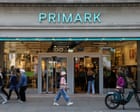
For decades, Primark stood like a giant high street fortress saying no to doorstep delivery. Now the discount retail juggernaut is racing to launch Primark home deliveries in Great Britain by December 2027, pulling the plan forward by roughly two years after profits slipped.
Honestly, that reversal tells you everything about where budget fashion sits right now. Even a chain with 511 stores across 21 countries and £9.8 billion in annual sales felt the squeeze when comparable store sales dropped 2.6% and adjusted operating profit fell. Speeding up Primark home deliveries isn't just a polite nod to convenience. It's a calculated push to reach shoppers who skip high street trips, right before Associated British Foods spins Primark off as a standalone business in December 2027.
Why Primark Speeding Up Home Deliveries Changes the Math
For years, Primark's argument against home delivery sounded dead simple. Selling a £4 T-shirt or £8 sweatshirt leaves almost zero margin once you pay to pick, pack, ship, and take back returns. Anyone who has ever worked in retail logistics knows single-item parcel economics can eat cheap apparel alive.
So what changed? According to Associated British Foods chief executive George Weston, the wider online retail playbook shifted. Delivery charges, minimum basket thresholds, and tighter return norms have become far more normal across e-commerce, letting retailers push more of the fulfilment cost onto shoppers or spread it across bigger orders.
At the same time, high street foot traffic hasn't been doing favors for physical stores. While total Primark sales for the 52 weeks to 12 September 2026 crept up—reported at £9.8 billion, helped along by new store openings—like-for-like sales dipped 2.6%, and continental Europe felt especially rough with a 4.7% comparable drop. Add price cuts, marketing spend, and digital investments into the mix, and operating profit fell (down 10% to £1.0 billion on the headline figures reported in November 2026).
Sitting on the sidelines while online fashion keeps growing looked harder to defend. Tracking from BDO highlighted in early November 2026 showed UK online fashion sales rising 9.0% in October against 2.1% in stores. Even if Weston pushed back on the idea that ultra-cheap online rivals like Shein are grabbing huge chunks of Primark's core business, rivals that blend physical stores with home delivery—like Zara, H&M, and supermarket clothing lines—are competing aggressively for every wardrobe pound.
The Hidden Trap of Trading Store Visits for Parcels
Here's the catch that a lot of casual observers miss. Click & Collect, which Primark rolled out across Great Britain stores by May 2025, had a built-in superpower: it got people through the front door.
When a shopper walks into a Primark store to pick up an online order, they pass impulse displays, socks, homeware, and seasonal items they never planned to buy. Industry coverage of Primark's digital rollout noted that around 40% of Click & Collect shoppers made extra purchases once they arrived in-store.
Home delivery cuts out that walk past the racks. A parcel dropped on a porch is convenient, sure, but it doesn't accidentally put a £6 throw pillow or holiday mug into someone's basket. To make doorstep delivery pay off instead of just cannibalizing store trips, Primark has to pull in genuinely new orders from people who live far from shops or simply refuse to browse aisles.
Inside the £90 Million Sheffield Warehouse Move
You don't turn a bulk-store apparel chain into a parcel shipper overnight just by flipping a switch on a website. The real backbone of this faster timeline is a £90 million deal struck in September 2026 with Debenhams Group to acquire the automation kit and lease assignment at a fulfilment site in Sheffield.
The deal structure itself is pretty telling. Primark agreed to pay £76.5 million at completion and £13.5 million upon vacant possession, expected early in 2027, with handover targeted around mid-2027 ahead of a December 2027 launch across Great Britain (England, Scotland, and Wales). Meanwhile, Debenhams Group gets to lean further into a capital-light marketplace model, while Primark gets ready-built automation to handle individual customer parcels alongside store replenishment.
Buying robots is only half the battle, though. In my experience looking at retail supply chains, factory-to-shelf workflows and single-parcel picking are two very different beasts:
- Supplier packaging shifts: Factories that pack big cartons for store stockrooms have to adapt so items can be picked and packed cleanly for individual homes.
- Return handling costs: Low-cost clothes often see higher return rates online when sizing varies, and every returned item has to be inspected, steamed or folded, and restocked without wiping out margin.
- Geographic boundaries: The December 2027 plan targets Great Britain, with no timeline set for mainland Europe and Northern Ireland ruled out for now.
Let's be real: a late-2027 launch window is tight. Taking over automation in mid-2027 and going live with home deliveries by December leaves zero room for sloppy software integration or carrier bottlenecks.
Timing Around the 2027 Demerger and What Comes Next
Why December 2027? Look at the calendar and another major move on ABF's slate: Associated British Foods plans to demerge Primark around December 2027, turning it into a standalone business separate from its food, grocery, agriculture, and sugar divisions.
ABF has faced serious headwinds in other corners—including sugar losses that reached £47 million in 2025/26 and were forecast to widen further—while analysts have sized up a potential standalone valuation for Primark around £9 billion. Entering a standalone chapter with a live home delivery channel in Britain gives investors a clearer omnichannel story, even if profitability on parcels will take time to prove out.
At the same time, Primark isn't abandoning physical expansion. It is still opening stores—including pushing deeper into the US, where sales grew 13% over the year to 12 September 2026, and exploring franchise expansion in markets like Saudi Arabia and Mexico. That mix of store growth, price investment, and now home delivery shows a company trying to defend its turf on multiple fronts at once.
Practical Next Steps for Retailers and Shoppers
If you run or work in retail, watch three things closely over the next twelve months rather than obsessing over the headline announcement:
- Track delivery fees and minimum baskets: Watch how Primark prices shipping and sets order thresholds once details emerge, because those rules will show how much cost shoppers are willing to absorb on low-ticket items.
- Audit your own single-order unit economics: Before rushing into home delivery on low-margin goods, map out picking speed, packaging weight, and return rates so convenience doesn't quietly drain profit.
- Protect in-store cross-selling: If you offer Click & Collect or ship-to-store, design the pickup journey to encourage add-on buys rather than handing over a bag at the door and losing the aisle visit.
And if you're a shopper wondering when you can get cheap basics sent straight to your door in Great Britain, keep an eye out toward late 2027—and expect a delivery fee or minimum spend to be part of the deal.