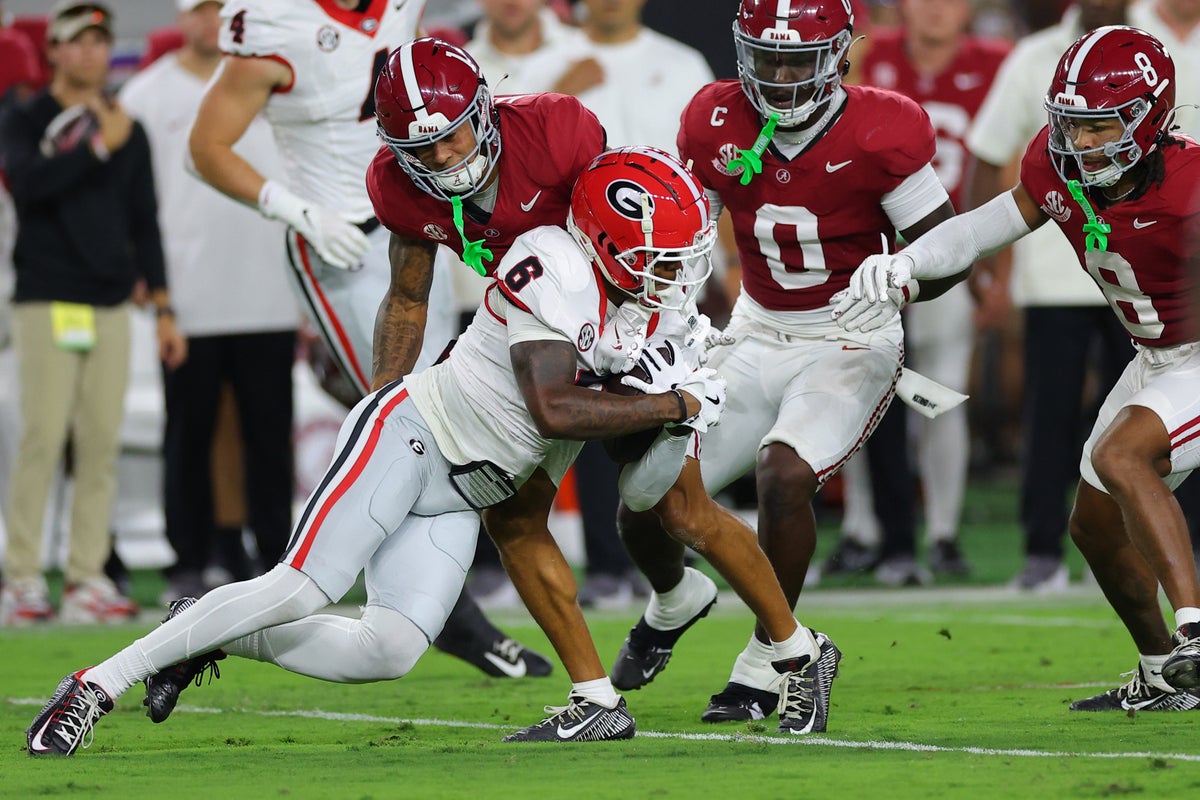
The stadium lights in Texas, Georgia, and Florida do not just illuminate a field. They blind you. If you have ever stood on the sidelines of a Power Five football game, you know the sound is not just loud; it is a physical force. It rattles your ribs. It drowns out the voice in your head. For a nineteen-year-old kid standing in the tunnel, waiting to run out into a sea of eighty thousand screaming fans, that noise feels like love.
But love in college sports has always been a transactional thing.
For decades, the deal was simple, if deeply flawed. The athletes gave their bodies, their knees, and their youth. In return, the universities gave them a stage, an education, and a chance at the lottery ticket of a professional career. It was an arrangement that built billion-dollar television networks, funded palatial training facilities, and turned coaches into the highest-paid public employees in their respective states. The machine ran smoothly because everyone played their part.
Then, the rules outside the stadium changed.
When the NAACP issued a sweeping call for Black student-athletes to reconsider signing with public universities in states that roll back diversity, equity, and inclusion (DEI) initiatives, it was not a sudden burst of administrative anger. It was a calculated strike at the engine room of the entire system. Derrick Johnson, the president of the organization, did not mince words. He pointed directly at the legislative halls where laws were being signed to dismantle DEI offices, fire staff, and defund programs that supported minority students.
The message was clear: If a state does not value your history, your identity, or your protection when you walk off the field, you should not give them your talent when you walk onto it.
Consider a hypothetical recruit named Marcus. Marcus is a five-star cornerback from Atlanta. He can run a forty-yard dash in four-three seconds. He has a vertical leap that defies gravity. To the coaching staff at a major university in a state passing restrictive legislation, Marcus is a savior in cleats. They sit in his living room. They eat his mother’s sweet potato pie. They promise to look after him like family.
But what happens when Marcus steps off the campus shuttle and walks into the local voting precinct?
In many of the very states where these massive athletic programs thrive, the legislature has spent the last few years passing laws that restrict voting access. They have cut early voting hours. They have banned water handouts to voters waiting in line. They have made it harder to register, harder to vote by mail, and easier to purge voter rolls.
This is the invisible wall. On Saturday, Marcus is a hero. On Tuesday, he is a threat.
The contrast is jarring. A young man can carry a football across a goal line to the roar of a stadium filled with people who voted for politicians who made it harder for that young man’s grandmother to cast a ballot. It is a cognitive dissonance that hurts if you think about it too long. And for a long time, the system ensured that athletes did not have the time or the space to think about it.
The playbook was always to keep your head down. Focus on the film. Study the playbook. Do not say anything controversial. Don’t ruin your draft stock.
But the current generation of athletes is different. They grew up watching the NBA bubble protests. They saw the murder of George Floyd. They understand their market value in a way their predecessors never could, thanks to the advent of Name, Image, and Likeness (NIL) deals. They know that without them, those shiny new facilities are just empty concrete caverns.
The NAACP’s call to action is an attempt to weaponize that economic reality. It is a recognition that the only language a multi-billion-dollar industry truly understands is leverage.
Look at the numbers to understand the sheer weight of this leverage. In the Southeastern Conference, the undisputed crown jewel of college football, Black athletes make up a massive majority of the rosters in the revenue-generating sports of football and men’s basketball. They are the product. They are the ones putting their bodies on the line for the television contracts.
When a state like Texas passes Senate Bill 17, effectively banning DEI offices at public universities, it doesn't just affect the academic staff. It signals a cultural shift. It tells the student body—and the athletes who represent it—that the institutions housing them are no longer permitted to actively protect or cultivate their distinct spaces.
The universities argue that athletic departments are separate ecosystems, shielded from the political winds blowing through state capitols. They point to their internal support systems, their academic advisors, and their player development programs. They argue that a young man like Marcus will still be taken care of.
That argument falls apart the moment an athlete steps outside the facility gates.
A player cannot spend his entire life inside a football facility. He has to live in the community. He has to interact with local law enforcement. He has to navigate a world where his jersey number no longer protects him. When the state actively works to diminish the political power of that player's community through voting restrictions, the university's internal support systems look less like a shield and more like a gilded cage.
The tension here is not new. It is the continuation of a long, painful American tradition of asking Black performers to sing, dance, run, and jump while ignoring the reality of their lives when the music stops.
Think back to 1968. Tommie Smith and John Carlos raised their fists on the podium in Mexico City. They were vilified. They were stripped of their medals. They were told to keep politics out of sports. The response from the establishment has always been the same: perform for us, but do not challenge us.
What the NAACP is suggesting is a reversal of that dynamic. They are asking athletes to use the ultimate power of refusal.
It is easy to underestimate the courage this requires from a teenager. Choosing a college is the most important decision a young athlete will ever make. It dictates their financial future, their network, and their path to adulthood. To ask a high school senior to walk away from their dream school—the school they grew up watching, the school their friends go to—because of a voting rights bill passed in a state capitol hundreds of miles away is an immense ask.
It requires the athlete to look past the immediate gratification of the stadium lights and see the long-term stakes of the society they are helping to build.
The pushback against this movement is predictable. Critics argue that sports should be a unifier, a meritocracy where the only things that matter are the color of your jersey and the score on the board. They claim that bringing voting rights and DEI debates into the recruiting process ruins the purity of the game.
This argument is historical amnesia at its finest. College sports have never been pure. They have always been deeply political. The integration of southern football rosters in the late 1960s and 1970s was not done out of a sudden burst of moral enlightenment; it happened because all-white teams kept losing to integrated teams from the North and West. Progress was forced by the scoreboard.
Now, the battle is shifting from the scoreboard to the spreadsheet.
If a handful of elite recruits—just a dozen five-star players—decide that they will not play in states that suppress the vote or dismantle diversity programs, the balance of power shifts instantly. If those players choose instead to attend universities in states that protect those rights, or if they choose to elevate Historically Black Colleges and Universities (HBCUs), the talent pool migrates.
When the talent migrates, the wins migrate. When the wins migrate, the television revenue follows.
That is the invisible thread connecting a voting booth in a rural county to the multimillion-dollar bonus of a head coach. The politicians who pass these laws often rely on the cultural capital of these football programs to rally their base. They wear the team colors on Saturdays. They sit in the luxury boxes. They celebrate the championships as if they were their own achievements.
The NAACP is trying to cut that cord. They want to make it impossible for a politician to celebrate the labor of Black athletes while systematically undermining the rights of Black citizens.
The true weight of this struggle is carried by the families. Imagine the conversation at a kitchen table. A mother looks at her son. She sees his talent, his drive, and the life-changing money that is suddenly within his reach. She also remembers what her parents went through to secure the right to vote. She knows the history. She sees the news.
She has to ask herself: Am I sending my child to a place that views him as a human being, or am I sending him to a place that views him as an asset?
This is not a question that can be answered by a glossy recruiting brochure or a virtual reality tour of a locker room. It cannot be solved by an NIL deal or a promise of playing time. It is a fundamental question of dignity.
The silence from many coaches on this issue is deafening. Men who are paid seven and eight figures to lead young men, men who frequently use corporate catchphrases about "character," "family," and "manhood," suddenly find themselves struck dumb when asked about the laws passed in their own backyards. They hide behind the shield of neutrality. They say they are just focused on the next opponent.
But neutrality in the face of systemic erasure is a choice. It is a statement that the status quo is acceptable as long as the checks keep clearing.
The conflict will not disappear with the next signing day. The legislative trend toward restricting voting access and rolling back civil rights protections shows no signs of slowing down. As long as those laws continue to be written, the stadium will remain a battleground.
The young men walking through those tunnels have a decision to make that goes far beyond any scheme or coverage rotation. They have to decide what their sweat is worth. They have to decide if the roar of a crowd that wants their labor but rejects their rights is worth the price of admission.
The next time you watch a Saturday afternoon game, look past the flying football and the colorful pageantry. Look at the faces of the players on the field. Understand that beneath the helmets and the pads, a quiet calculation is taking place. The game on the field is simple. The game off it is for the future of the country.
The scoreboard is ticking. The ball is in their hands.