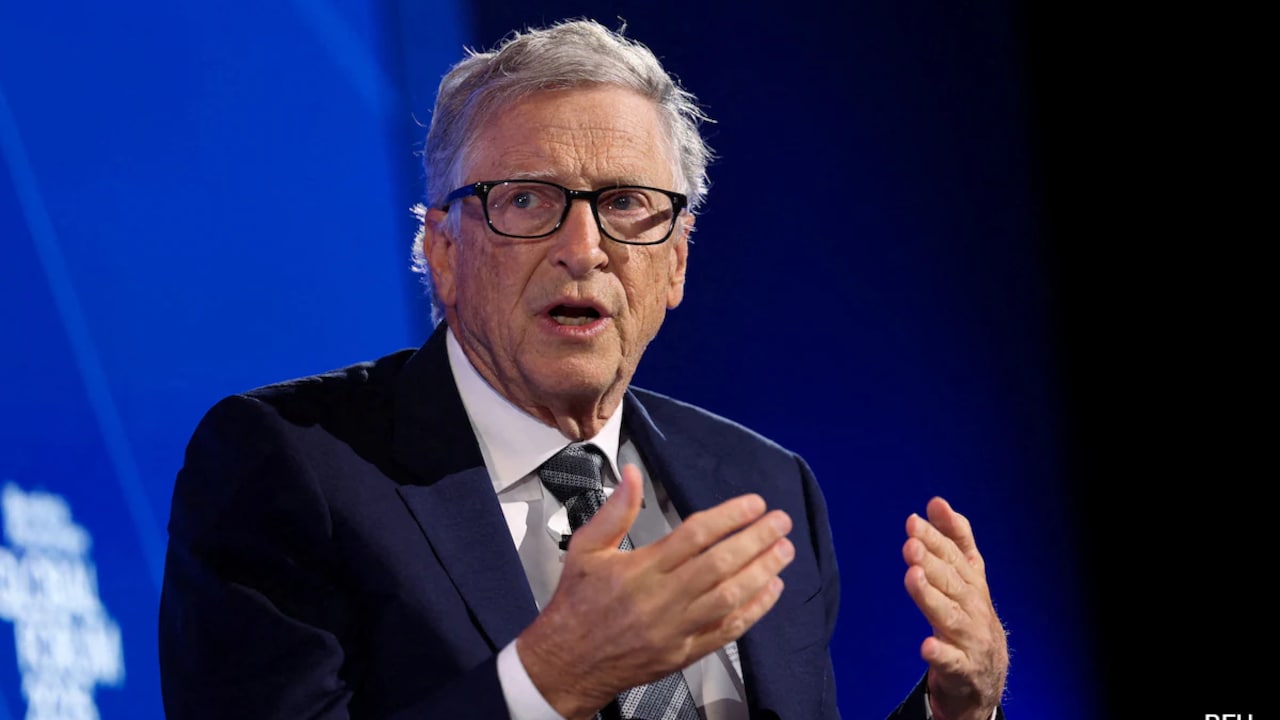
Bill Gates spent nearly six hours answering questions behind closed doors before the House Oversight Committee, trying to dismantle a narrative that has threatened his life’s work. The billionaire philanthropist insisted to lawmakers that he never witnessed criminal conduct, never visited Jeffrey Epstein's private island, and never victimized anyone. He termed his multi-year association with the convicted sex offender a grave error in judgment, driven entirely by a desire to raise billions for global health initiatives. Yet the transactional realities buried in recent Justice Department file dumps paint a far more complex picture of how power operates at the highest echelons of global wealth.
The relationship was not a momentary lapse. It was a calculated, multi-year alignment that began in 2011, a full three years after Epstein pleaded guilty to soliciting prostitution from a minor in Florida.
To understand how the co-founder of Microsoft, a man legendary for his analytical rigor, could fall into orbit with a disgraced financier, one must look past the simple explanation of a naive tech icon being duped. The alliance operated on a sophisticated framework of mutual leverage. Gates sought access to a shadow network of ultra-high-net-worth individuals for whom Epstein managed tax structures and estate planning. Epstein, conversely, needed the ultimate reputational shield, a public association with the world's premier philanthropist, to wash away the stain of his 2008 conviction and regain access to polite society.
The strategy worked for years. Between 2011 and 2014, Gates and his inner circle held numerous meetings with Epstein across New York, Washington, Paris, and Germany. Gates even utilized Epstein's private aircraft in 2013, despite later downplaying the social nature of their interactions.
The cracks in this arrangement appeared long before congressional investigators began demanding answers. Internal friction within the Bill and Melinda Gates Foundation mounted as early as 2013, when Melinda French Gates expressed severe misgivings about Epstein. The warnings were ignored. Gates continued the dialogue for another year, chasing a massive global health fund that Epstein promised to mobilize but never actually delivered.
A critical turning point occurred when the professional relationship dissolved into blackmail. During his closed-door testimony, Gates revealed that after he severed contact in late 2014, Epstein attempted to weaponize sensitive personal data. Specifically, Epstein discovered that Gates had been unfaithful in his marriage, including an affair with a Russian bridge player. Epstein had previously paid for this woman's software coding tuition and later demanded reimbursement from Gates in an email that carried an implicit threat.
Justice Department documents uncovered draft emails from 2013 written by Epstein to himself, mimicking resignation letters for Boris Nikolic, Gates's former science adviser. The drafts referenced facilitating illicit trysts and managing marital disputes. It was an insurance policy. Epstein was archiving leverage, a standard practice in his operations to ensure compliance from the elite. Gates claimed the pressure campaign failed, but the existence of these records highlights the danger of entering a transactional alliance with a figure whose primary currency was human compromise.
The reputational damage to the Gates Foundation is measurable. For an institution that relies on its moral authority to orchestrate global immunization programs and poverty alleviation, a connection to a sex trafficker erodes the institutional trust required to broker international deals. Bipartisan lawmakers noted that Gates was combative during parts of the interview, pushing back on why he failed to apply basic institutional scrutiny to an individual whose criminal history was a matter of public record.
The defense offered by Gates, that he simply did not comprehend the full scope of Epstein's crimes at the time, faces deep skepticism from critics. In the elite corridors of international finance, information is the most accessible asset. The failure to vet was not an oversight. It was a conscious choice to prioritize capital acquisition over ethical alignment.
The House Oversight Committee's broader investigation into the systemic failures of federal law enforcement regarding the Epstein network will continue to drag high-profile figures into the light. For Gates, the reckoning involves a painful public untangling of his philanthropic ambitions from a dark web of kompromat and leverage. Wealth can buy access to almost any room on earth, but it cannot cleanly erase the ledger when the cost of entry involves compromising the very integrity an entire legacy is built upon.