The rain in the Solukhumbu district does not fall like water anymore. It hits the corrugated tin roofs with a sharp, frantic rattle, sounding less like weather and more like shrapnel.
Lakpa stands on the ridge, watching the gray mist swallow the tail of the Dudh Kosi river. He is fifty-four years old, though his hands look seventy, carved by decades of hauling heavy packs up vertical granite and squinting into the blinding glare of Himalayan snowfields. Thirty years ago, the glacier behind his village was a monolithic wall of blue-white ice that reached halfway down the valley. Today, it is a graveyard of gray moraine, weeping dirty water into newly formed, unstable lakes that threaten to burst their banks at any moment.
"The mountain is tired," Lakpa says, his voice a low gravel rasp. He does not use scientific terms. He does not talk about parts per million of carbon dioxide, or radiative forcing, or global temperature anomalies rising past the 1.5-degree threshold. He simply points to the barren slopes where potatoes refuse to grow in the warming, depleted soil, and to the stone walls of his ancestral home cracking as the foundation shifts beneath a thawing earth.
Down in the concrete halls of international climate summits, thousands of diplomats gather year after year to draft sweeping declarations. They speak in polished acronyms. They design intricate carbon markets, establish long-term emission reduction trajectories, and debate the finer points of multilateral architecture. They pledge allegiance to ambitious temperature targets that stretch out toward the middle of the century, painting a picture of a controlled, orderly transition away from fossil fuels.
Paper does not hold back water.
While negotiators in air-conditioned rooms argue over the exact wording of text paragraphs regarding emission cuts, communities like Lakpa’s are living inside an emergency that has already arrived. Nepal is responsible for a fraction of a fraction of global greenhouse gas emissions. Its people drive almost no coal plants, fly very few private jets, and consume a microscopic share of the energy that powers the industrialized world. Yet the Himalayas are warming at a rate significantly higher than the global average. The glaciers—the water towers of Asia, feeding billions of lives downstream across South Asia—are disappearing.
This is the central absurdity of the modern climate conversation. We treat the crisis as a future accounting problem, a ledger that can be balanced by 2050 through distant offsets and bureaucratic promises, while the roof is actively caving in on people who never lit the fire.
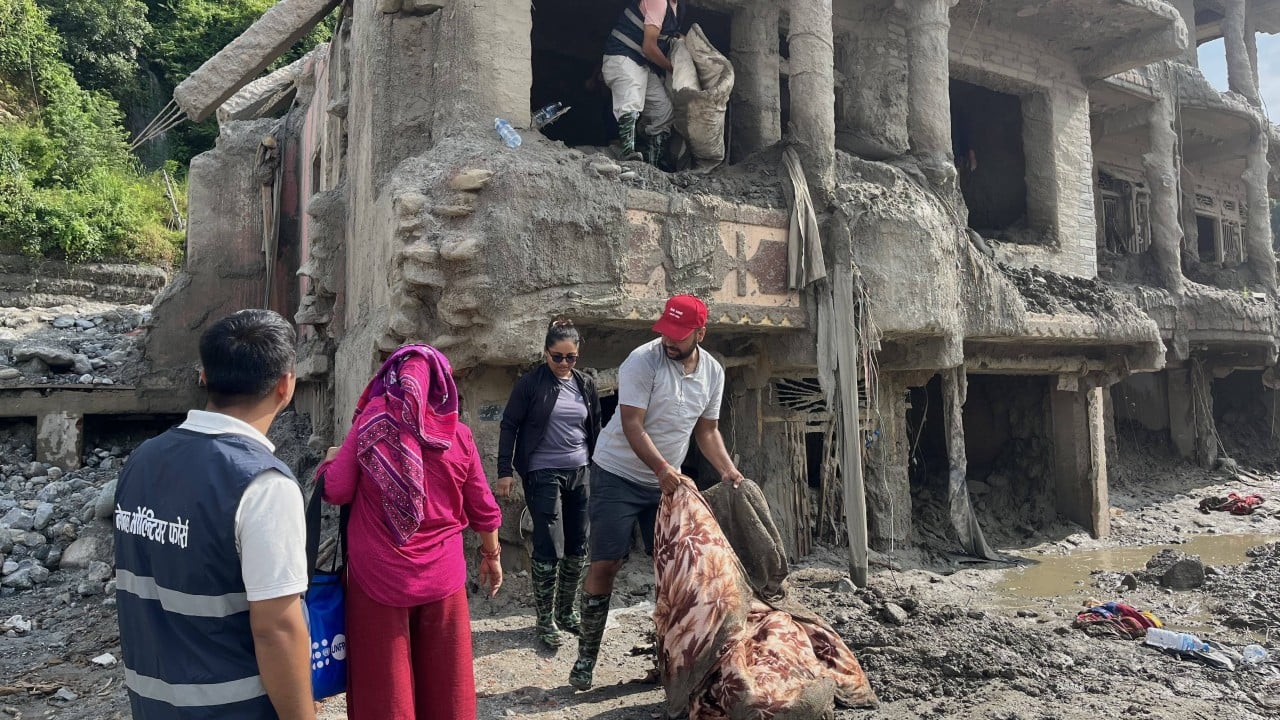
Consider what happens when a glacial lake outburst flood rips through a mountain settlement. Bridges vanish in seconds. Hydroelectric micro-plants, built with meager local savings and foreign aid grants, are crushed to powder. Fields are buried under boulders and silt. When the flood recedes, it leaves behind a vacuum of debt, displacement, and quiet despair.
At COP31 and the summits leading up to it, government delegations routinely step up to microphones to announce grand new climate pledges. They promise billions for global climate action. But peel back the diplomatic polish, and a stark, grinding reality emerges: most of this money arrives as loans, not grants.
Let that sink in. A nation whose villages are washed away by water melting from glaciers liquefied by foreign industrial emissions is offered the "privilege" of borrowing money to clean up the mess. They are told they can take out high-interest loans to build gabion walls, relocate schools, and reinforce riverbanks. They are forced to mortgage their futures to survive a crisis they did not create.
Debt is not aid. Loans are not justice.
Lakpa does not care about carbon credits. He cares about whether his grandchildren will have drinking water next spring. He cares about whether the trail that brings tourists to his lodge will wash out again before the trekking season begins. He needs resources that can be deployed immediately, without the labyrinthine paperwork of international financial institutions that demand endless feasibility studies while communities wash downstream.
The international climate finance architecture is built for banks, not for people. It is designed to minimize risk for wealthy donor nations while imposing maximum administrative burdens on impoverished countries with depleted civil services. A tiny mountain municipality cannot compete with multinational corporations for consulting firms to write grant proposals. By the time a climate resilience fund trickles down through the United Nations bureaucracy, regional banks, and national ministries, a fraction of a penny reaches the ground where the shovel actually hits the dirt.
We have built a system that rewards eloquence over urgency.
If you walk through the alleyways of Kathmandu during the monsoon, you see the other side of this story. You see urban drainage systems overwhelmed by erratic, torrential downpours that drop a month's worth of rain in a single afternoon. You see informal settlements along the riverbanks swept away in the dead of night. Families salvage sodden mattresses from the mud, drying them on concrete dividers in the gray morning light.
These are not isolated weather events. They are the daily manifestations of a destabilized planetary system. And they require an entirely different kind of response than the one currently on offer from global capitals.
Actual cash. Direct, unencumbered, unconditional resources placed into the hands of local governments and community cooperatives. Not complex financial instruments. Not green bonds that require sovereign guarantees. Cash to build seawalls, reinforce slopes, restore indigenous forest cover, and relocate vulnerable hamlets before the next flash flood arrives.
The industrialized world often views aid as an act of charity, a generous gesture bestowed upon the unfortunate out of the goodness of our collective heart. That perspective is a comforting illusion. It frames the rich as saviors and the vulnerable as passive victims waiting for a handout.
The truth is much sharper. It is debt.
When a nation builds its wealth by pumping centuries of carbon into a shared atmosphere, it incurs a profound ecological liability to the rest of the world. The melting of the Himalayas is not a natural disaster; it is a manufactured consequence. Every ton of steel forged and every barrel of oil burned in distant economic powerhouses has a direct, physical translation in the height of the glacial lakes above Lakpa’s village.
To withhold direct financial support under the guise of fiscal prudence or bureaucratic oversight is not just callous; it is a profound moral failure. It is the equivalent of burning down your neighbor's house and then offering to sell them a garden hose at market interest rates.
We stand at a strange historical crossroads. The science has never been clearer, the warnings have never been louder, and the human cost has never been more visible. Yet the political machinery remains sluggish, trapped in a mindset of incrementalism and national self-interest.
Change will not come from another polished communique or another recycled pledge to do better by 2050. It will come when citizens in wealthy nations begin to understand that climate justice is not a distant abstraction about polar bears or distant ice caps. It is about whether a grandfather in the Solukhumbu can stay in the home his ancestors built, or whether he will be driven down into the crowded, unforgiving streets of the capital as a climate refugee.
The mist is rolling back down the valley now, shrouding the jagged peaks in a thick, wet wool. Lakpa turns away from the ridge and walks slowly back toward his lodge, his boots crunching on the loose slate of the path. He stops for a moment to check a low stone wall he built by hand last autumn to divert the runoff from the melting snow above. It is holding, for now. But the mountain keeps warming, the water keeps rising, and the clock keeps ticking down to a future we are writing together, whether we choose to read the pages or not.