The wind off the Kotzebue Sound does not care about deadlines. It slices across the tundra, biting through heavy canvas and frozen breath, carrying with it the quiet, immense isolation that defines life in rural Alaska. For Martha, living in a community accessible only by small aircraft or seasonal ice roads, participating in an election has never been a matter of walking down the block to a local school gymnasium. It is an exercise in logistics, patience, and a deep-seated faith in invisible systems.
She filled out her primary ballot weeks ago. She licked the envelope, checked the witness signature, and handed it over to the local postal handler, trusting that small propeller planes, sorting facilities, and postal trucks would bridge the vast, unforgiving expanse between her kitchen table and the state capital.
She assumed her voice would travel. She was wrong.
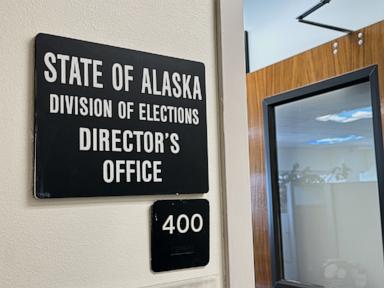
When the Alaska Division of Elections published its final accounting, dozens of ballots from remote hubs like Kotzebue, Igiugig, and Naknek arrived too late to be legally opened. They sat in transit bins while state law ticked down its unforgiving clock. The official explanation was dry, administrative, and clinical: mail delivery delays.
Logistics. Transit friction. Weather windows.
Behind those bureaucratic terms lies a sobering reality. When a state relies on postal infrastructure to enfranchise citizens living off the road system, geography stops being merely a physical challenge and becomes an active participant in political exclusion.
Consider what happens when a ballot is dropped into a rural mailbox. In places where mail moves once or twice a week depending on the temperament of the Arctic weather, a single cancelled flight due to blinding snow or impenetrable fog is not an inconvenience. It is a disenfranchisement event. The envelope misses the regional connection. The postmark dates slip past the statutory deadline. And somewhere in a secure room in Juneau, a stack of envelopes is set aside, unopened and uncounted, because the calendar moved faster than the mailbag.
The Alaska Division of Elections pointed directly to the U.S. Postal Service, noting that dozens of votes across seven specific communities were rendered void simply because they arrived after the statutory cutoff. Among them, Kotzebue, Igiugig, and Naknek alone accounted for over sixty discarded voices. Sixty individual intentions—opinions on candidates, futures, and policies—silenced not by a lack of caring, but by the sluggish geometry of distance.
This is the hidden cost of treating voting as a standard delivery service.
We have built an electoral apparatus that assumes uniform conditions. It assumes paved roads, daily postal sorts, and predictable transit hubs. When applied to a state the size of Alaska—where communities cling to coastlines and riverbanks hundreds of miles apart—that assumption fractures.
Think of it like an intricate mechanical watch dropped into deep mud. Every gear may be meticulously crafted, and every spring perfectly tensioned, but the environment chokes the mechanism. The rules governing ballot receipt dates are written for urban centers where a letter mailed on Monday arrives on Tuesday. They do not account for a mail sack stuck on a tarmac in a whiteout while a legal window slams shut.
Voters in these regions know the vulnerability intimately. They feel the friction every time they order vital medications, wait for winter heating fuel, or attempt to participate in the civic life of a country that often forgets how wide its borders really stretch. When their ballots miss the count, it feels less like an administrative accident and more like a structural erasure.
The state blames the mail. The postal service points to logistical complexities. But the ballot remains uncounted.
Democracy is supposed to be an unbreakable contract between the individual and the governed. Yet in the remote corners of the North, that contract is routinely subjected to the whims of jet fuel prices, runway conditions, and regional sorting bottlenecks.
Martha will vote again. She will fill out the envelope, seal it tightly, and hand it over to the postal worker with the same quiet hope. But until the system evolves to recognize the unique geography of its most isolated participants, her vote—and the votes of countless others living at the edge of the map—will remain hostage to the weather and the mail truck.