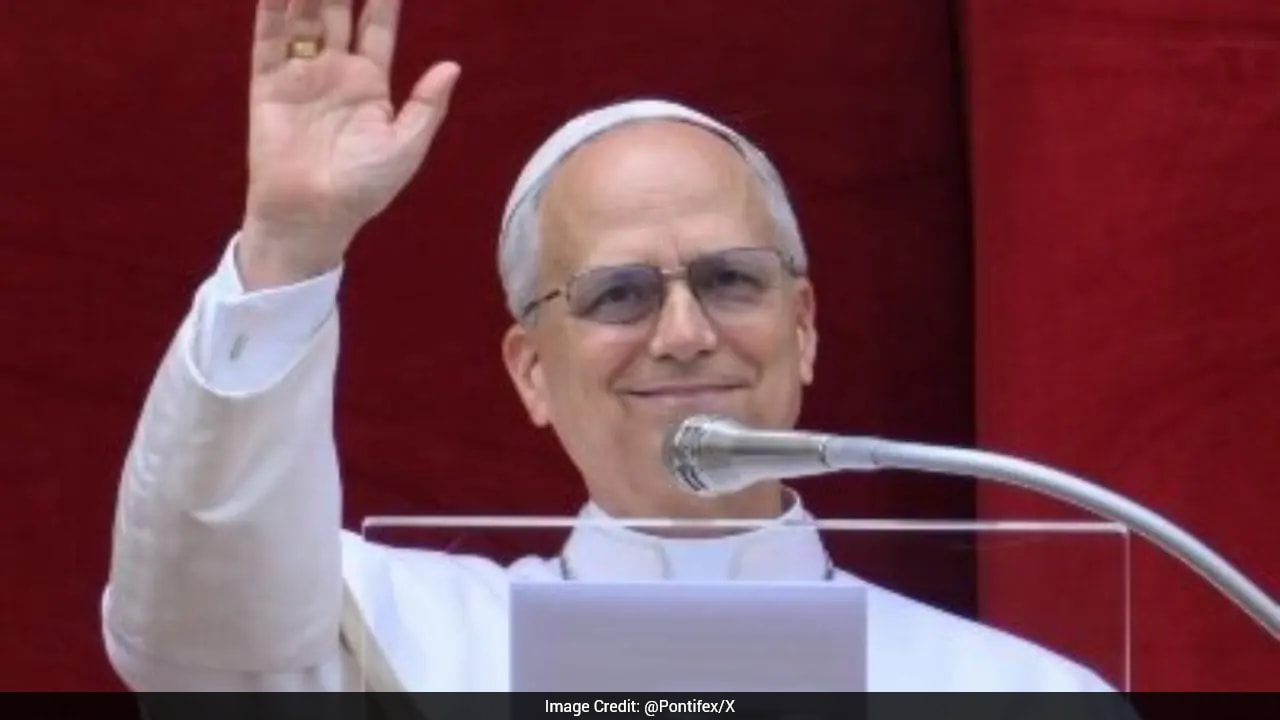
Pope Leo XIV has issued a stark warning to the global technology sector, insisting that artificial intelligence must remain strictly a tool under direct human supervision rather than an autonomous decision-maker. His directive targets the rapid deployment of black-box algorithms in high-stakes fields like warfare, healthcare, and finance, arguing that delegating moral and life-altering choices to machines erodes human dignity and accountability. For executives and engineers building autonomous systems, the Vatican's stance is not merely a theological reflection; it is a direct challenge to the current trajectory of Silicon Valley, where removing human bottlenecks is often treated as the primary metric of efficiency.
The timing of this intervention is deliberate. Across corporate boardrooms and defense ministries, the push toward "agentic" AI—software capable of executing multi-step tasks without constant human prompting—has accelerated. Tech leaders routinely pitch full automation as the ultimate goal. Pope Leo XIV is stepping directly into that current, drawing a hard ethical boundary. Machines calculate probabilities. Humans bear moral responsibility. When those two functions blur, society loses the ability to hold anyone accountable when things inevitably break.
The Theology Behind the Name and the Warning
Papal names are never accidental. By choosing the name Leo XIV, the pontiff signaled an immediate ideological link to Pope Leo XIII, who led the Catholic Church from 1878 to 1903 during the height of the Second Industrial Revolution. In 1891, Leo XIII published Rerum Novarum, a foundational text that confronted the brutal realities of unchecked industrial capitalism, factory automation, and the displacement of human workers. That document argued that technological and economic progress means nothing if it strips human beings of their agency and reduces them to disposable cogs in a machine.
More than a century later, Leo XIV is applying that exact framework to silicon and code. The tools have changed from steam engines and assembly lines to neural networks and predictive models, yet the underlying conflict remains identical. Industrialists in the nineteenth century argued that factory conditions and wage suppression were simply the natural, unstoppable laws of the market. Today, venture capitalists and AI lab directors make a remarkably similar argument, claiming that the march toward total algorithmic autonomy is an inevitable force of nature that regulators and ethicists should not slow down.
The Vatican rejects that determinism. Technology is built by human hands, funded by human capital, and deployed by human institutions. Nothing about its trajectory is inevitable. By framing AI strictly as an instrument—no different in moral status from a hammer, a printing press, or a scalpel—Pope Leo XIV strips away the pseudo-religious mystique that Silicon Valley often wraps around its largest models. An algorithm does not possess wisdom, empathy, or a conscience. Treating its statistical outputs as objective truth is a dangerous abdication of human judgment.
Why "Human in the Loop" Is Failing in Practice
On paper, almost every major technology company already agrees with the Pope. You will struggle to find a chief executive who publicly advocates for reckless, unsupervised AI. Corporate ethics pledges are packed with reassuring phrases about keeping a human in the loop.
The reality inside modern workplaces looks very different.
When an organization introduces an automated system to screen resumes, approve mortgages, or flag medical anomalies, human oversight frequently degrades into a rubber stamp. This phenomenon, well-documented by human-factors engineers and cognitive psychologists, is known as automation bias. When a software interface presents a confident-looking score or recommendation, human operators tend to defer to the machine rather than risk the professional friction of overriding it. If the algorithm is right 95 percent of the time, the human reviewer stops paying close attention during the critical 5 percent when the system hallucinates or relies on flawed correlations.
Consider a hypothetical example in a busy hospital emergency department. Imagine an AI triage system designed to prioritize patients based on incoming vital signs and electronic health records. Under intense time pressure, a nurse sees the system assign a low-risk score to a patient presenting subtle, atypical symptoms of a cardiac event. Because the software has proven reliable over thousands of previous shifts, the nurse trusts the dashboard over their own clinical intuition, delaying care. On paper, a human was in the loop. In practice, the machine made the call, and the human merely absorbed the legal liability.
Pope Leo XIV's demand for genuine human supervision cuts directly through this corporate theater. True supervision requires more than a tired worker clicking "approve" on an algorithmic queue every four seconds. It requires systems designed to augment human deliberation rather than replace it, giving people the time, authority, and transparent information needed to challenge a machine's output.
The Accountability Vacuum in High-Stakes Systems
The Vatican's sharpest critiques are reserved for domains where errors cannot be patched with a software update. Lethal autonomous weapons systems, predictive policing, and automated judicial sentencing sit at the top of that list.
In military applications, the drive for speed threatens to push human commanders entirely out of the decision chain. Modern missile defense and drone swarms operate at velocities that outpace human reaction times. Defense contractors argue that if an adversary uses fully autonomous strike systems, a nation must deploy equally autonomous defenses to survive. Once both sides hand lethal authority to algorithms, the risk of an accidental, machine-driven escalation spikes dramatically. A sensor glitch or misinterpreted radar signature can trigger a kinetic response before a human officer even finishes reading the alert.
Leo XIV's insistence on human control targets the moral void created by these systems. In traditional warfare and jurisprudence, a clear chain of command ensures that specific individuals can be held responsible for war crimes, wrongful convictions, or negligent deaths. Autonomous systems fracture that chain. If an unsupervised drone strikes a civilian target, or if a proprietary lending algorithm systematically denies credit to qualified minority applicants, who answers for the harm?
The software engineers point to the training data. The executives point to the complexity of deep learning architectures that even their creators cannot fully audit. The end users claim they were simply following the system's guidelines. Everyone involved hides behind the math, creating a convenient accountability vacuum where massive harm occurs without a single human being bearing moral or legal guilt. The Church's position is uncompromising: if a task carries moral weight, a human must remain firmly in charge of the final decision, precisely so that moral responsibility cannot be laundered through code.
Where the Vatican's Stance Clashes With Economic Reality
While Pope Leo XIV's argument carries immense moral clarity, implementing it across the global economy runs headfirst into brutal financial incentives. The entire business model of the current AI boom relies on labor substitution and scale.
Companies do not spend tens of billions of dollars on data centers and custom semiconductors simply to build slightly better spellcheckers. They invest that capital because they expect autonomous software to perform the work of millions of customer service agents, paralegals, software developers, radiologists, and logistics coordinators. If every AI action requires rigorous, attentive human supervision, the promised return on investment shrinks overnight.
There is also the problem of speed and complexity. In modern cybersecurity, automated defense systems detect and neutralize thousands of intrusion attempts per second. No human team could manually review and approve each firewall block in real time; waiting for human intervention would leave critical infrastructure completely exposed. Similarly, in high-frequency financial markets or power grid load-balancing, algorithms adjust variables on millisecond timescales to prevent blackouts and liquidity freezes.
A blanket rule requiring manual human sign-off for every algorithmic micro-decision is technically impossible in these environments. Critics within the tech industry argue that religious leaders and policymakers often fail to distinguish between low-level operational automation—like an anti-lock braking system in a car—and high-level moral delegation, like deciding who gets a job or who goes to prison.
Yet acknowledging that gray area does not invalidate the Pope's warning; it sharpens it. The real battle is not over whether machines should automate routine calculations. The battle is over architecture and governance. Engineers can design systems where humans set strict operational boundaries, audit outcomes continuously, and retain unambiguous kill-switches, rather than systems that operate as opaque, self-modifying black boxes.
The Quiet Erosion of Human Skill
Beyond immediate disasters like algorithmic bias or autonomous weapons, Pope Leo XIV's message points to a slower, quieter danger: the atrophy of human competence.
Skills are perishable. A pilot who relies entirely on autopilot eventually loses the tactile mastery required to land a crippled aircraft in a crosswind. A writer who outsources every draft to a language model loses the capacity to structure complex arguments independently. A doctor who leans exclusively on diagnostic software slowly dulls the pattern-recognition instincts honed over years of clinical practice.
When societies prioritize frictionless algorithmic efficiency over human effort, they steadily deskill their own populations. Over a single generation, that loss of competence becomes irreversible. If the foundational knowledge required to evaluate an AI's output disappears from the human workforce, "human supervision" becomes an empty slogan. You cannot supervise a machine doing work you no longer know how to perform yourself.
By insisting that AI remain a subordinate tool, the Vatican is defending the value of human struggle, learning, and mastery. Tools exist to extend human capability, not to render human intelligence obsolete. A telescope extends the reach of the human eye, yet an astronomer still has to interpret the light. When software stops extending human agency and starts replacing it, society trades long-term resilience for short-term convenience.
Regulation and the Road Ahead for Tech Leaders
The Vatican commands no armies and passes no binding secular laws, yet its soft power frequently shapes international regulatory frameworks. In recent years, Catholic moral theologians and Vatican diplomats have actively engaged with European Union lawmakers, United Nations committees, and Silicon Valley executives to push for binding guardrails on artificial intelligence.
Pope Leo XIV's remarks provide clear ideological ammunition for regulators drafting strict liability laws. Right now, many technology firms enjoy broad legal insulation when their software causes downstream harm, often shifting the burden onto end users through dense terms-of-service agreements. A regulatory framework built on the principle of mandatory human supervision flips that dynamic. It forces companies to prove that their systems are auditable, explainable, and structured in a way that allows real human intervention before deployment in sensitive sectors.
For industry leaders, ignoring this push is a strategic miscalculation. Public trust in major technology platforms has already eroded over privacy scandals, algorithmic radicalization, and opaque content moderation. Deploying autonomous agents across healthcare, finance, and public administration without ironclad human accountability will trigger a severe regulatory backlash the moment a high-profile failure occurs.
The choice facing engineers and executives is straightforward. They can build systems designed to obscure responsibility behind layers of automated complexity, or they can build transparent instruments that keep human judgment squarely at the center of power. Pope Leo XIV has made clear where the Church stands, leaving the architects of the digital world to answer a question no algorithm can compute for them: when the machine makes a fatal mistake, who will have the courage to sign their name to it?