Political commentators frequently attribute midterm electoral shifts to the rhetoric and strategic choices of a sitting president or dominant party figure. A recurring thesis in political commentary—exemplified by analyses suggesting that Donald Trump's midterm vulnerabilities stem directly from his own unscripted rhetoric—argues that high-variance messaging alienates swing voters while energizing a core base. Evaluating this claim requires separating partisan commentary from established political science models, examining both the structural mechanics of midterm elections and the dual-edged nature of populist communication strategies.
The Structural Baseline of Midterm Elections
Before attributing electoral outcomes to individual rhetoric, political analysts establish a baseline using historical and institutional variables. Across modern United States political history, the party holding the White House almost invariably loses seats in the House of Representatives during midterm cycles. Political scientists attribute this phenomenon to three primary mechanisms rather than the communication style of any single leader.
First, surge and decline theory explains shifts in electorate composition. Presidential elections generate high turnout among peripheral voters—individuals with weaker partisan attachments who are drawn to the polls by nationalized campaigns. Midterm elections see a sharp drop-off in these peripheral voters, leaving an electorate that is older, wealthier, and more ideologically consistent.
Second, thermostatic public opinion describes how the electorate reacts to policy implementation. Regardless of which party holds power, legislative action tends to overshoot the preferences of the median voter. As the administration enacts policies, public sentiment shifts in the opposite direction to restore ideological equilibrium, creating a structural headwind for the incumbent party.
Third, referendum voting transforms congressional races into an evaluation of executive performance. Economic indicators—specifically real disposable income, inflation rates, and unemployment—serve as primary inputs for undecided voters. When macroeconomic conditions tighten, voters penalize the party associated with the presidency, independent of the specific rhetorical framing used by party leaders.
The Rhetoric-Driven Hypothesis
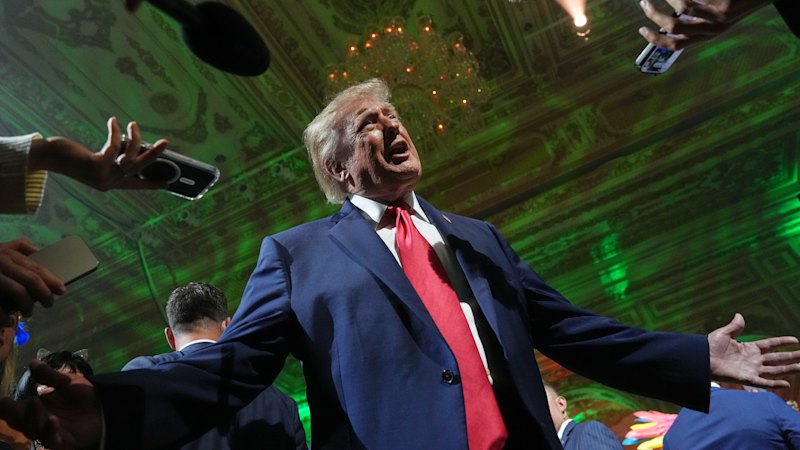
Commentary focusing on Donald Trump’s communication style—such as critiques highlighting his observation that supporters would applaud even his most off-the-cuff remarks—proposes an alternative or compounding mechanism. In this analytical framework, the central vulnerability is not merely structural, but behavioral. Critics argue that unscripted, norm-breaking rhetoric creates a specific set of electoral liabilities.
- Asymmetric Mobilization: High-intensity rhetoric maximizes turnout among a dedicated core base, yet it simultaneously acts as an organizing catalyst for the opposition. In low-turnout midterm environments, opposition enthusiasm can outweigh base loyalty, shifting margins in competitive suburban districts.
- Message Discipline Erosion: Effective midterm campaigns typically rely on localized, issue-specific messaging tailored to swing districts. When a national figure dominates the media cycle with unscripted commentary, down-ballot candidates lose control over the local information environment and are forced to respond to national controversies rather than local economic concerns.
- The Persuasion Deficit: Winning pluralities in competitive districts requires appealing to ticket-splitters and low-information independents. Critics contend that rhetoric designed to validate an in-group often relies on grievances or hyperbole that alienates voters seeking institutional stability.
Counter-Perspectives and Strategic Trade-Offs
A complete strategic evaluation must also account for the counter-arguments advanced by supporters and political strategists who view populist rhetoric as an asset rather than a liability. From this perspective, conventional political communication suffers from low salience and fails to break through fragmented media ecosystems.
Proponents of unscripted, populist messaging point to several operational advantages that traditional political frameworks often overlook.
- Attention Dominance: In an era of severe audience fragmentation, earned media value depends on generating continuous narrative momentum. Unfiltered statements bypass traditional editorial gatekeepers, ensuring that the speaker remains the central reference point of national political discourse.
- Authenticity Signaling: Many voters harbor deep skepticism toward polished, focus-grouped political speech, viewing it as calculated or insincere. Speaking without a teleprompter or departing from standard talking points signals authenticity and strength to voters who prioritize disruption over institutional norms.
- Coalition Realignment: Rather than competing solely for traditional suburban swing voters, populist messaging aims to expand the electoral map by bringing non-traditional, working-class voters into the coalition. Analysts favoring this approach argue that any losses among college-educated suburbanites are offset by durable gains among demographic groups historically aligned with the opposing party.
The Echo Chamber Feedback Loop
The tension between base mobilization and broad persuasion creates a persistent feedback loop in modern political strategy. The quote referenced in critical commentary—suggesting a dynamic where an audience applauds regardless of the substance of the remarks—illustrates the mechanics of positive reinforcement in political rallies.
In live events and partisan media ecosystems, immediate applause and engagement metrics reward escalation. Speakers receive real-time validation for statements that generate the strongest emotional reaction within the room. However, the incentives inside a partisan venue are inversely correlated with the incentives of a general electorate. What optimizes for engagement within a self-selected audience often degrades favorability ratings among median voters watching clips out of context on evening broadcasts or social media feeds.
Managing this divergence represents a core challenge for any political movement built around a charismatic leader. Disciplining the message risks dampening the organic enthusiasm that powers fundraising and volunteer networks. Conversely, allowing the feedback loop to run unchecked risks nationalizing local races around personalities rather than policy outcomes.
Evaluating Causality in Electoral Outcomes
Determining whether midterm losses are primarily driven by structural headwinds or individual rhetoric requires examining variance across different races within the same cycle. If presidential rhetoric were the sole determinant of electoral performance, losses would manifest uniformly across all districts. Instead, empirical election data consistently demonstrates significant ticket-splitting and candidate-specific variance.
In recent midterm cycles, candidates who aligned closely with national populist messaging outperformed historical baselines in rural and working-class districts, while underperforming in suburban districts where institutional norms and candidate temperament carried higher weight. Simultaneously, candidates in the same party who emphasized local governance, economic stewardship, and institutional stability often survived the broader national wave, even while sharing the same party label.
This divergence indicates that rhetoric acts as a regional multiplier rather than a uniform drag. It alters the geographic distribution of votes, concentrating support in specific demographic strongholds while increasing resistance in others.
Limitations of Single-Cause Political Analysis
Attributing complex electoral outcomes to a single individual or a single quote simplifies a multi-variable system into a linear narrative. While compelling for media commentary, single-cause explanations fail to account for critical operational factors that decide close elections.
- Candidate Quality and Recruitment: Primary elections frequently select nominees optimized for ideological purity rather than general election viability. The strength of individual challengers and incumbents accounts for several percentage points of variance in competitive seats.
- Financial Asymmetries and Ground Game: Fundraising disparities, early-voting infrastructure, and ballot-harvesting operations in states where permitted directly influence turnout margins independently of national media narratives.
- Redistricting and Institutional Maps: Decennial redistricting alters the baseline partisan lean of dozens of congressional seats, insulating incumbents and reducing the total number of genuinely competitive races before a single campaign speech is delivered.
Strategic Implications for Campaign Architecture
For campaign strategists and political analysts evaluating future midterm cycles, the interplay between structural fundamentals and high-variance rhetoric dictates specific operational adjustments. Relying solely on base enthusiasm ignores the mathematical reality of suburban swing districts, while attempting to suppress a leader's core communication style risks demoralizing the grassroots infrastructure.
The optimal strategic posture requires message compartmentalization. National figures must maintain the high-salience, earned-media dominance that energizes their base, while campaign committees aggressively insulate down-ballot candidates in swing districts by funding localized, issue-specific media buys focused on macroeconomic performance and cost-of-living metrics. Ultimately, electoral outcomes depend on whether a party can harness the turnout benefits of populist energy without allowing national controversies to overwhelm local voter priorities.