Saffron.
That is the first thing that hits you before the camera even leaves your neck, a bitter-sweet, peppery cloud rising off thousands of orange cempasúchil petals pressed into damp earth and poured across cool stone slabs. Bees hum low over the mounds. Wax bleeds down tall glass veladoras in thin, milky ribbons. Then comes the sharp, resinous bite of copal smoke curling past a stack of old silver-gelatin portraits, each one curling slightly at the corners from decades of humidity and grief.
People come looking for pictures of Día de los Muertos expecting a riot of neon paint and sugar skulls—something bright, theatrical, and neatly packaged for a social feed. I used to think that way too, back when I first stood inside a cemetery in Oaxaca at midnight with a fifty-millimeter lens and a notebook full of questions I didn't yet know how to ask. Grief can feel like a locked room where nobody wants to say the wrong word or stare too long at someone else's sorrow. Standing among strangers tending graves with brooms, bread, and battered tin boxes of photographs made me realize how awkward—and how necessary—it is to witness mourning up close.
What follows is a true account of what happens inside those frames, anchored in the documented history and living practices of Día de los Muertos across Mexico and among diasporic families. At a couple of points, I will use a deliberate metaphor to explain how memory works, and I will introduce one clearly labeled hypothetical scenario to show how a family photograph crosses the threshold from paper to presence.
The Lie of the Pretty Picture
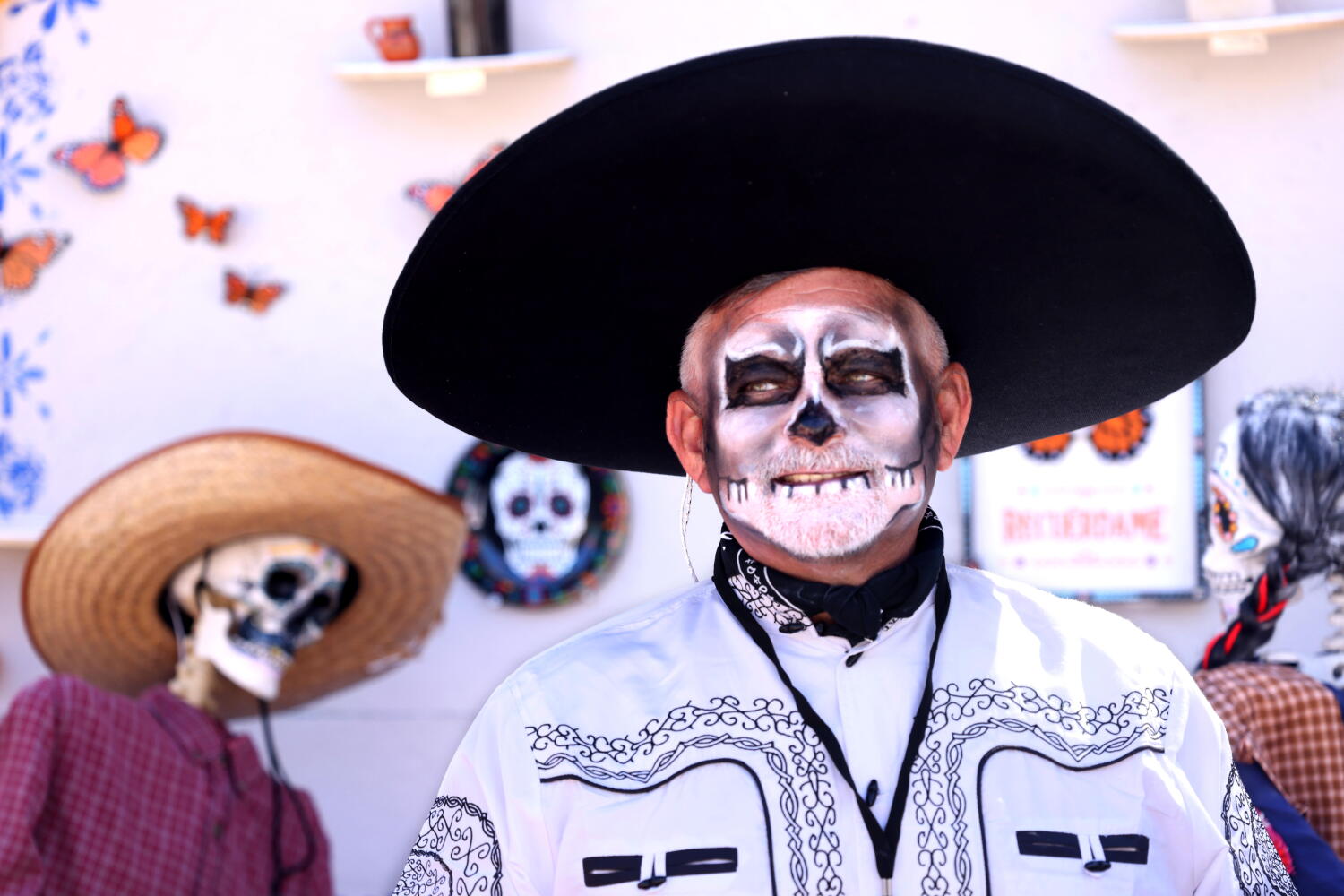
Walk past almost any gallery wall or travel blog in late October and early November, and you will see the same visual shorthand. A woman with painted cheekbones and a crown of marigolds. A row of grinning calaveras in pastel icing. Crisp, sunlit frames that look as though sadness were never invited to the party.
Color.
It is real, of course—vibrant tissue paper cut into intricate papel picado banners fluttering in the night breeze is an unmistakable part of the celebration. Yet a purely decorative image flattens the weight of the occasion. Día de los Muertos is not a Halloween costume party with a prettier palette, nor is it a solemn, black-veiled dirge modeled on Victorian mourning. Rooted in Indigenous Mesoamerican traditions—such as Mexica observances honoring ancestors—and woven together with Spanish Catholic feast days on November 1 and November 2, the observance treats death not as a final eraser, but as a continuing relationship.
When photographs only show the spectacle, they miss the quiet labor behind every frame. Before dusk settles over a family home or a municipal cemetery, someone has to sweep away dried leaves, scrub algae off headstones, bake pan de muerto dusted with sugar, cook the mole or tamales the deceased loved most, and hunt down the clearest snapshot of an uncle who passed twenty years ago.
Consider what happens next: once you stop treating these photographs as exotic street art and start reading them as family archives, every detail shifts. The marigold petals aren't just bright orange for contrast; in tradition, their vivid hue and pungent scent are believed to guide spirits back through the dark. The tallow and paraffin flames aren't mere mood lighting; they light the path. And the printed portrait sitting at the center of the ofrenda isn't a museum artifact—it is a greeting.
How Paper Becomes a Threshold
Let us use a metaphor here: a photograph on an ofrenda works less like a window into the past and more like a tuning fork. History doesn't sit frozen behind glass; when the right note is struck—a familiar laugh, a favorite dish, a crooked grin captured on cheap film in 1978—something resonant answers back inside the living.
To make that abstraction concrete, picture a hypothetical scenario. Imagine Mateo, a graphic designer in his thirties living in Chicago, laying out his grandmother Doña Elena's altar in a small apartment kitchen. He has a crisp digital portrait taken two years before she died, showing her neat silver bun and pearl earrings. Beside it, he places an older, faded snapshot from the 1960s: Elena young, sunburned, laughing with one hand shielding her eyes outside a Michoacán market, a half-eaten mango in the other. The newer photo shows who she became at the end. The older one shows who she was before sorrow or age weighed her down.
Which version does Mateo need to see on November 1?
Often, both. Grief has a way of shrinking a person down to their final months—hospital sheets, slowed steps, quiet rooms. Photographs on an altar push back against that contraction. They restore texture, motion, and youth to people whose names might otherwise become heavy nouns.
Documented traditions across Mexico emphasize that different days and elements honor different aspects of memory—from angelitos (children who died young) to adult relatives and community elders. Even within a single household, an ofrenda is layered rather than static. A child's toy car might sit beside a black-and-white wedding portrait; a shot of mezcal or a cup of hot chocolate might rest right in front of a cracked wallet-sized print pulled from an old coat pocket.
Why does that matter when you look at photographs of Día de los Muertos? Because a single image rarely tells the whole story. The real magic happens in the juxtaposition: a weathered snapshot curling in the heat of a candle flame while fresh orange petals tremble beside it.
Inside the Cemetery After Midnight
If you have never spent a night in a cemetery during Día de los Muertos, your senses will argue with your expectations.
Quiet.
Then laughter.
In communities famous for night vigils—such as those around Lake Pátzcuaro in Michoacán or towns across the Central Valleys of Oaxaca—families gather around graves from dusk until dawn. The air smells of damp soil, crushed marigold stems, sweet bread, and warm wax. People sit on folding chairs or blankets spread directly over the earth. Some pray softly; others tell stories that make their cousins snort and wipe their eyes. Children nod off against an aunt's shoulder while a radio plays an old ranchera low enough not to disturb the neighbors.
As a photographer or observer, this is where your own habits get tested. It is easy to raise a camera and treat someone else's tenderness like a film set. You have to ask yourself a hard question before pressing the shutter: am I documenting devotion, or am I interrupting it?
Respect changes how you frame the shot. Instead of zooming in aggressively on a weeping face, the truest photographs often step back and show the whole ecosystem of care—calloused hands smoothing petals around a stone cross, a framed portrait propped against a bottle of soda or a plate of calabaza en tacha (candied pumpkin), shoes kicked off beside a woven mat. You see that remembrance is physical. Knees ache on cold stone. Eyes sting from smoke. Fingers get sticky with sugar and sap.
And there is something disarming about how ordinary the people in those photos look. Most aren't models in elaborate face paint. Many are grandfathers in plaid shirts, mothers holding babies, teenagers wearing baseball caps, cousins leaning against a pickup truck in the midday sun. Seeing an everyday snapshot placed among sacred offerings collapses the distance between "tradition" and plain human love. We all know what it feels like to keep one blurry picture because it is the only one where their eyes weren't closed.
What Outsiders Miss in the Frame
A common mistake when viewing Día de los Muertos photography is assuming every vibrant skull motif or marigold display means the exact same thing everywhere. Mexico is vast, and regional customs vary widely—from the elaborate sand tapestries and cemetery vigils of central and southern states to quieter family altars kept inside homes across the north and across the border in the United States. Even the word ofrenda itself—meaning offering—carries layers of meaning shaped by local history, faith, and family habit.
Uncertainty is part of the picture, too. If you are looking at a photograph taken in a town you don't know, you won't always know the private backstory behind the items on the altar. Why is there an unlit cigarette next to that portrait? Why a pack of peppermint candies or a pair of reading glasses? Those details belong to the family. A good photograph doesn't pretend to solve every mystery; it honors the fact that some stories belong to the people who lived them.
Still, patterns emerge when you look closely across dozens of images from different years and places:
- Presence over permanence: Marigolds wilt, candles burn down to puddles, food is eventually shared or cleared away, and paper fades. The ritual is cyclical—built to be renewed each year rather than locked in amber.
- Generational dialogue: Young people arrange digital prints alongside tintypes and Polaroids, linking modern lives to ancestors they may have met only through stories.
- Joy braided with loss: Tears and jokes sit inches apart on the same blanket. You can see grief in the tilt of a shoulder and warmth in the curve of a smile without contradiction.
Look closely at any strong photograph from these nights and you will usually find that tension—the ache of absence meeting the stubborn insistence of memory. Nobody is pretending the person isn't gone. That is the whole point. If they weren't gone, there would be no need to set a place for them, light a wick, or hold their face up to the warmth of the flame.
Why These Images Stay With You
Months after November ends, long after the marigold petals have dried to brown husks and been swept into compost, certain photographs keep echoing in the mind.
Not the loudest ones. Usually it is a quieter frame: a grandmother's hand resting near the edge of a worn photograph as a candle flickers across the paper, turning ink and silver into something warm enough to hold onto for one more year.
Light.
A single small flame against dark earth, catching the edge of an old face that refuses to be forgotten.