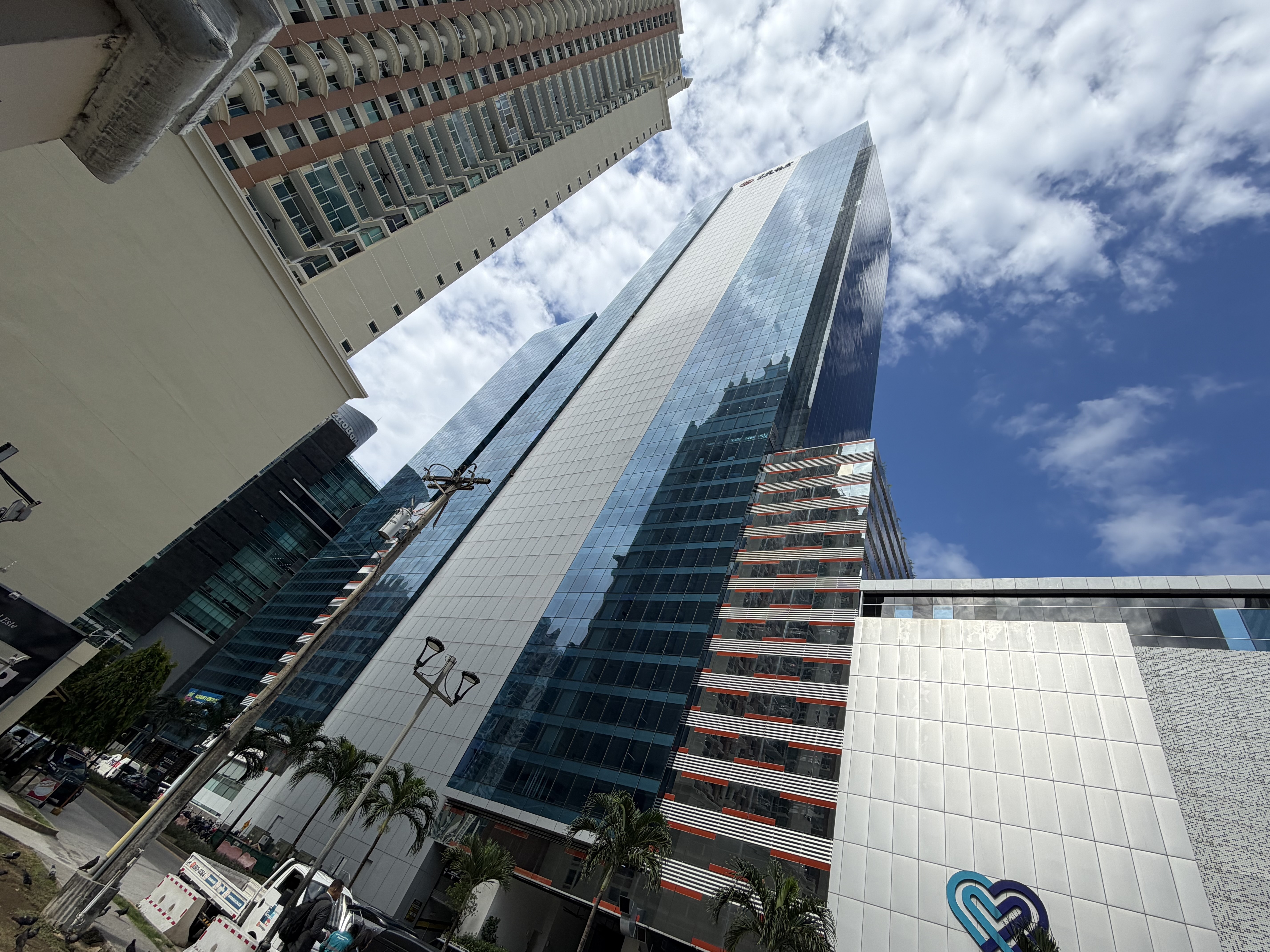
Polymarket is the most influential crystal ball in the modern financial world, yet it exists primarily as a ghost. While it processes billions of dollars in betting volume on everything from election outcomes to Federal Reserve rate hikes, its physical presence is a vanishing act. Recent attempts to track the company to its registered headquarters in Panama City reveal nothing but a maze of shell companies and empty hallways. This isn't just a quirky startup story about "digital nomads." It is a deliberate architecture of evasion designed to keep the platform operational while remaining untouchable by US regulators.
The platform has become the darling of the "rationalist" community and Wall Street alike. They argue that because people are putting real money on the line, the odds reflected on Polymarket are more accurate than any poll or expert opinion. But as the money grows, so does the scrutiny. The Commodity Futures Trading Commission (CFTC) already slapped the company with a $1.4 million fine in 2022 for operating an unregistered facility. Polymarket responded by blocking US IP addresses, at least on paper. In reality, the platform has simply retreated further into the shadows, using its Panama "base" as a legal firewall.
The Panama Shell Game
If you fly to Panama City looking for a bustling tech hub with Polymarket’s logo on the door, you will be disappointed. The address associated with the company often leads to a nondescript law firm or a shared corporate services building where hundreds of other entities are registered. This is the standard playbook for firms seeking "regulatory arbitrage." By planting a flag in a jurisdiction with lax oversight and high secrecy, a company can claim it doesn't fall under the jurisdiction of the SEC or the CFTC.
Panama has spent decades refining this service. The country offers a suite of legal structures that allow for "nominee directors"—people paid to put their names on corporate documents so the real owners don't have to. For a prediction market that frequently dances on the edge of legality, this anonymity is a feature, not a bug. It creates a jurisdictional gap. If a US regulator wants to subpoena records or freeze assets, they hit a wall of Panamanian privacy laws and bureaucratic red tape.
The irony is that Polymarket markets itself on the "transparency" of the blockchain. Every bet is recorded on the Polygon network. Every payout is visible to anyone with a block explorer. But while the data is transparent, the humans behind the curtain are opaque. This creates a dangerous imbalance. Users trust the math, but they have no recourse if the entity managing the interface or the "oracle"—the mechanism that decides who won a bet—disappears into the Panamanian jungle.
The Illusion of the Geofence
Polymarket claims it does not allow Americans to trade. This is the central pillar of its legal defense. If you visit the site from a New York IP address, you are greeted with a polite message saying the service is unavailable in your region.
It takes approximately thirty seconds to bypass this.
The use of Virtual Private Networks (VPNs) is an open secret in the crypto world. More importantly, Polymarket’s liquidity often comes from "whales"—high-net-worth traders who are sophisticated enough to move funds through offshore entities. The platform’s volume surged during the 2024 US election cycle, reaching heights that suggest a massive amount of American capital is still flowing into the system, despite the official ban.
Regulators are not stupid. They see the volume. They see the cultural impact. The CFTC’s recent crackdown on Kalshi, a regulated US competitor, shows that the government is desperate to maintain control over "event contracts." By allowing Polymarket to operate from a hidden headquarters in Panama while blocking law-abiding US firms from offering similar products, the current regulatory environment actually encourages offshore evasion. It creates a "Gresham’s Law" of prediction markets: the unregulated, offshore platforms drive out the transparent, regulated ones.
The Oracle Problem and the Risk of Centralization
The most significant risk isn't just where the office is located, but how the bets are settled. Polymarket uses UMA, a "decentralized oracle" system. When a market closes—for example, "Who will win the Super Bowl?"—UMA’s token holders vote on the outcome.
This sounds democratic, but it is deeply flawed. If a market is worth $500 million, the incentive to bribe or manipulate the voters becomes massive. In a traditional regulated market, a government agency or a trusted third party provides the "truth." On Polymarket, the truth is whatever the majority of token holders say it is. If the company’s leadership is hiding in Panama, there is no one to hold accountable if an oracle vote goes sideways or is corrupted by a massive bettor with a conflict of interest.
We saw a version of this with the "Will a ceasefire happen by [Date]?" markets. These are not just fun bets; they are sensitive geopolitical indicators. If the entity overseeing these markets is an "elusive" Panama corporation, the potential for market manipulation by state actors or massive hedge funds is astronomical. They aren't just betting on the news; they are incentivized to make the news to win the bet.
Why the "Elusive" Label Matters
NPR and other outlets have focused on the physical disappearance of the headquarters. That is a fine starting point, but it misses the broader industrial shift. Polymarket is the vanguard of a new type of company: the Jurisdictional Ghost.
These companies don't want to be found because being found means being served. They operate in a state of permanent "regulatory transition." They raise venture capital from top-tier firms like General Catalyst and Founders Fund—firms that are very much located in the United States—while the actual operations are funneled through a series of international mirrors.
This creates a "too big to fail" or "too famous to jail" dynamic. Polymarket is now so ingrained in the media’s data diet that shutting it down would be seen as an attack on "free information." By the time regulators move to actually shutter the Panama shell, the platform will have likely migrated its front-end to a decentralized hosting service like IPFS, making it even harder to kill.
The Venture Capital Hypocrisy
There is a glaring contradiction in how Polymarket is funded. Its lead investors are some of the most respected names in Silicon Valley. These investors are subject to US law. They sit in offices in Menlo Park and San Francisco. They are, in effect, the "real" headquarters of Polymarket.
If the government truly wanted to stop the flow of unregulated gambling, they wouldn't go looking for a ghost in Panama. They would look at the bank transfers from Sand Hill Road. The fact that they haven't suggests a quiet complicity. The US government benefits from the data these markets provide, even as it publicly scolds the platform for not having a license. It’s a "don't ask, don't tell" policy for the digital age.
The Real Cost of Hiding
When a company hides its physical self, it loses the ability to be a legitimate pillar of the financial system. Polymarket could be the future of how we price risk, but as long as it remains an "elusive" entity in Panama, it is stuck in the shadows.
For the average user, the risk is simple: Counterparty risk. If you win a million dollars on a bet and the site goes down, who do you sue? You can't sue a smart contract. You can't easily sue a Panamanian shell company that doesn't have a physical office. You are essentially trusting that the founders care more about their reputation than they do about the massive pile of USDC sitting in their treasury.
History shows that in the crypto world, reputation is a fragile shield.
The search for the Panama headquarters isn't a wild goose chase; it is a search for accountability. If the door is locked and the lights are off, it means the people running the show aren't ready to stand behind their product when the stakes get high. They are prepared to burn the building down and move to the next jurisdiction at the first sign of a federal subpoena.
Stop looking at the maps and start looking at the code and the capital. The headquarters isn't in Panama; it's in the cloud, protected by a wall of lawyers and a total lack of transparency. If you’re betting on Polymarket, you aren't just betting on the outcome of an event. You are betting that the ghost in the machine won't decide to simply vanish.
Move your funds to a cold wallet after every win. Never keep more on the platform than you are willing to lose to a regulatory seizure. The "elusive" nature of the company is your only warning.