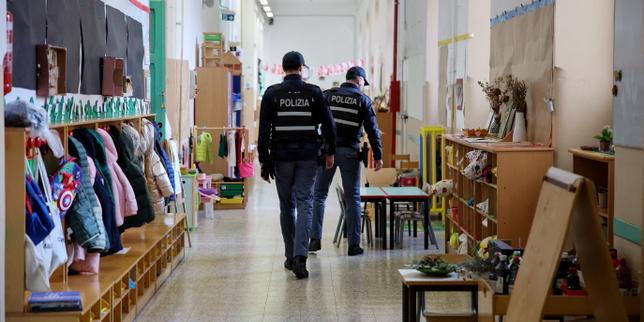
Silence.
That is the first sound a school makes when a false bomb alert clears the halls—not the rowdy quiet of a holiday or the hushed concentration of a midterm exam, but the hollow, metallic quiet of a building abandoned mid-thought. Coats left draped over chairs. Half-finished geometry problems frozen in chalk dust. Sneakers lined up on damp mats by the door because someone told seven-year-olds to move fast, move now, leave the rest behind.
Across Italy, hundreds of schools have been evacuated behind wave after wave of fake bomb threats. Across the United Kingdom and Ireland, schools have been hit by menacing messages—digital poison slipping into morning inboxes before the coffee in the teachers' lounge has even cooled.
On paper, a hoax is a non-event. Nobody gets hurt. No device detonates. Officials check the rooms, declare the campus safe, and log another statistic in a column labeled false alarm.
Easy to shrug at if you are reading from a distance. Hard to shrug at if your heart is hammering against your ribs in a parking lot three hundred meters from your child's classroom, watching police lights reflect off wet asphalt while you wait for a text message that proves nothing happened.
When the Siren Has No Fire
To understand what a hoax does to a community, you have to stop measuring harm by physical explosions. Consider a hypothetical morning in northern Italy—a composite picture drawn from the real pattern of mass school evacuations. Let us call the town Valchiara and the school principal Marco.
Marco reaches his office at 7:30 a.m. The air smells like floor wax and damp wool. By 7:55, his phone buzzes with an ominous warning routed through an email or messaging channel that looks just credible enough to make every instinct scream do not gamble. Maybe it comes from an anonymized account, a spoofed sender, or an encrypted relay designed to obscure where the threat originated. Marco does not have forty minutes to run forensic checks while three hundred students sit one floor above him. He has minutes.
He pulls the alarm.
Now watch what happens next. A ten-year-old girl named Sofia steps out into the chilly morning air without her cardigan. She isn't crying at first; ten-year-olds often treat sudden drills like a strange adventure until they see the adults' faces. Then she sees a teacher's hands trembling slightly as the class headcount is read aloud on a clipboard. She sees police cars pull up with tires hissing on the gravel. A seed is planted in Sofia's chest—small, cold, and sharp—that a safe place can stop being safe in the middle of a Tuesday.
Multiply Sofia by hundreds of classrooms across Italy, and multiply those classrooms by the schools receiving menacing messages in the UK and Ireland. Suddenly you are not looking at isolated pranks. You are looking at an industrial-scale disruption of ordinary life.
A bomb hoax is a parasite on trust. It feeds on the social contract that says when you send your children to school in the morning, the worst danger they face is a pop quiz or a scraped knee on the playground. Every false alarm taxes that contract. Every time a school empties out for a threat that turns out to be air and pixels, two dangerous things happen at once: parents feel a spike of raw terror, and institutions risk growing numb.
Numbness is the quiet trap. If a bell rings wolf ten times and there is no wolf, human brains start bargaining with danger. Probably fake again. Probably just someone trying to get out of a test or cause chaos. That bargaining is lethal, because the tragedy of mass hoaxes is not that they never happen—it is that they train people to doubt urgency until the day they cannot afford to doubt it.
The Invisible Cost Behind Every "All Clear"
Newspaper summaries tend to end at the all-clear. Police swept the building; nothing was found; classes resumed the following day.
Clean. Tidy. Complete.
Except real life does not run on newspaper neatness. Consider what happens after the police tape comes down and the cruisers drive away.
First, there is the lost time—and not just academic hours, though those add up fast when evacuations repeat across a region or a school year. Lost time means a single mother who had to walk out of a bakery shift or a hospital corridor because her phone lit up with an emergency alert. Lost time means a substitute teacher trying to calm jittery eight-year-olds who keep staring at the locked hallway doors. Lost time means school staff spending hours filing reports, speaking with investigators, reviewing security protocols, and answering frantic calls from worried families instead of teaching.
Then there is the psychological residue. Adults often assume kids bounce back instantly because kids are resilient. Many do bounce back—eventually. Yet resilience is not the same thing as immunity. A child who already struggles with anxiety, or who has a sensory sensitivity to sirens and crowds, carries that sudden jolt home at dinner time. Sleep gets patchier. Loud noises startle a little harder. Even teenagers—who put on armor so thick you can barely see through it—feel the surreal whiplash of receiving a menacing message in a school system and wondering who sent it, why they sent it, and whether it is real.
Why do people send fake bomb threats or menacing messages to schools in the first place?
There is no single neat motive, and pretending otherwise would flatten a messy reality. Sometimes it is calculated mischief by someone hiding behind a screen, chasing the cheap thrill of watching an entire town scramble on command. Sometimes it is coordinated disruption aimed at sowing panic, testing emergency response times, or overwhelming local authorities across multiple sites at once. Sometimes it is a teenager making a catastrophic mistake under the false belief that digital distance equals invisibility.
Whatever the motive in the sender's head, the mechanism is the same. The sender pays almost nothing—a few keystrokes, a burner channel, a mask of anonymity—while the community pays the full bill in fear, police hours, stalled routines, and frayed nerves.
Let me be honest about my own limitations here: without access to confidential law-enforcement files on every single incident in Italy, the UK, and Ireland, nobody outside the investigation can assign a single motive to every case. Anyone who claims to know with certainty who is behind every threatening message is guessing. What we can see clearly is the pattern: schools are soft targets for psychological shock precisely because they hold what societies value most, gathered in one place, under strict duty of care.
Why Schools Hurt More Than Almost Any Other Target
Think about what happens if a fake threat hits an empty warehouse versus a packed elementary school.
In the warehouse, maybe a security guard sighs and walks the perimeter. Nobody's heart stops. Nobody wonders if their child made it to the assembly point.
A school is different. A school is a crossroads of vulnerability and hope. Every morning, families hand over their most precious responsibility to teachers and administrators, trusting the system to keep order and calm. When a bomb hoax or menacing message targets a school, it doesn't just rattle windows or clear corridors; it strikes straight at that bond of trust.
Consider the ripple effect on teachers. Most teachers did not sign up to be crisis commanders or counter-threat analysts. They signed up to teach literature, history, science, art, or early numeracy. When a threatening message lands or an evacuation order sounds, a second-grade teacher has to become a calm anchor in a storm—counting heads, keeping kids moving without causing stampedes, soothing a crying child while quietly wondering if the threat is real. That emotional labor rarely makes the headline, yet it leaves teachers exhausted to the bone.
And consider the police and emergency responders. Every false alert pulls patrol units, bomb squads or specialists, and dispatchers away from other calls across a city or province. When hundreds of schools face evacuations or menacing messages across connected waves, emergency resources get stretched thin. Even when every threat turns out to be a hoax, the strain on real-world readiness is very real.
Here is a metaphor that helps clarify the trap: a hoax is like pulling a fire alarm in a theater every night for a month. By week three, the audience is annoyed, the ushers are tired, and the manager is furious. No one has been burned. Yet if a real spark catches in week four, half the room may hesitate for ten crucial seconds—and ten seconds is too long.
What People Really Want to Know When the Alerts Hit
Whenever news breaks about hundreds of school evacuations in Italy or menacing messages hitting schools in the UK and Ireland, parents and citizens ask the same urgent questions—often in the middle of the night or between work calls.
Are these threats usually real?
Historically and statistically, the overwhelming majority of mass or wave school bomb threats turn out to be hoaxes with no explosive device found. Authorities still treat every credible-sounding threat seriously because the cost of guessing wrong is unthinkable, yet the practical reality is that hoaxers rely on fear and disruption rather than physical capability.
Why do schools evacuate if the threat might be fake?
Because leaders operate under a duty of care with incomplete information. When a threat arrives, officials rarely have proof in that first minute that it is harmless. Evacuating moves people away from potential danger while professionals assess the risk. Criticizing a school for evacuating out of caution is easy when nothing explodes; living with the regret of staying put if something did is impossible.
How do investigators track down messages sent anonymously?
Digital trails are rarely as invisible as senders think. Even when someone uses anonymizing tools, virtual private networks, encrypted platforms, or spoofed addresses, investigators piece together metadata, routing logs, timing patterns, behavioral signatures, and cross-border cooperation. Catching every actor takes time—especially when threats cross jurisdictions—but anonymity is a cloak, not a force field.
What can families do without turning everyday life into a bunker?
Start by keeping calm at home. Children read emotional cues from the adults around them like radar. If parents panic and catastrophize every alert, kids absorb that dread; if parents acknowledge the fear plainly, validate that being scared makes sense, and then anchor back to facts and routines, children feel steadier. Talk through basic school safety rules calmly—listen to your teacher, stay with your group, never rely on rumors or social media posts—and resist sharing unverified screenshots that multiply panic across group chats.
The Courage to Stay Human
There is a temptation, when stories like this multiply across borders, to harden into cynicism or permanent alarm. Both extremes hurt us.
Cynicism says, Nothing matters, everything is fake, why bother caring? That attitude erodes empathy and makes communities brittle. Permanent alarm says, Danger is everywhere, trust no one, live on edge. That attitude steals the joy and ordinary warmth out of childhood and daily life.
Real strength sits in the middle: clear-eyed vigilance paired with stubborn tenderness.
We can demand thorough investigations and tough accountability for anyone who sends menacing messages or stages false bomb alerts against schools. We can support school leaders, teachers, and emergency workers who carry heavy decisions under pressure. We can refuse to amplify viral rumors that turn a scary morning into mass hysteria.
Above all, we can protect the simple normalcy of a school day. A child walking through the gate with a backpack that is too heavy, complaining about homework, laughing with a friend over something absurd—that ordinary scene is fragile, and it is worth defending.
Picture that school hallway again after the false alarm passes. The door swings open. Footsteps return, scuffing across linoleum. A teacher picks up a piece of chalk, taps it twice against the board, and looks out at a room full of young faces waiting to see what comes next.
The bell can ring false a hundred times, yet the choice to show up, stay steady, and build a future anyway still belongs to the people inside.