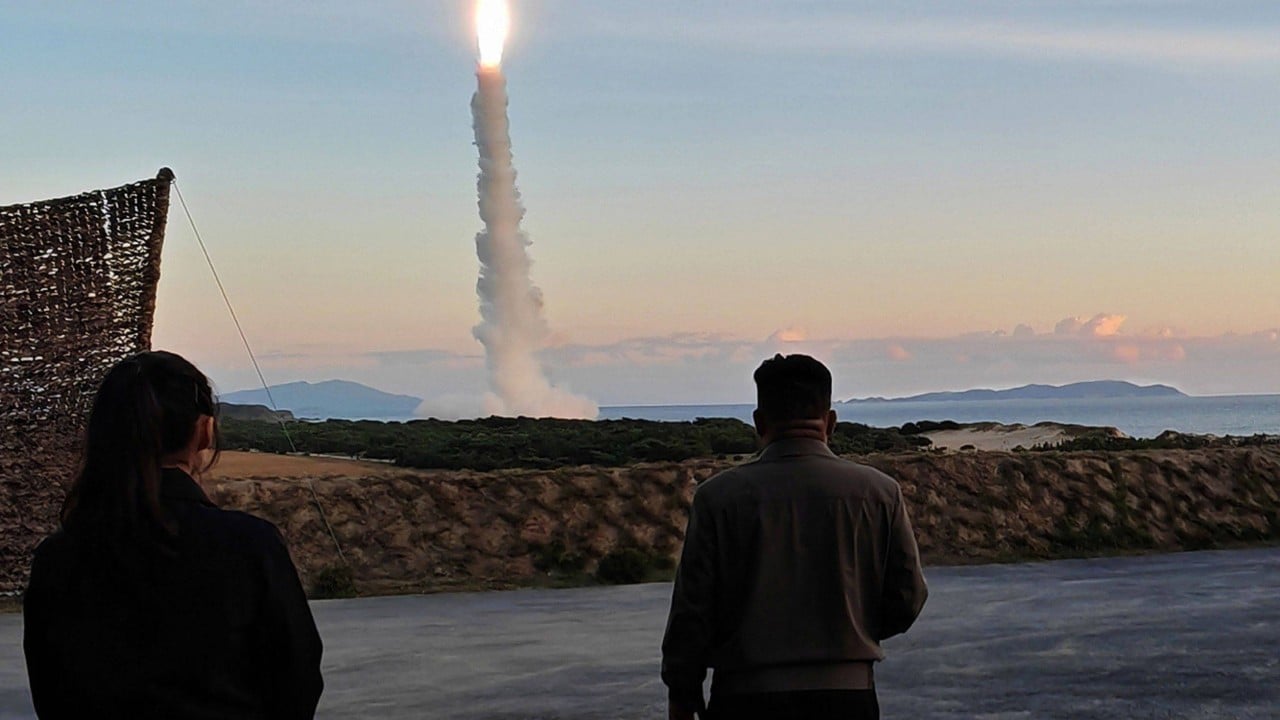
The official diplomatic posture of Washington, Seoul, and Tokyo regarding Pyongyang remains frozen in a comforting fiction. Decades of joint statements continue to invoke the holy grail of complete, verifiable, and irreversible denuclearization, ignoring the reality on the ground. North Korea does not possess an embryonic nuclear program waiting to be bartered away for heavy fuel oil or sanctions relief. It operates as a mature, entrenched nuclear-weapons state with an expanding arsenal of intercontinental ballistic missiles, tactical warheads, and diversified fissile material production.
To understand how international diplomacy reached this dead end, one must examine the systematic erosion of momentum that occurred across successive American administrations. The missed opportunities stretch back decades, characterized by a recurrent cycle of domestic political short-sightedness in the West and calculated deception by the Kim regime.
The Anatomy of Missed Openings
During the 1994 Agreed Framework, Washington and Pyongyang came closer than most subsequent analyses acknowledge to capping the North's plutonium production. Inspectors from the International Atomic Energy Agency maintained a physical presence at the Yongbyon nuclear complex, effectively freezing the plutonium cores that could have been turned into an early arsenal. Yet, the architecture of the deal collapsed under the weight of mutual distrust and domestic political hostility. The United States Congress dragged its feet on funding heavy fuel oil shipments, while North Korean planners, recognizing that conventional economic survival under strict communist planning was mathematically impossible, quietly began exploring clandestine uranium enrichment pathways with outside partners.
When the clandestine enrichment program was exposed in the late autumn of 2002, the framework imploded. Rather than adjusting policy to manage a stubborn proliferation threat through robust containment and stepped-up verification, Western policy oscillated wildly between strategic neglect and maximalist demands. The subsequent Six-Party Talks suffered from a fatal structural flaw. They attempted to trade comprehensive security assurances and economic normalization for a complete rollback of a program that Pyongyang viewed as its sole existential insurance policy.
By the time the 2005 Joint Statement was signed, promising economic aid and security talks in exchange for disarmament, financial sanctions hit simultaneously from the United States Treasury. Bureaucratic cross-purposes between diplomatic negotiators and financial enforcement agencies torpedoed the agreement before the ink was dry. Pyongyang responded with its first underground nuclear test in October 2006, crossing a threshold from which there was no diplomatic return.
The Trap of Maximalist Dogma
The persistence of the denuclearization demand today serves domestic political conveniences rather than strategic realities. For allied capitals, abandoning the goal of complete disarmament feels like an unacceptable capitulation—an admission that deterrence failed and proliferation cannot be rolled back. Admitting that North Korea has permanently joined the nuclear club undermines decades of United Nations Security Council resolutions and invalidates the legal architecture of global non-proliferation norms.
Yet, maintaining this maximalist fiction carries a heavy operational cost. By tying all diplomatic engagement to an impossible precondition, Washington and its partners have rendered themselves spectators to Pyongyang's qualitative and quantitative military modernization. Every sanction package passed, while imposing genuine humanitarian hardship on the local populace, fails to achieve its primary security objective. Instead, economic isolation forces the regime into deeper systemic self-reliance and illicit cyber-theft operations to fund its military apparatus, while driving tighter strategic alignment with Moscow and Beijing.
Consider a hypothetical security scenario to illustrate the structural dilemma. If a corporate board continues to budget for a failed product line long after the market has moved on, the firm bleeds capital while ignoring emerging competitors. Western security policy toward the Korean Peninsula operates on a similar corporate denial. Resources and diplomatic capital are continually funneled into demanding an outcome that the counterpart views as non-negotiable suicide, while pressing regional security challenges—such as conventional artillery threats, cyber warfare, and regional missile proliferation—are crowded out by the singular obsession with total disarmament.
The Alternative Nobody Wants to Name
If the historical record proves that complete denuclearization is an unattainable objective under current or foreseeable geopolitical conditions, the rational alternative is a pivot toward arms control and risk reduction. This shift is routinely dismissed by critics as appeasement. They argue that accepting North Korea as a de facto nuclear state rewards bad behavior and encourages other regional actors to pursue their own atomic deterrents.
However, that argument ignores the unique severity of North Korea's domestic control model. Very few regimes possess the totalitarian capacity to absorb decades of catastrophic economic deprivation and international isolation purely to preserve a weapons program. The North Korean path is an anomaly born of specific historical trauma, ideological insularity, and geographic vulnerability, rather than an attractive template that developing nations can easily replicate.
Moving from a policy of maximalist denuclearization to pragmatic risk management means accepting a lower ceiling of security goals. It means prioritizing a nuclear freeze—capping the production of fissile material, instituting moratoriums on long-range missile tests, and establishing direct military-to-military crisis communication channels—over the immediate elimination of existing warheads.
Such an approach does not require formal recognition of North Korea as a legitimate nuclear weapons state. It simply requires diplomatic maturity to manage an imperfect reality rather than tilting at historical windmills. Until policymakers in Washington, Seoul, and Tokyo muster the political courage to separate the desirable fantasy of a nuclear-free peninsula from the dangerous reality of an armed adversary, the alliance will remain trapped in an endless loop of futile condemnations and missed opportunities.