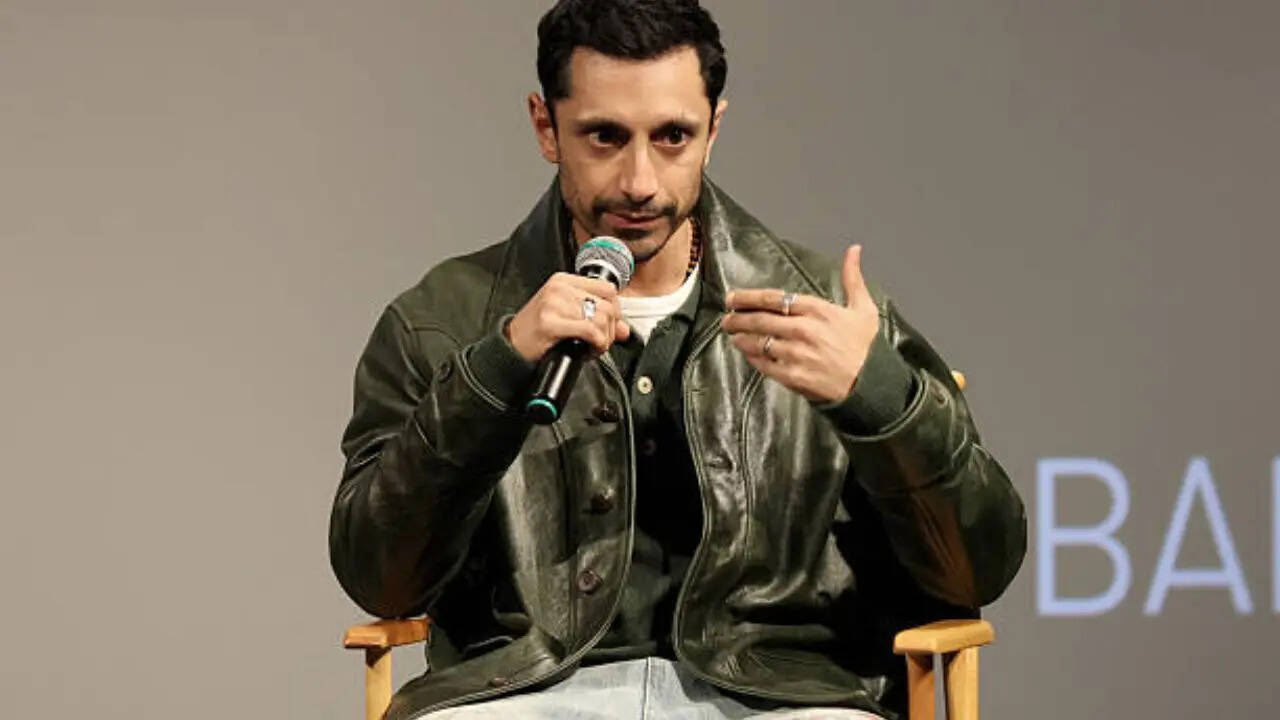
The metal detector at Heathrow doesn't just scan for keys or coins. For someone like Riz Ahmed, it scans for a history he didn't write. He stands there, shoes off, belt in a plastic bin, watching the officer’s eyes. It is a specific look. Not quite suspicion, not quite boredom, but a flicker of recognition that belongs in a police procedural rather than a movie theater.
He is an Emmy winner. A rapper. A Cambridge graduate. A man who has graced the covers of magazines and stood on the stages of the world's most prestigious festivals. Yet, the moment he steps into an airport or walks down a quiet street in a Western capital, his resume dissolves. He is reset to a default setting. In the eyes of the state and the lens of the camera, he is a variable. A question mark. A potential plot twist in a thriller he never auditioned for.
Being Brown in the West, as Ahmed often points out, is not a static identity. It is a performance that never ends.
The Script We Didn't Write
Imagine walking into a room where everyone has already read a book about you. The problem is, the book is a lie. Every chapter describes you as a shadow, a threat, or a victim. You spend the rest of your life trying to tear out the pages, but the ink is permanent.
This is the "spy thriller" existence Ahmed describes. It is the exhaustion of being "constantly chased" by a narrative that predates your birth. For South Asians in the UK and the US, the stakes aren't just about representation on screen; they are about the right to exist without being a "type."
When Ahmed speaks about being chased, he isn't talking about a physical pursuit. He is talking about the psychological weight of being perceived through a narrow, jagged lens. Think of the 1990s. If you saw a man with a beard and brown skin on a screen, you knew exactly what was about to happen. There would be a ticking clock. There would be shouting in a language that wasn't translated. There would be a grainy video.
That imagery didn't stay in the cinema. It leaked into the subconscious of the person sitting next to you on the bus. It seeped into the policy rooms where laws are drafted. It followed children into classrooms.
The Three Stages of the Box
There is a hierarchy to how the West views the "other," a progression of boxes that actors—and by extension, citizens—are forced to inhabit.
First, there is the Two-Dimensional Stereotype. This is the easiest one to spot. It’s the shopkeeper with the exaggerated accent. The terrorist. The IT guy who exists only to fix the protagonist's laptop. In this stage, the human is a prop. They have no inner life, no history, and certainly no romance. They are there to serve the white protagonist’s journey.
Then comes the Subversive Stereotype. This feels like progress, but it’s a trap. This is the story of the person "struggling" with their identity. The girl who wants to play soccer but her traditional parents won't let her. The man who is a "good Muslim" despite the "bad" ones around him. While these stories have more depth, they are still defined entirely by the stereotype they are trying to fight. You are still in the ring with the ghost of the caricature.
Finally, there is the Human Being. This is the promised land. This is playing a character named Ruben who happens to be losing his hearing, where his heritage is just a texture of his life, not the entire plot. It is the freedom to be flawed, selfish, heroic, or boring without representing an entire billion-person demographic.
Ahmed reached that third stage through sheer force of will, yet he finds himself pulled back into the first two by the reality of the world outside the studio.
The Invisible Checkpoint
Consider a hypothetical man named Sameer. Sameer is an architect. He likes jazz, drinks too much oat milk, and is currently worried about his mortgage. He is a person.
But when Sameer enters a subway station and notices a police officer watching him, he stops being an architect. He becomes a series of data points. He remembers to take his hands out of his pockets. He makes sure his backpack is zipped. He consciously modulates his walk to look "unthreatening."
This is the tax. The mental energy required to constantly manage how you are being perceived. It is a silent, internal monologue that never hits "mute." Sameer is living in a spy thriller because he has to be his own counter-intelligence agent. He has to anticipate the suspicion before it manifests.
When Riz Ahmed talks about being chased, he is talking about Sameer. He is talking about the fact that even at the height of fame, the shadow of the "threat" is always just a few paces behind.
The Cost of the Caricature
We often treat "representation" as a buzzword, a checkbox for HR departments or casting directors. We act as if seeing a South Asian face on a billboard is merely a matter of politeness.
It is much more than that.
When a group of people is consistently portrayed as a monolith of danger or "otherness," the real-world consequences are measured in blood and policy. Dehumanization on screen is the dress rehearsal for dehumanization in the streets. If the only time a culture sees a specific face is through the crosshairs of a rifle in a video game or a news report about a "cell," empathy begins to erode.
The "spy thriller" isn't fun when you’re the one being hunted.
Ahmed has noted that the industry often congratulates itself for "diversity" while still requiring the minority to perform their trauma for a paycheck. "Tell us about your struggle," the industry says. "Show us your scars." But rarely does it say, "Tell us a story about a guy who falls in love at a laundromat."
The Mirror and the Mask
There is a specific kind of vertigo that comes from seeing a distorted version of yourself reflected back by the world. You begin to wonder if the mirror is right and you are wrong.
For the South Asian diaspora, the "West" is home. It is where they pay taxes, raise children, and bury their dead. Yet, the narrative often treats them as permanent guests whose stay is conditional on good behavior. You are "one of the good ones" until a headline changes, and suddenly, the "spy thriller" music starts playing again.
This isn't just about Hollywood. It’s about the soul of a society. A culture that cannot see the humanity in its neighbors without filtering it through a lens of suspicion is a culture that is fundamentally broken.
Ahmed’s advocacy isn't a plea for more jobs for actors. It is a demand for the right to be complicated. It is a demand to stop being a plot point and start being a person.
The Final Frame
The camera pans out.
The airport security line continues to move. The lights of the city flicker on. Millions of people are navigating their lives, but for some, the air is just a little bit heavier. They are checking their mirrors. They are watching their backs. They are wondering if today is the day the script turns against them.
We like to think we are moving toward a world that is colorblind, but that is a fantasy. The goal isn't to be blind; it’s to see clearly. To see the man in the airport not as a character in a thriller, but as a man who is simply trying to get home.
Until the "spy thriller" ends, the West is just a set, and we are all just waiting for the director to call "cut" on a story that should have ended decades ago.
The tragedy isn't that the chase continues. The tragedy is that we’ve forgotten why we started running in the first place.