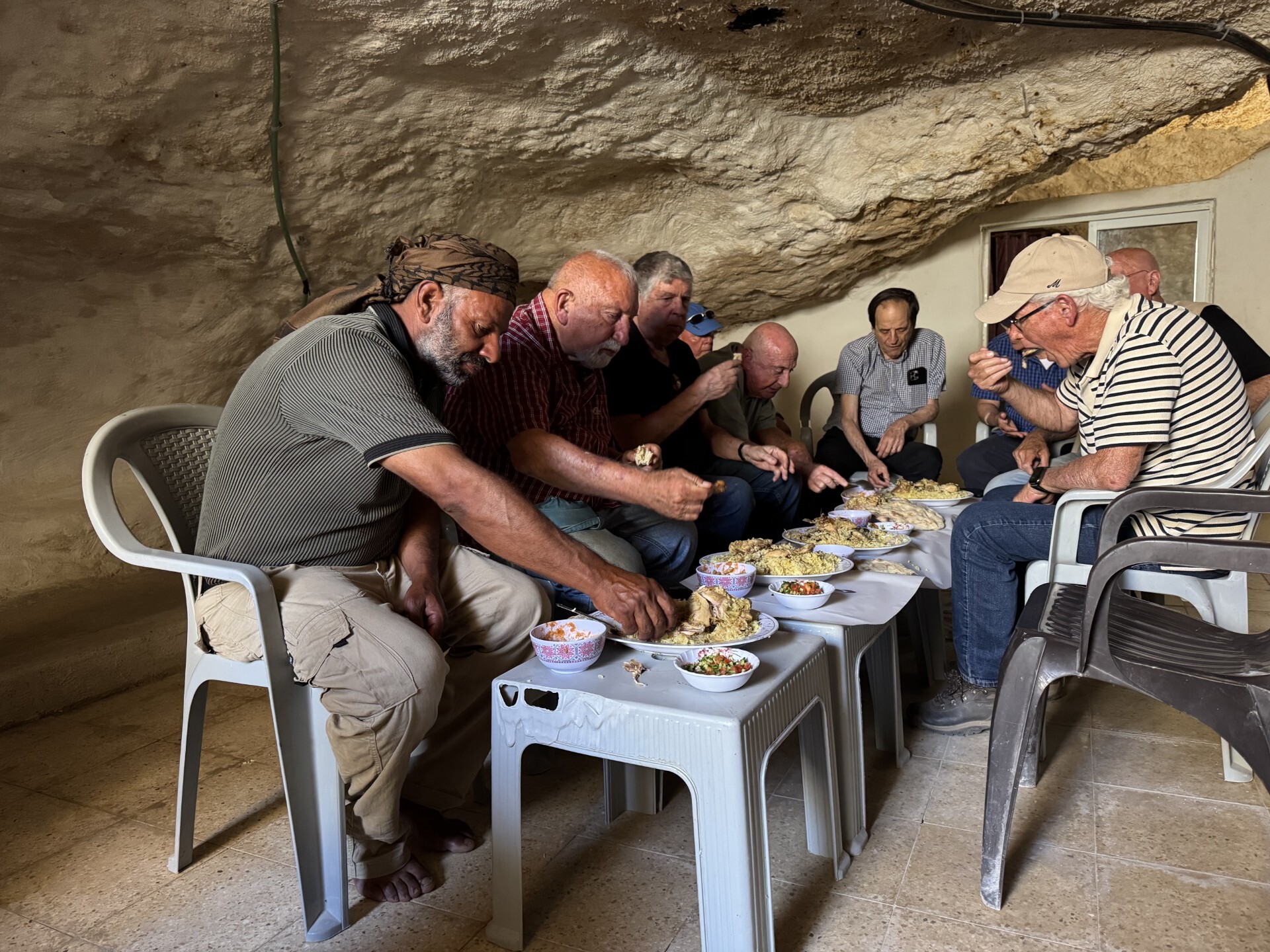
Geopolitics cannot be solved with hummus. Yet, every few months, mainstream media outlets rush to cover the latest iteration of what can only be described as transactional coexistence theater. A group of Israelis and Palestinians meet in a neutral, atmospheric location—often a West Bank cave or a remote olive grove—to share a meal, exchange pleasantries, and pretend for ninety minutes that the underlying systemic issues of military occupation, land disputes, and decades of trauma can be digested alongside flatbread.
These feel-good narratives do more harm than good. They sanitize a brutal reality, offering a comforting illusion to Western spectators while leaving the actual structure of the conflict entirely untouched. I have spent years analyzing peace-building initiatives and NGO funding structures in the Middle East. If you look at the ledger sheets, millions of dollars flow into these "interpersonal dialogue" initiatives annually. The return on investment, however, is functionally zero.
It is time to dismantle the lazy consensus that proximity equals progress.
The Coexistence Illusion vs. Structural Reality
The fundamental flaw of the "cave lunch" model is the assumption that conflict is primarily driven by a mutual misunderstanding. This is a psychological reduction of a deeply political problem. The premise suggests that if only individual Israelis and individual Palestinians could sit down, look into each other's eyes, and realize their shared humanity, the walls would crumble.
This is structurally illiterate.
The Israeli-Palestinian conflict is not a communication breakdown. It is a dispute over sovereignty, resources, borders, and civil rights. A Palestinian farmer and an Israeli settler do not suffer from a lack of dialogue; they are locked in a zero-sum legal and physical battle over the same square meter of soil.
Imagine a scenario where two litigants in a high-stakes corporate lawsuit over intellectual property are told by their lawyers to skip the courtroom, go to a bistro, and share a plate of fries to settle the matter. It sounds ridiculous because it ignores the legal and material stakes. In the West Bank, those stakes involve water rights, security checkpoints, and building permits. Hummus does not rewrite zoning laws.
The Asymmetry of the Dinner Table
The media loves to paint these gatherings as meetings of equals. They are not. The inherent asymmetry of the occupation cannot be checked at the entrance of a cave.
- The Israeli Participant: Enters the space with full citizenship, mobility guaranteed by a powerful military, and the ability to return home to a state that protects their interests.
- The Palestinian Participant: Navigates checkpoints, permits, and systemic surveillance just to attend, returning afterward to a stateless reality governed by military law.
When you ignore this asymmetry, "dialogue" becomes a mechanism that validates the status quo. It allows the dominant party to feel a sense of moral absolution without sacrificing any structural privilege, while demanding that the occupied party perform reconciliation for a global audience.
Elite peace-builders love to ask: "How can we build trust?" They are asking the wrong question. The real question is: "How do you negotiate leverage?" Trust is irrelevant in geopolitics; enforceable agreements are everything.
The PAA Trap: Dismantling the Naive Queries
When people look into these grassroots initiatives, the questions asked online reveal a deep misunderstanding of political mechanics. Let us address them with brutal honesty.
Do grassroots peace initiatives reduce violence?
No. There is no statistical correlation between interpersonal dialogue projects and a reduction in localized or systemic violence. Political violence in the region is tied to macroeconomic indicators, policy shifts, settlement expansion, and security operations. A dozen people sharing a meal does not move the needle on regional stability. It functions as a localized release valve for a tiny, self-selecting demographic of liberals who already agree with each other.
Why don't more Israelis and Palestinians meet?
Because the physical and legal architecture of the region is designed to prevent it. Under Israeli law, Area A of the West Bank is strictly off-limits to Israeli citizens. Meanwhile, Palestinian movement into Israel or even between different zones of the West Bank is tightly regulated by a complex permit regime. The few who do meet must bypass these structural barriers, meaning these gatherings are elite anomalies, not scalable models.
The Failure of the NGO Industrial Complex
We must look at who benefits from these spectacles. The primary beneficiaries are the organizations organizing them and the foreign donors funding them.
For decades, European and American foundations have poured capital into "people-to-people" peace-building grants. These grants require measurable metrics, so NGOs track numbers: how many lunches were served, how many youth participated, how many joint art workshops were held.
This creates a perverse incentive structure. NGOs become adept at staging optics that satisfy foreign grant requirements while avoiding the hard, controversial political advocacy that might alienate donors or local authorities. They choose the safe path of abstract harmony over the dangerous work of structural disruption.
I have watched organizations burn through six-figure budgets on weekend retreats that produce nothing but a shared photo gallery and a fleeting sense of warmth. Once the funding cycle ends, the participants return to their segregated realities, and the systemic friction resumes.
The Cost of False Comfort
The true danger of the cave lunch narrative is that it breeds complacency. It provides Western observers with a cheap escape hatch from the discomfort of geopolitical reality. It allows people to believe that peace is just around the corner if everyone would just stop being so stubborn.
This sentimentality is a luxury of the uninvolved. It actively obscures the policy-driven nature of the impasse. Peace is not a feeling. It is a legal framework. It requires hard, institutional concessions, shifts in state policy, and international accountability—none of which can be manifested through interpersonal empathy alone.
Stop celebrating the performative meals. Stop sharing the sanitized stories of exceptionalism that treat structural oppression as a mere interpersonal misunderstanding. If you want to engage with the reality of the West Bank, look at the land registries, analyze the water allocation data, and study the legal frameworks governing the territory.
Leave the caves, blow out the candles, and face the daylight of raw political mechanics.



