Washington is about to witness something completely unprecedented on Independence Day. Donald Trump promised the largest fireworks show in history for America's 250th birthday. By the numbers, he isn't exaggerating. The Freedom 250 celebration plans to launch over 860,000 fireworks over a 40-minute span. Contrast that with a typical July 4 show in the nation's capital, which usually fires off about 7,000 to 20,000 shells over roughly 17 minutes. We are talking about multiplying the usual explosives by more than a hundred times.
It sounds like a spectacular jaw-dropping display. But behind the scenes, a different reality is playing out. Leaked internal documents from the National Park Service reveal that this massive celebration will likely trigger a massive localized public health crisis. The smoke won't just linger. It will choke the city.
Internal National Park Service models obtained by The Washington Post show that the sheer volume of pyrotechnics will plunge downtown Washington, Arlington, and Capitol Hill into "very unhealthy" air quality conditions. Government scientists are explicitly warning that the air will become hazardous. They even put out a draft air-quality analysis recommending that residents wear N95 masks outdoors and stay inside as much as possible during and after the event. This isn't typical bureaucratic hand-wringing. It is a stark warning about a cloud of toxic particulate matter that will blanket the region for hours.
The Toxic Smoke Bomb Over the National Mall
When you watch a firework explode, you aren't just seeing light. You're seeing a chemical reaction that sprays fine particulate matter, known as PM2.5, directly into the air. These tiny particles are less than 2.5 micrometers in diameter. They are small enough to bypass your body's natural defense mechanisms. They travel deep into your lungs and enter your bloodstream.
The National Park Service modeling predicts that pollution levels will spike so high that spectators and residents will experience immediate irritation symptoms. Coughing, burning eyes, and shortness of breath will be common. Unless unusually strong winds sweep through the area on Saturday night, the toxic cloud will stay trapped over the city for three to six hours. Because the show won't even start until around 10:30 p.m. or 11 p.m.—which is much later than usual—the worst air pollution will settle over neighborhoods while people are sleeping.
Public health experts are genuinely alarmed. George Thurston, a professor of medicine and population health at New York University, pointed out that the scale of this pollution is entirely off the charts. He urges anyone in the metro area to minimize their exposure. If you must go outside, wearing a high-quality N95 mask isn't an overreaction. It's a necessity.
The American Lung Association has tracked fireworks pollution for years. They point to historical data showing that even standard Fourth of July displays cause a nationwide average spike of 42% in particulate air pollution. Now imagine scaling that up by a factor of 120 in a single concentrated metropolitan area. For anyone living with asthma, chronic obstructive pulmonary disease, or heart conditions, this event is a ticking time bomb.
Heavy Metals and the Potomac River Fallout
The immediate air quality disaster is only half the story. Nobody is talking about where those 860,000 spent shells actually go when they come back down. Pyrotechnics rely on heavy metals to produce their vibrant, brilliant colors. Strontium creates deep reds. Barium produces vivid greens. Copper compounds yield bright blues.
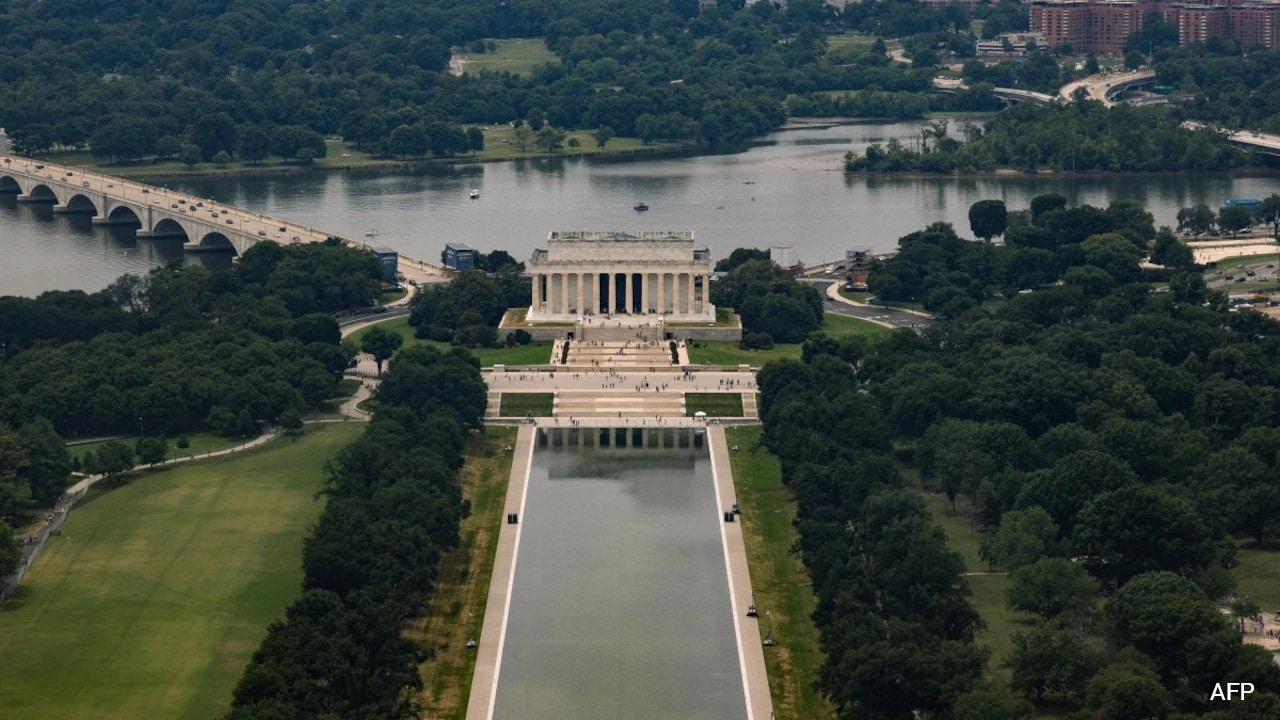
When these materials detonate, they don't vanish into thin air. They fall back to earth as dust and debris. The planned launch sites sit right along the Lincoln Memorial Reflecting Pool, West Potomac Park, and on eight massive barges moored in the Potomac River. This means tons of toxic heavy metals and perchlorates will drop directly into the local waterways.
Perchlorates are a massive concern for environmental scientists. They are used as oxidizers to propel fireworks into the sky. Once they leach into the water, they stick around. They disrupt human thyroid function by limiting the body's ability to absorb iodine. The long-term ecological consequences of dumping this unprecedented volume of chemicals into the Potomac River are entirely unknown. Scientists simply don't have data on a single pyrotechnic event of this scale. We are basically running a massive chemical experiment on a major urban ecosystem.
Vulnerable Communities Bear the Brunt
Environmental hazards are rarely distributed equally. This historic fireworks display will hurt low-income neighborhoods in Washington far worse than affluent areas. Downtown D.C. and parts of Northeast and Southeast D.C. already deal with higher baseline levels of urban air pollution from traffic and industry.
Residents in these areas also experience disproportionately higher rates of asthma and cardiovascular disease. When the massive smoke plume drifts off the National Mall, it will settle over communities that lack the resources to simply pack up and leave for the weekend. High-quality air purifiers are expensive. Central air conditioning systems with tight filtration aren't a given in older, lower-income rental units.
This creates a serious environmental justice problem. A 40-minute political spectacle will leave vulnerable residents dealing with the health fallout for days. Local emergency rooms are already gearing up for a surge in respiratory distress cases. Chief John A. Donnelly Sr. of the D.C. Fire and Emergency Medical Services Department confirmed that first-aid tents and emergency personnel are being heavily deployed throughout the event zone to manage heat, crowds, and medical crises.
Securing a Giant Powder Keg
Planning this event has transformed downtown Washington into a high-security military zone. The Department of Homeland Security designated the Freedom 250 celebration as a National Special Security Event. This puts it on the exact same security level as a presidential inauguration or a State of the Union address.
The Secret Service is running the show. Massive security fences line the perimeter. Forklifts have been buzzing around the Lincoln Memorial Reflecting Pool for days, moving literal pallets of explosives into position. Because Donald Trump will deliver an in-person speech before the pyrotechnics begin, security screenings will be intensely strict.
If you plan on attending, you have to leave almost everything at home. Backpacks, coolers, lawn chairs, and even personal sports balls are strictly banned from the primary viewing areas. The main screening checkpoint on 15th Street will see massive bottlenecks.
Combine intense summer heat with a massive security footprint, long wait times, and an unprecedented late start time, and you have a recipe for chaos. The event organizers themselves have quietly acknowledged the risks. The official Freedom 250 website added a warning advising attendees to assess their health before showing up. They openly state that air quality will decline and noise levels will be intensely high.
How to Protect Yourself if You Live in D.C.
If you live in Washington, Arlington, or the surrounding suburbs, you need a plan to handle the smoke. Do not assume that staying inside with your windows closed is automatically enough. Fine particulate matter easily sneaks inside older homes through drafty doors and windows.
First, check your HVAC system. If you have central air, make sure you are running a filter rated MERV 13 or higher. Turn the system fan setting to "On" rather than "Auto" so the air continuously passes through the filter, cleaning out particles that leak inside. If you rely on window AC units, make sure the outdoor air damper is closed so you aren't pulling the toxic firework smoke directly into your living room.
Second, deploy portable air purifiers if you have them. Place them in the bedrooms where you sleep. Because the pollution will peak between midnight and 6 a.m., protecting your breathing environment while you sleep is vital. If you don't have a commercial air purifier, you can build a makeshift one by taping a MERV 13 furnace filter to the back of a standard box fan. It looks ugly, but it works surprisingly well at pulling PM2.5 out of the air.
Third, change your schedule. Avoid exercising outdoors on Sunday morning. The air will look clear long before the microscopic particles actually settle out of the breathing zone. Give the atmosphere at least 12 to 24 hours to clear before you go for a run or take children to local parks.
Finally, track the actual air quality numbers rather than relying on how the sky looks. Use resources like AirNow.gov to monitor real-time PM2.5 levels in your specific zip code. If the tracker enters the red or purple zones, keep your outdoor time to an absolute minimum. If you have to walk your dog or commute, put on an N95 or KN95 mask. Standard surgical masks or cloth bandanas won't do anything to block these tiny particles. Take the threat seriously, protect your lungs, and let the historic smoke cloud pass over without breathing it in.