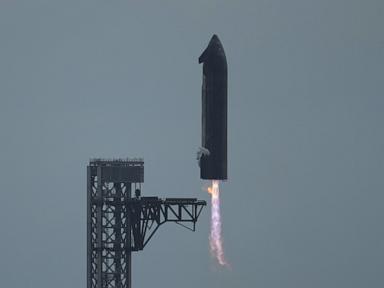
Most people watched a 232-foot stainless steel booster drop out of the sky and get grabbed mid-air by giant metal chopsticks, and their brains immediately defaulted to sci-fi tropes. That's the wrong way to look at it.
What SpaceX actually pulled off at Starbase in Boca Chica, Texas, wasn't a neat party trick for the livestream cameras. It was an aggressive, borderline stubborn engineering compromise designed to solve the single biggest bottleneck in human spaceflight—mass. When SpaceX's Starship returns to the launch pad, the headline usually focuses on the spectacle of the "Mechazilla" tower catch. Yet the real story sits inside the structural math of why rockets are so ridiculously expensive in the first place.
If you've ever tracked orbital launch economics, you know that traditional rocketry operates like building a brand-new 747 for a single flight from New York to London, then dumping the airframe into the Atlantic Ocean. SpaceX broke that cycle years ago with the Falcon 9. Even so, Falcon 9 still carries heavy carbon-fiber landing legs, hydraulic fluid, and deployment mechanisms all the way up toward the edge of space. Every single kilogram of landing gear you carry uphill steals directly from the payload you can put into orbit.
Elon Musk and his engineering team looked at the Super Heavy booster—a behemoth powered by 33 Raptor engines—and realized that bolting landing legs onto something that massive would cripple its payload capacity. So they threw the legs in the trash. Instead, they moved the landing hardware onto the ground.
Why SpaceX Refused to Put Landing Legs on Super Heavy
Think about the structural absurdity of a rocket landing vertically. You're trying to balance a pencil on your fingertip while it falls at supersonic speeds through shifting crosswinds.
On the Falcon 9, four deployable legs unfold seconds before touchdown. That works fine when your dry mass is roughly 22 to 25 metric tons. Super Heavy is an entirely different beast. Standing roughly 71 meters (232 feet) tall and 9 meters wide, its dry mass runs north of 200 metric tons. Adding legs strong enough to absorb the dynamic loads of a 200-ton cylinder slamming onto concrete—even at a gentle descent rate—requires heavy structural reinforcement at the bottom of the tank.
You don't just pay for the weight of the legs. You pay for the extra steel in the thrust puck, the heavier welds, and the propellant needed to haul that dead weight out of Earth's thickest atmosphere. By catching the booster using two small load-bearing pins tucked just beneath the forward grid fins, SpaceX shifted the entire mechanical burden onto the launch integration tower.
Honestly, it sounds insane on paper. You're aiming a skyscraper-sized rocket at a multi-billion-dollar ground facility with virtually zero margin for error. If the booster comes in three meters off-center or pitches two degrees too fast, you don't just lose the rocket. You vaporize the launch mount, the propellant tank farm, and months of flight testing in a fireball visible from South Padre Island.
The Physics of the Chopstick Catch
Watch the telemetry from Starship Flight 5 and subsequent orbital test flights, and you'll notice how counterintuitive the final approach looks. The booster doesn't hover. It can't.
Even with just three center Raptor engines firing during the final landing burn, the thrust-to-weight ratio of an almost-empty Super Heavy booster exceeds 1.0. That means the rocket can't simply pause in mid-air like a quadcopter drone while the tower arms slowly line up. It has to execute what aerospace engineers call a "hoverslam" or suicide burn—timing the deceleration so its vertical velocity hits zero at the exact altitude where the catch pins meet the tower rails.
Here's what actually happens in the final ten seconds of that descent:
- Supersonic Re-entry and Grid Fin Control: As Super Heavy drops back into the dense lower atmosphere, four massive waffle-shaped titanium-and-steel grid fins bite into the airflow. Unlike the Falcon 9's titanium fins, Super Heavy's fins don't fold flush against the hull. They stay fixed, acting like aerodynamic rudders that steer the booster toward the Gulf Coast.
- The Divert Trajectory: Up until the final moments of the landing burn, the booster isn't even aimed at the tower. SpaceX programs the flight computer to target a point offshore in the Gulf of Mexico. Only after the booster passes real-time health checks—verifying engine chamber pressures, gimbal responsiveness, and guidance locks—does the software command a sharp lateral divert toward the launch pad.
- Sensor Fusion and Pin Alignment: Once the booster swings over the concrete pad, onboard inertial measurement units, GPS, and radar altimeters talk directly to ground-based sensors mounted on the launch tower. The two mechanical arms—nicknamed "chopsticks"—swing inward just as the booster's horizontal speed bleeds off, letting the catch pins settle onto shock-absorbing rails along the arms.
It's brutal. It's unforgiving. And it shaved tons of dead weight off the vehicle.
What the Competitor Coverage Misses About Heat Shields and Upper Stage Returns
Most mainstream news reports lump the Super Heavy booster and the Starship upper stage together when they talk about returning to the launch pad. That's a massive oversight. Catching the booster is hard, sure, but bringing the actual Starship spacecraft back from orbital velocity is an order of magnitude more difficult.
Super Heavy never reaches orbit. It separates from the upper stage roughly two and a half minutes into flight at an altitude around 65 to 70 kilometers, traveling at roughly 5,000 to 6,000 kilometers per hour. It deals with intense heating, yes, yet nothing close to orbital re-entry.
The Starship upper stage, by contrast, accelerates to roughly 27,000 kilometers per hour (about Mach 25). When it hits the upper atmosphere on its way back down, the air in front of the hull doesn't just get warm—it ionizes into glowing plasma exceeding 1,400 degrees Celsius (2,600 degrees Fahrenheit).
During early orbital test flights—specifically Flight 4 in June 2024—viewers watched live Starlink video feeds as plasma literally chewed through one of Starship's forward aerodynamic flaps. Sparks flew off the hinges. Chunks of steel melted away in real time. Incredibly, the flap actuator kept working, and the ship still managed a controlled soft splashdown in the Indian Ocean.
Why SpaceX Keeps Tweaking the Thermal Protection System
If you've followed SpaceX's hardware iterations at Starbase, you know they don't treat a heat shield as a static design. After every single flight, crews strip off thousands of hexagonal silica-based ceramic tiles and test new attachment methods.
Unlike NASA's Space Shuttle, which relied on custom-molded tiles glued individually onto an aluminum airframe—a nightmare maintenance process that required tens of thousands of technician hours between flights—SpaceX wants a heat shield that requires almost zero refurbishment. They've tested mechanical pins, ablative underlayers, and thinner, tougher tile formulations because a single missing tile near a hinge can let hot gas burn straight into the stainless steel structure.
And unlike the booster, the upper stage has to pull off the infamous "belly flop" maneuver. It falls horizontally like a skydiver, using four actuated flaps—two forward, two aft—to control pitch and roll, before lighting its Raptor engines just above the ground to flip vertical. Doing that over the ocean is one thing. Doing it over Boca Chica, aligning upper-stage catch pins with the exact same tower arms that caught the booster, requires surgical precision across 25 Mach numbers of aerodynamic variables.
The Real Economic Reason Behind Rapid Reusability
Why go through all this risk? Why not just land Starship in the ocean or on a drone ship and fish it out with a crane?
Because recovery boats kill turnaround time. When a Falcon 9 booster lands on an autonomous spaceport drone ship hundreds of miles downrange, it takes days just to tow the vessel back to Port Canaveral or Long Beach. Then cranes have to lift the booster, crews have to fold the legs, and trucks have to haul it back to the hangar. Even at SpaceX's record-breaking cadence, that logistics chain eats up days or weeks.
Musk's goal with Starship isn't a rocket that flies once a month. He's building an orbital airliner designed to launch, land back on its own launch mount, get restacked by the tower's chopstick arms, refill with liquid methane and liquid oxygen, and launch again within hours.
Think about what happens to launch costs when you eliminate maritime recovery operations entirely:
- Zero Drone Ship Fleet: You don't pay millions of dollars a year for tugboats, marine crews, support ships, and port leases.
- Immediate Pad Integration: The exact same tower arms that catch the booster lower it straight back onto the orbital launch mount. No horizontal transport crawlers required.
- Propellant-Dominated Pricing: Once the vehicle hardware is amortized over dozens or hundreds of flights, your primary marginal cost becomes liquid oxygen and liquid methane—roughly a million dollars or less per launch for a rocket capable of lifting 100 to 150 metric tons to Low Earth Orbit.
Compare that to NASA's Space Launch System (SLS), which costs well over $2 billion per launch and dumps four RS-25 engines and two solid rocket boosters into the sea every time it leaves Kennedy Space Center. Even if Starship never hits Musk's wildest projections of sub-$10 million flights, cutting launch costs by 90% fundamentally breaks every financial assumption the aerospace industry has relied on since the Apollo era.
What Critics and Aerospace Veterans Still Worry About
It's easy to get swept up in the hype after a successful catch, so let's be honest about the headaches SpaceX still faces. Landing a rocket on its launch pad isn't a solved problem just because it worked once or twice.
First, there's sonic boom and regulatory friction. Every time a 71-meter booster drops out of the upper atmosphere over South Texas, it generates double sonic booms loud enough to rattle windows across Brownsville and South Padre Island. Environmental groups and residents have pushed back hard on launch cadence limits, water deluge runoff, and wildlife impact around the Lower Rio Grande Valley National Wildlife Refuge. Scaling up to daily catches means navigating fierce legal and FAA licensing battles.
Second, Raptor engine reliability under thermal cycling remains a massive engineering hurdle. SpaceX's Raptor engines run a full-flow staged combustion cycle at extreme chamber pressures—over 300 to 350 bar. That makes them extraordinarily efficient, yet it also subjects turbopumps and injectors to brutal mechanical stress. Relighting those engines mid-air after soaking in freezing cryogenic propellants and scorching atmospheric plasma isn't trivial. One sluggish valve during a landing burn turns a triumph into scrap metal.
Third, in-orbit propellant transfer is still the elephant in the room. Returning Starship to the launch pad proves you can get hardware back intact, which is essential for NASA's Artemis lunar lander contract. Under the Human Landing System (HLS) agreement, SpaceX has to send an uncrewed Starship to orbit, then launch multiple "tanker" Starships to refuel it in space before it has enough delta-v to reach the Moon. Rapid pad turnaround is the prerequisite that makes those back-to-back tanker launches physically possible within a narrow orbital boil-off window.
How to Track What Actually Matters on Future Starship Flights
If you want to cut through the PR noise and evaluate future Starship test flights like an aerospace engineer rather than a casual spectator, stop staring purely at whether the rocket explodes. SpaceX builds hardware fast and breaks it on purpose to gather flight data. Instead, watch for four specific milestones on upcoming missions:
- Engine Relight Margins: Watch the live telemetry graphic during the landing burn. Notice how many of the 13 inner Raptor engines ignite for the initial deceleration, and how cleanly they throttle down to the final 3 center engines just before the tower catch. Smooth throttling without flameouts means the propellant header tanks are managing slosh properly.
- Heat Shield Tile Retention: Look closely at the post-landing exterior cameras on the Starship upper stage. Count how many bare steel patches show through the black tile matrix, particularly around the forward flap hinges and the leeward-to-windward transition zones. Fewer missing tiles mean SpaceX is getting closer to zero-refurbishment turnaround.
- Pad Turnaround Time: Don't just measure flight duration—measure the gap between a booster catch and the next static fire test on the same launch mount. If the launch table needs weeks of concrete and plumbing repairs after every catch, the rapid-reusability thesis isn't working yet.
- Payload Door and Dispenser Tests: A rocket that lands safely is useless if it can't deploy satellites reliably. Watch for clean operation of the "Pez dispenser" payload mechanism used to eject next-generation Starlink V3 satellites in orbit before re-entry begins.
SpaceX's decision to catch a falling rocket mid-air looked like pure hubris right up until the moment the chopsticks closed around Super Heavy. Now, the rest of the global launch industry—from Blue Origin's New Glenn to European and Chinese heavy-lift programs—has to reckon with a simple reality. Expending rockets in the ocean isn't just wasteful anymore. It's obsolete.