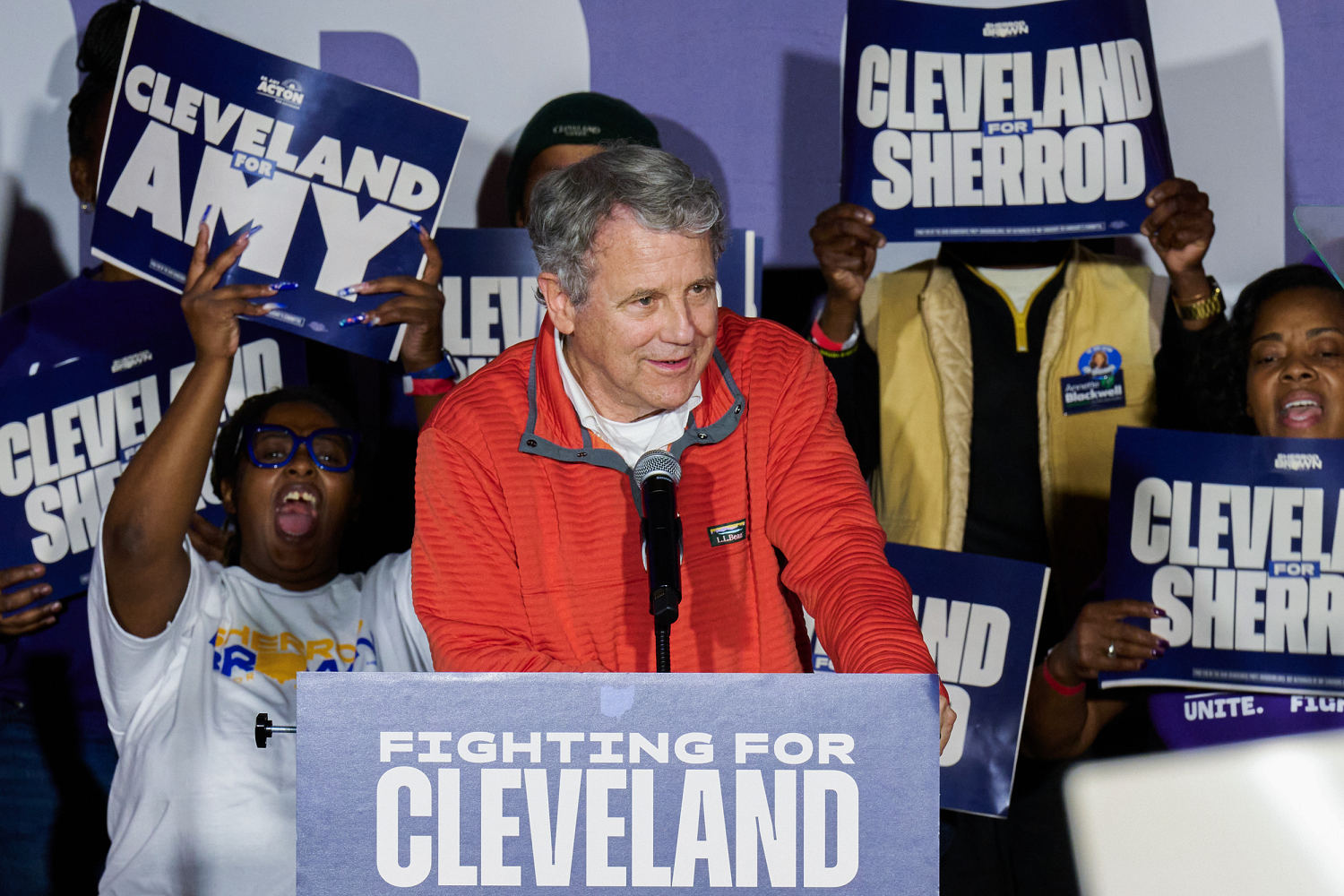
Everyone in Washington wrote Ohio off as a lost cause for Democrats after 2024. They were dead wrong. Sherrod Brown just unseated appointed Republican Senator Jon Husted, pulling off one of the sharpest political comebacks in modern Rust Belt history.
If you only look at national cable news, this result looks like a miracle. It wasn't. Brown didn't win because Ohio suddenly turned blue overnight, and he didn't win because voters forgot about inflation or border security. He won because he stripped away the national party brand, hammered kitchen-table economics, and exploited every weakness of an incumbent who hadn't faced a truly competitive general election race in over a decade.
Let's break down what actually happened on the ground in the Buckeye State, why the conventional wisdom failed so miserably, and what this upset means for the Senate math heading into 2028.
Why Sherrod Brown Won Back His Senate Seat
Two years ago, Sherrod Brown lost his longtime Senate seat to Republican Bernie Moreno in a brutal 2024 cycle where Donald Trump carried Ohio by double digits. When JD Vance left his Senate seat to become Vice President in early 2025, Ohio Governor Mike DeWine tapped Lieutenant Governor Jon Husted to fill the vacancy. On paper, Husted looked like a juggernaut. He had won statewide multiple times, raised millions effortlessly, and held the power of incumbency in a state that had drifted steadily rightward for ten years.
Yet Brown came back and beat him. How?
First, the midterm environment flipped the script. In 2024, Brown had to swim upstream against a massive presidential turnout wave fueled by Trump at the top of the ticket. In a 2026 midterm election with Republicans holding the White House and both chambers of Congress, the historical pendulum swung hard. Voters who stayed home or split their tickets two years prior showed up angry about utility bills, grocery costs, and healthcare premiums.
Second, Brown ran a hyper-local campaign that made national Democrats uncomfortable—and it worked. He didn't spend his airtime talking about Washington process or abstract ideological battles. Instead, he went straight after corporate price gouging, prescription drug caps, and foreign trade deals that hollowed out Ohio manufacturing towns. When you talk to union workers in Lordstown or retirees in Toledo, they don't care about partisan talking points. They care about whether their pension is safe and why their electric bill jumped thirty percent.
The Structural Weaknesses in Jon Husted's Campaign
Political consultants love candidates with clean resumes, and Jon Husted had the cleanest resume in Columbus. Speaker of the Ohio House. Secretary of State. Lieutenant Governor. United States Senator. That track record should have made him bulletproof. Instead, it gave Brown an endless supply of ammunition.
When you spend twenty-five years inside the Columbus statehouse ecosystem, you accumulate baggage. Brown's team ruthlessly tied Husted to every unpopular policy decision and utility scandal that touched Ohio state government over the last decade. Specifically, voters in suburban counties around Columbus, Cincinnati, and Cleveland heard nonstop ads connecting Husted's administration to the FirstEnergy bribery fallout and rising residential energy rates. Whether Husted was directly responsible or not didn't matter in thirty-second spots—he was the face of the establishment, and voters wanted someone to blame.
The Enthusiasm Gap in Rural Counties
To win statewide in Ohio as a Republican, you need massive margins in rural, working-class counties like Ashtabula, Trumbull, and Scioto. Trump got those margins in 2024. Husted didn't.
Without Trump on the ballot, thousands of low-propensity populist voters simply stayed home. Husted's traditional, chamber-of-commerce conservatism didn't fire up the MAGA base the way an outsider candidate does. Meanwhile, Brown kept his gravel-voiced, populist persona front and center, peeling off just enough union households and rural independents to erase Husted's structural advantage.
Look at the math. Brown didn't need to win rural Ohio outright. He just needed to lose those counties by fifteen points instead of thirty, while running up the score in Cuyahoga, Franklin, and Hamilton counties. That's exactly what happened.
What National Pundits Missed About Ohio Voters
If you watch national political commentary, you'd think Ohio voters are monolithic. They aren't. Ohio is a collection of distinct media markets—Cleveland, Columbus, Cincinnati, Dayton, Toledo, Youngstown—each with its own economic reality.
- Northeast Ohio still runs on manufacturing pride and union heritage. Brown's decades-long focus on "Dignity of Work" resonates deeply there, even among voters who backed Trump for president.
- Central Ohio around Columbus is booming with tech and healthcare growth, making it look much more like a classic suburban battleground where educated voters punish Republicans over social issues and healthcare access.
- Southwest Ohio remains traditionally conservative, yet even Cincinnati suburbs shifted slightly toward Brown as independent women balked at hardline federal proposals.
Most out-of-state analysts treated Ohio like Indiana or Missouri—a safe red state permanently out of reach. They ignored the fact that Brown still possessed near-universal name recognition and deep personal goodwill built over forty years of retail politics. You can't buy that kind of familiarity with super PAC money in the final six weeks of a race.
How This Upset Changes the Senate Math
Brown's victory doesn't just give him a second act in Washington; it fundamentally alters the balance of power in the U.S. Senate. Because this was a special election to finish the remainder of JD Vance's original term, Brown takes office immediately upon certification rather than waiting until January.
That timing matters enormously. Every single seat counts when leadership is trying to confirm judicial nominees, pass budget reconciliation bills, or block executive appointments. For Senate Democrats, reclaiming an Ohio seat they thought was gone for a generation injects serious momentum into their long-term map. It proves that with the right candidate and an economic populist message, the party isn't dead in the industrial Midwest.
What Happens Next for Both Politicians
Don't expect Jon Husted to disappear from Ohio politics. He remains well-liked among traditional GOP donors and could easily eye another statewide run—potentially for governor or another Senate seat—depending on how the 2028 field shapes up. However, his aura of invincibility is gone. Future primary challengers will point straight to this loss as proof that establishment credentials aren't enough to carry a general election.
For Sherrod Brown, the clock starts ticking immediately. Because he won a special election for an unexpired term, he won't get a full six-year runway before facing voters again. He will have to defend this seat again in 2028—a presidential election year when turnout dynamics will look completely different than a midterm cycle.
How to Read Swing-State Election Results Without Getting Fooled
If you're tracking political races, analyzing campaigns, or trying to predict where key swing states head next, stop relying on national polling averages and cable punditry. Here is what you should actually watch going forward:
- Track county-level turnout drop-off, not just vote share. Compare how many total ballots were cast in rural versus suburban counties compared to the previous presidential year. Drop-off tells you far more about enthusiasm than partisan persuasion does.
- Watch local media market ad spending. Look at where campaigns spend money in the final fourteen days. When a candidate starts dumping cash into traditionally safe territory, they are playing defense.
- Separate the candidate from the national brand. Voters routinely split their tickets when a candidate builds an authentic local identity around pocketbook issues. Always evaluate candidate quality alongside partisan lean.
- Pay attention to special election calendars. Winning a special election gives a candidate incumbency power right away, but it also puts them right back on the ballot sooner than most voters realize.
Keep your eye on Ohio's county-by-county certification numbers over the next few days, especially in the Mahoning Valley and the Columbus suburbs, because those exact margins will write the playbook for every Rust Belt race in 2028.