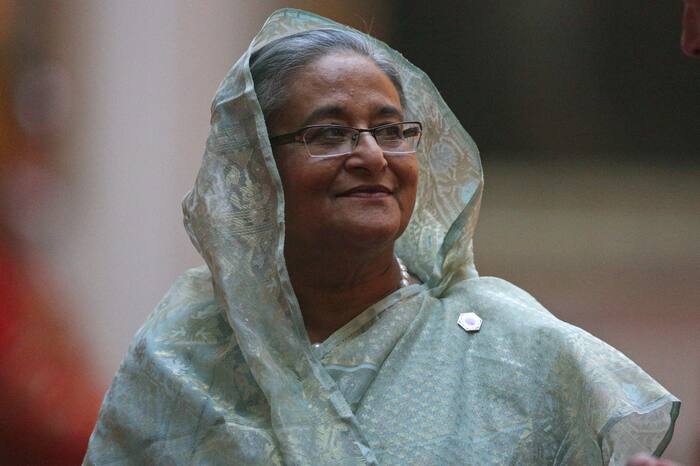
Sheikh Hasina just dropped a political grenade from exile. In an interview with the Associated Press, Bangladesh's ousted prime minister announced she plans to return home in December "at any cost."
Most headlines treat this like a standard political comeback story. They're wrong. You might also find this similar coverage useful: Eight Years in Federal Prison Will Not Save a Single Dollar From Elder Fraud Rings.
If you've watched South Asian politics closely over the past decade, you know nothing about Hasina's trajectory is standard. She fled Dhaka in a military helicopter in August 2024 after weeks of student-led protests turned deadly, ending her 15-year iron grip on the country. Since then, she's been living in an undisclosed safe house in India while an interim government led by Nobel laureate Muhammad Yunus tries to rebuild Bangladesh's shattered institutions. Now, she says she's coming back next month.
Wait a minute. Think about what happens the second her plane touches down at Hazrat Shahjalal International Airport. As discussed in latest articles by Al Jazeera, the effects are worth noting.
Why Sheikh Hasina's December Return Threatens Everything
Let's look at the reality on the ground in Dhaka right now. Hasina isn't just an opposition leader trying to win back voters. She's facing dozens of criminal charges, including mass murder and crimes against humanity, at Bangladesh's International Crimes Tribunal. That's the exact same court she set up years ago to prosecute her own political rivals.
The irony is brutal.
When Hasina tells the AP she will return "at any cost," she isn't talking about campaigning at village rallies. She's talking about walking straight into an arrest warrant. Unless, of course, she believes the political ground in Bangladesh has shifted enough to protect her—or at least spark enough chaos to fracture the interim government.
Here's what people miss when they read these wire reports. Hasina's Awami League party hasn't vanished into thin air. For 15 years, her party built deep networks across the bureaucracy, the police, the judiciary, and the business elite. Even after months of purges and reforms by Yunus's administration, those loyalties don't evaporate overnight. By naming a specific month—December—she's giving her remaining loyalists a concrete deadline to mobilize.
The Legal Trap Waiting in Dhaka
You can't separate Hasina's return plan from the legal noose tightening around her neck. Since August 2024, prosecutors in Dhaka have filed over a hundred cases against her and her top lieutenants. The charges stem from the July and August 2024 crackdown, where security forces and Awami League student wings killed hundreds of protesters.
The International Crimes Tribunal has already issued arrest warrants for Hasina. Interpol red notices have been requested by Dhaka's interim authorities.
So how does someone under an active arrest warrant for crimes against humanity just fly home?
Honestly, she doesn't—unless she's willing to be handcuffed on the tarmac. And maybe that's the entire point. In South Asian politics, martyrdom is the ultimate currency. Look at history. Hasina's own father, Sheikh Mujibur Rahman, spent years in Pakistani jails before becoming Bangladesh's founding leader. Hasina herself was arrested on extortion charges in 2007 by a military-backed caretaker government, only to emerge a year later and win a landslide election in 2008.
She knows how the script works. Being dragged off a plane in front of international cameras turns a disgraced autocrat into a defiant political prisoner overnight. It shifts the global media narrative from her past human rights abuses to how the current government treats a 79-year-old former leader.
India's Quiet Headache Over Hasina's Next Move
We need to talk about the elephant in the room. New Delhi.
Hasina has been India's guest since the day she fled Dhaka. Prime Minister Narendra Modi's government viewed her as a reliable, secular bulwark against Islamist extremism and Chinese influence in the Bay of Bengal. Hosting her was supposed to be a temporary humanitarian gesture. Instead, it has turned into a massive diplomatic liability.
Relations between India and Bangladesh have hit rock bottom over Hasina's presence. Dhaka's interim government has repeatedly demanded her extradition, pointing to a 2013 bilateral extradition treaty between the two nations. New Delhi has stalled, citing legal technicalities and political exceptions built into that very treaty.
If Hasina actually boards a flight to Dhaka in December, India faces two ugly scenarios.
First, if India lets her leave, New Delhi washes its hands of an awkward guest—but risks watching its closest regional ally get thrown into a Dhaka prison cell. That sends a terrible message to other leaders in the region who rely on Indian backing. Second, if Hasina uses Indian soil to launch a destabilizing political campaign against Dhaka, Yunus's government will accuse New Delhi of actively meddling in Bangladesh's internal affairs.
Either way, India loses leverage. New Delhi wants stability on its eastern border, not a civil conflict triggered by an ex-prime minister's dramatic homecoming.
What the Interim Government Actually Fears
Muhammad Yunus didn't ask for this job. The 86-year-old microfinance pioneer was pulled in to stabilize a country on the brink of economic collapse and institutional anarchy. Over the past two years, his team has tried to overhaul the central bank, clean up massive loan defaults linked to Awami League cronies, and draft constitutional reforms before holding fresh elections.
It's been messy. Inflation has stayed stubbornly high, factory workers have protested over unpaid wages, and law enforcement is still rebuilding its credibility after the 2024 bloodshed.
Hasina is betting on that frustration.
When an economy hurts, people develop selective amnesia. They forget the rigged elections of 2014, 2018, and 2024. They forget the enforced disappearances and the suffocating censorship. Instead, they remember the megaprojects—the Padma Bridge, the Dhaka Metro Rail, the steady GDP growth numbers that defined the early years of Hasina's rule.
Her AP interview wasn't aimed at the students who toppled her. Those kids won't forgive her. Her message was aimed at the exhausted middle class, the nervous business owners, and the rank-and-file police officers wondering who will protect them if the political winds shift again. By promising to return in December, she's telling them that the current era is temporary and the old order isn't dead yet.
Why December Matters More Than You Think
Timing in politics is never accidental. Why did Hasina pick December instead of waiting until next spring?
December is the most emotionally charged month in Bangladesh's calendar. December 16 is Victory Day, marking the 1971 liberation war that birthed the nation—a war led by Hasina's father and the Awami League. Every year, December is saturated with nationalist symbolism, rallies, and historical memory.
By tying her return to December, Hasina is wrapping herself in the flag of 1971. She's trying to remind Bangladeshis that her family's political legitimacy predates the 2024 uprising. It's a calculated attempt to hijack the national narrative during the exact weeks when patriotism peaks.
At the same time, December usually brings cooler weather and clearer conditions for street mobilization. If Awami League activists plan to flood the streets of Dhaka to welcome her—or clash with student groups trying to block her—December gives them the logistical window to do it.
How the Student Movement and BNP Will React
You can't analyze Hasina's move without looking at the forces that replaced her. The Anti-Discrimination Student Movement, which sparked the 2024 revolution, hasn't gone away. Many of its key figures sit inside the interim administration or operate as powerful pressure groups on the streets. For them, Hasina's return isn't a political debate; it's an existential threat. If she comes back and avoids justice, everything they bled for in July and August 2024 was for nothing.
Then there's the Bangladesh Nationalist Party (BNP). As Hasina's longtime rival, the BNP has spent the last two years positioning itself as the government-in-waiting. Party leaders have been pushing Yunus to set a firm date for national elections, confident they'll sweep the polls in the Awami League's absence.
Hasina's December threat puts the BNP in a bind. They despise Hasina, yet they also want the interim government to hand over power quickly. If Hasina's return sparks nationwide violence, Yunus could easily argue that the security situation makes immediate elections impossible. Ironically, Hasina's chaos could delay the very elections the BNP wants—or force the BNP and student groups into an uneasy alliance to keep the Awami League crushed.
Three Real Scenarios for December
Forget the breathless speculation on social media. When you strip away the political theater, Hasina's pledge to return boils down to three realistic outcomes.
1. The Tarmac Arrest
Hasina boards a flight, lands in Dhaka, and is immediately detained by police under existing International Crimes Tribunal warrants. She's taken to a high-security facility—likely a converted sub-jail similar to the one she occupied in 2007. Her supporters try to stage protests, security forces crack down hard, and Bangladesh enters a tense, prolonged legal battle that dominates headlines for months.
2. The Last-Minute Delay
Politicians make bold promises to rally their base, then blame external forces when they don't follow through. Hasina could easily claim in late November or early December that "security threats," "international pressure," or "Indian government restrictions" forced her to postpone the trip. She gets weeks of free media coverage and tests the loyalty of her grassroots network without actually risking a prison cell.
3. The Diplomatic Intervention
Behind closed doors, New Delhi, Washington, and regional power brokers lean heavily on both Hasina and Dhaka's interim government to prevent a bloodbath. India quietly tells Hasina she can't use their territory to launch a political insurgency, effectively grounding her while keeping her safe in exile.
How to Watch This Story Without Getting Played
If you're following Bangladesh's political crisis, don't fall for every viral rumor or partisan press release over the next few weeks. Information warfare in South Asia is relentless, and both sides are flooding social media with manipulated clips and unverified claims.
Pay attention to three concrete signals instead. First, watch New Delhi's Ministry of External Affairs. If Indian officials start subtly distancing themselves from Hasina's statements or emphasizing "non-interference," it means they're actively blocking her travel plans. Second, track the formal docket at Dhaka's International Crimes Tribunal. Accelerated hearing dates or fresh asset freezes signal that the interim government is preparing a legal wall to meet her at the border. Third, look at flight manifests and diplomatic clearances out of New Delhi—real logistical moves always leave paper trails long before a plane takes off.
Hasina spent a decade and a half proving she never backs down from a fight, even when the odds look suicidal. Whether she actually steps onto Bangladeshi soil in December or uses the threat as leverage from afar, she has already succeeded in forcing Dhaka, New Delhi, and the international community back onto her chessboard.


