Everyone acts like Greenland just handed over the keys to the Arctic. They didn't. When Greenland's parliament—the Inatsisartut—voted to approve the updated security and defense framework with Denmark and the United States, headlines instantly framed it as a massive American geopolitical victory.
That's only half the story.
If you actually look at what Nuuk signed off on, it's way more nuanced than Washington simply planting a bigger flag in the ice. Greenlandic lawmakers spent months grilling Danish and American diplomats before giving the green light, and they did it to secure economic concessions, environmental protections, and local contracting rights that previous Cold War agreements completely ignored.
Why Greenland Approving This Security Deal Matters Right Now
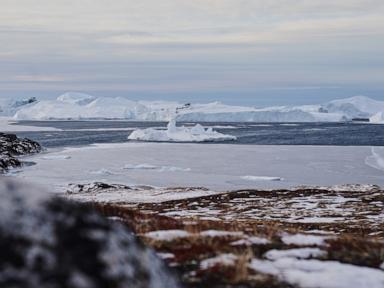
Let's be clear about what triggered this. The Arctic isn't a frozen buffer zone anymore. Melting sea ice is opening up the Northern Sea Route and the Northwest Passage, while Russia has spent the last decade reopening dozens of Soviet-era bases along its northern coast. China, calling itself a "near-Arctic state," has repeatedly tried to buy up strategic ports and rare earth mining stakes across the island.
For decades, the legal backbone of American military presence on the island was the 1951 Defense of Greenland Agreement, updated in 2004 with the Igaliku Agreement. Those older deals treated Greenlanders almost like bystanders on their own land.
I've followed Arctic defense policy for years, and the biggest mistake outsiders make is assuming Nuuk just rubber-stamps whatever Copenhagen and Washington cook up. That era ended when Greenland gained self-rule in 2009. Foreign and defense policy technically remain under Danish constitutional authority, yet Denmark knows full well it can't sign anything affecting Greenlandic soil without Nuuk's explicit political blessing.
So when Greenland approves a security deal with Denmark and the US today, it's acting as a co-equal broker, not a passive territory.
What's Actually Inside the Updated Security Framework
Forget the vague diplomatic press releases. The core of this agreement revolves around Pituffik Space Base—formerly known as Thule Air Base—located roughly 750 miles north of the Arctic Circle.
Pituffik isn't just a cold-weather outpost. It houses the 12th Space Warning Squadron, operating a massive Upgraded Early Warning Radar that watches for intercontinental ballistic missiles coming over the North Pole. It's literally the first line of detection for North American aerospace defense.
Under the approved framework, three major shifts happen on the ground:
- Modernization and infrastructure upgrades. The US Space Force and Air Force are pouring hundreds of millions of dollars into upgrading runways, radar arrays, and power generation systems at Pituffik to handle next-generation surveillance aircraft and hypersonic threat tracking.
- Local economic inclusion. For years, Greenlandic companies got boxed out of base maintenance contracts because American procurement rules favored US firms or large Danish conglomerates. The new terms force bidders to integrate Greenlandic labor, apprenticeships, and local subcontractors into the supply chain.
- Strict environmental accountability. Cold War-era bases like Camp Century left behind toxic waste, fuel drums, and radioactive coolant buried under ice sheets that are now melting. Nuuk demanded—and got—binding commitments on environmental monitoring and cleanup protocols before approving new construction.
Honestly, the contracting piece was the make-or-break issue in Nuuk. If American tax dollars are going to pour into northern Greenland, Greenlanders want that money circulating in their own economy instead of flying straight back to Virginia or Copenhagen.
The History Nobody Mentions When Talking About US Bases in Greenland
You can't understand why Greenlandic politicians were so hesitant about this deal without looking at 1953.
Back then, the US and Denmark decided to expand Thule Air Base without consulting the local population. In May 1953, the Inughuit families living in the village of Uummannaq were given just days to pack their belongings and were forcibly relocated 60 miles north to Qaanaaq. They spent their first Arctic winter living in tents.
That wound hasn't healed. Every time Washington asks for expanded radar access, deeper port facilities, or joint military exercises, older generations in Nuuk and Qaanaaq remember 1953.
When former President Donald Trump famously floated the idea of buying Greenland back in 2019, it caused diplomatic whiplash, sure, but it also handed Greenlandic leaders enormous leverage. Suddenly, Washington realized it couldn't take Nuuk for granted. The US reopened a consulate in Nuuk in 2020—the first since 1953—and started offering direct civilian aid packages for education, tourism, and mineral mapping.
By the time this latest security agreement hit the floor of the Inatsisartut, Nuuk knew Washington needed the deal far more than Greenland did.
How Denmark Fits Into This Three-Way Balancing Act
Denmark walks a tightrope here, and frankly, Copenhagen often struggles to keep its balance.
On one hand, Denmark is a founding NATO member that chronically underspent on its own military for decades, relying heavily on the US security umbrella. Keeping Washington happy in the Arctic buys Copenhagen massive goodwill at NATO headquarters in Brussels.
On the other hand, Denmark pays an annual block grant—known as the bloktilskud—of roughly 4 billion Danish kroner (around $580 million) to Greenland, covering about half of the Greenlandic government's budget. Meanwhile, a vocal independence movement in Nuuk wants to cut ties with Denmark altogether as soon as Greenland becomes economically self-sufficient.
If Copenhagen pushes too hard for US military expansion, Greenlandic nationalists accuse Denmark of selling out Greenland's sovereignty to please Washington. If Copenhagen drags its feet, the Pentagon gets frustrated and starts talking directly to Nuuk behind Denmark's back.
The approved security deal tries to solve this friction through the Permanent Committee—a trilateral consultation body established under the 2004 Igaliku Agreement where American, Danish, and Greenlandic officials sit at the same table. By routing all military updates and joint exercises through this trilateral mechanism, Nuuk gets an early veto before plans ever reach the construction phase.
What About Russia and China
Let's look at the threat matrix driving this urgency. Russia's Northern Fleet, headquartered in Severomorsk on the Kola Peninsula, operates ballistic missile submarines that regularly patrol beneath the Arctic ice cap. Between 2014 and 2024, Moscow refurbished airfields at Nagurskoye, Temp, and Rogachevo, putting Russian interceptors and long-range bombers within easy striking distance of the Greenland-Iceland-UK (GIUK) gap.
China's approach is quieter but just as aggressive. State-backed Chinese firms tried to buy an abandoned naval base at Grønnedal in 2016 (blocked by Denmark) and bid to finance three major airports in Nuuk, Ilulissat, and Qaqortoq in 2018 (blocked after intense Pentagon lobbying convinced Copenhagen to fund the airports itself).
Greenlandic politicians aren't naive about Beijing or Moscow. Most lawmakers in Nuuk prefer aligning with democratic Western partners over authoritarian regimes. Still, they aren't eager to turn their island into a bullseye in a superpower shooting war. That's why Greenland insisted the agreement emphasize defensive surveillance, search-and-rescue capabilities, and dual-use infrastructure—like weather stations and satellite communications—rather than offensive strike weapons.
The Rare Earth Minerals Connection Everyone Misses
You can't separate Arctic security from what's sitting underneath Greenland's bedrock.
Greenland holds some of the largest untapped deposits of rare earth elements on Earth—neodymium, praseodymium, dysprosium, and terbium—alongside massive reserves of graphite, lithium, and zinc. These are the exact minerals required to build F-35 fighter jets, Virginia-class submarines, guided missile systems, and electric vehicle batteries.
Right now, China controls roughly 85% to 90% of global rare earth processing. Both the Pentagon and the European Union are desperate to break that chokehold.
While the approved security deal doesn't directly hand mining licenses to American corporations, military security and resource extraction go hand in hand. Mining companies won't sink billions of dollars into remote Arctic sites unless there's reliable deep-water port access, aviation infrastructure, search-and-rescue coverage, and political stability.
By locking in long-term US and Danish security commitments, Greenland just dramatically lowered the geopolitical risk profile for Western mining investors. At the same time, Nuuk kept strict environmental laws intact—including its 2021 ban on uranium mining, which effectively halted the controversial Kvanefjeld project. Greenland wants Western investment, just on its own environmental terms.
What Happens Next on the Ground
Approval in parliament is the starting gun, not the finish line. Over the next 24 months, watch three concrete developments to see if this deal actually delivers what Nuuk was promised:
- Contract awards at Pituffik Space Base. Watch the US Air Force and Space Force procurement notices. If major logistics, construction, and facility management contracts go to Greenlandic-registered joint ventures rather than exclusively outside contractors, Nuuk's negotiating strategy worked. If local firms get sidelined again, expect immediate political backlash in the Inatsisartut.
- Joint Arctic search-and-rescue drills. Increasing cruise ship traffic and commercial shipping in Greenlandic waters means maritime accidents are a real threat. The deal promises better coordination between the US Coast Guard, Denmark's Joint Arctic Command in Nuuk, and local Greenlandic vessels. Look for expanded satellite coverage and upgraded port refueling stations along the west coast.
- The independence timeline debate. Greenland's constitutional commission already drafted a blueprint for an independent state. Every dollar Greenland earns from base contracts, dual-use airport upgrades, and Western mineral partnerships brings Nuuk one step closer to replacing Denmark's annual subsidy.
If you're tracking Arctic geopolitics, defense contracting, or critical mineral supply chains, stop viewing Greenland as a passive piece on a chessboard. Keep your eyes on the trilateral committee announcements out of Nuuk and the Pentagon's upcoming Arctic infrastructure budgets—because Nuuk is now writing the rules for who operates in the High North.