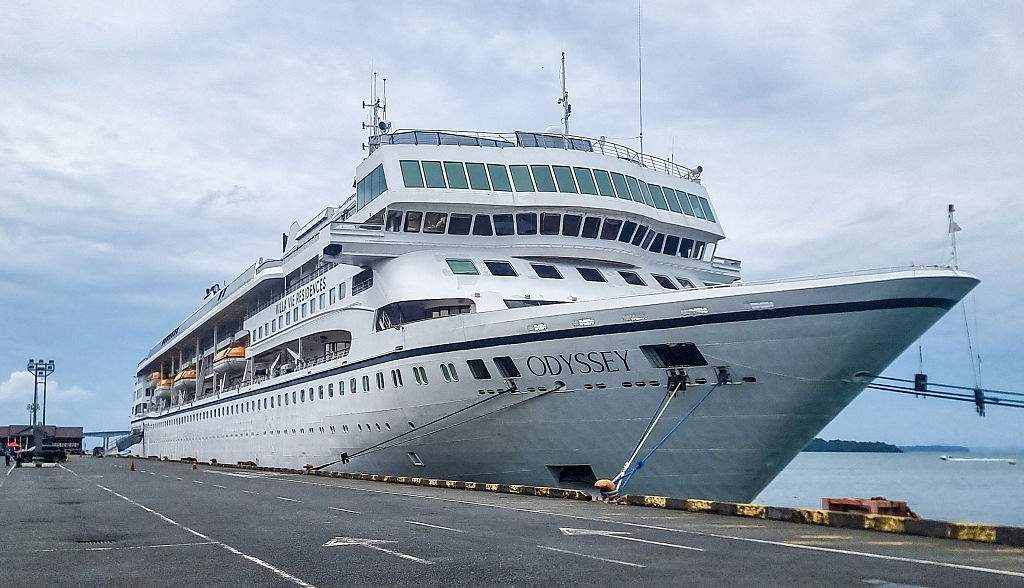
Imagine paying thousands of dollars for a luxury Southeast Asian vacation, only to be marched down a gangway in a foreign port because your ship got caught in a geopolitical crossfire. That sounds like a movie plot, right? Yet when a cruise ship leaves Cambodia after forcing hundreds of passengers to get off, the real story is rarely about a simple mechanical breakdown or a sudden tropical storm.
Most travelers assume cruise itineraries are set in stone once you step on board. They aren't. Maritime law, port authority disputes, and sudden visa rule changes give cruise lines massive latitude to alter routes—or abruptly end a voyage—with zero advance warning. If you're planning an international sailing, understanding what actually triggers these sudden port evacuations can save you from getting stranded halfway across the world.
Why Ships Get Forced Out of Cambodian Ports
Port authorities in places like Sihanoukville don't kick out hundreds of paying tourists on a whim. Tourism dollars matter too much to the local economy. When a vessel is ordered to disembark passengers and clear out, it almost always comes down to three hard realities—regulatory clashes, health and safety protocols, or unpaid maritime fees.
During the global health crises of the early 2020s, Cambodia famously became the center of international maritime drama when the MS Westerdam spent weeks at sea after multiple countries turned it away over unconfirmed illness fears before Sihanoukville finally allowed passengers ashore. Even outside of global emergencies, port clearance in Southeast Asia involves strict paperwork. If a cruise operator fails to submit updated passenger manifests, violates local cabotage rules, or hits a snag with customs immigration clearances, port officials have the legal authority to detain the vessel or demand immediate disembarkation.
Sometimes the issue isn't even the ship itself. Political tensions, sudden changes in diplomatic visa reciprocity, or local port strikes can force a captain to make an ugly call. Leaving hundreds of guests on the dock while the ship sails away empty—or heads to a different jurisdiction—is a nightmare scenario for a cruise line's public relations team, which tells you they only do it when their hands are completely tied.
The Fine Print Nobody Reads Until They're Stranded
You'd think a cruise line kicking you off the boat mid-trip would owe you a massive payout, a first-class flight home, and a full refund. Honestly, the cruise ticket contract you clicked "I Agree" on says the exact opposite.
Every major cruise line operates under a strict Contract of Carriage. Buried in those thousands of words of legalese is a clause giving the captain and the company the unilateral right to deviate from the scheduled itinerary, omit ports, or terminate the voyage early if local authorities demand it or if safety is at risk.
- No guaranteed compensation for port changes. If local officials force a ship to disembark guests, the cruise line typically classifies it as an "Act of Government" or force majeure.
- Onboard credit isn't cash. Even when companies offer goodwill gestures, they usually hand out future cruise credits rather than returning money to your bank account.
- Independent shore excursions are your problem. If you booked a private tour in Phnom Penh or Angkor Wat outside the cruise line's official portal, you're eating that cost yourself.
I've watched seasoned cruisers lose their minds at guest services desks over this. They yell about consumer protection laws, completely unaware that once a ship leaves a U.S. or European port, maritime law operates by its own rulebook.
What Actually Happens on the Dock During a Forced Disembarkation
When a captain announces that hundreds of passengers have to pack their bags and leave the ship immediately, chaos doesn't look like the movies. It looks like three hundred people staring at dead cell phones because their international roaming plans haven't kicked in yet.
First, immigration officers have to process everyone ashore. Sihanoukville's cruise terminal isn't built to suddenly absorb hundreds of unplanned international departures looking for immediate flights out of Sihanoukville International Airport or Phnom Penh. Ground transportation vanishes within minutes. Local taxis double their rates. Hotel rooms near the waterfront sell out before the last luggage tag is even printed.
Cruise lines will usually scramble port agents to arrange charter buses to the nearest major airport, which in Cambodia often means a grueling three-to-four-hour drive up National Road 4 to Phnom Penh. If you don't have your physical passport in your hand—because the ship's purser held onto it for bulk customs clearance—you aren't going anywhere until they sort through binders of documents for hundreds of anxious travelers.
How to Protect Yourself Before Booking an International Sailing
You don't have to stop taking exotic cruises, you just have to stop trusting that everything will go according to the glossy brochure. A few basic precautions separate the travelers who handle a port crisis smoothly from the ones sleeping on airport floors.
Buy Cancel For Any Reason Travel Insurance
Standard travel insurance policies are full of loopholes. Many basic plans exclude "government actions" or "itinerary changes" unless a hurricane physically destroys the port. Look specifically for policies with Trip Interruption coverage that explicitly names unexpected disembarkation or political unrest, or pay extra for a Cancel For Any Reason (CFAR) upgrade. Buy it within 14 days of your initial trip deposit, otherwise you miss the eligibility window.
Keep Your Own Passport When Possible
Many cruise lines in Asia collect guests' passports at embarkation to speed up immigration clearance at each port. While it's convenient, being separated from your passport during an emergency is terrifying. Always carry high-resolution color copies of your passport data page and your Cambodian visa stamps on your phone and in your daypack. If the ship leaves without you, that paper copy is the only thing standing between you and a bureaucratic nightmare at the nearest embassy.
Book Flights Through the Cruise Line's Air Program
Normally, booking flights directly with an airline is cheaper and gives you more control. International cruises in regions with complex port regulations are the big exception. When you book airfare through programs like Princess EZair or Holland America's Flight Ease, the cruise line takes responsibility for rebooking your flights if the ship terminates early or misses a disembarkation port. If you booked a non-refundable ticket on your own, the airline won't care why you missed your flight home.
Never Rely on Ship Wi-Fi for Emergency Logistics
The moment hundreds of passengers find out they're being kicked off a ship, the onboard satellite internet slows to a crawl because everyone is trying to call airlines and banks at the exact same time. Download an international eSIM—like Airalo or Holafly—before you leave home so your phone connects to local Cambodian cell towers the second the ship nears the coast. Having independent cellular data lets you book a hotel room and a flight while everyone else is still standing in line at the reception desk.
Start your next trip by pulling up your cruise contract, checking your insurance policy's trip interruption limits, and setting up an international eSIM before you pack a single suitcase.