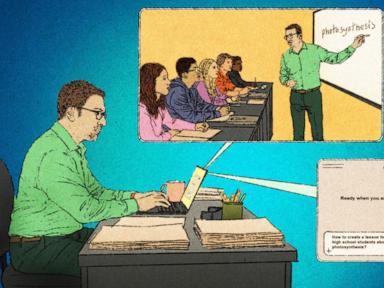
Most people think AI is just for writing mediocre poems or making weird art with too many fingers. They're wrong. If you're still stuck in the "look at this cool trick" phase, you're missing the massive shift happening in how we actually work. Real people—teachers, lawyers, harried parents, and small business owners—are using these tools to shave hours off their weekly grind.
It isn't about replacing the human brain. It's about offloading the grunt work that makes your brain hurt by 3:00 PM. We're talking about clearing the "mental debt" that accumulates when you have to sift through five different 40-page PDFs or figure out why a piece of software is throwing a cryptic error code.
Moving beyond the hype to real utility
The real magic happens when you stop asking AI to "be creative" and start asking it to be your most diligent, slightly literal-minded intern. This isn't theoretical. According to recent data from the Pew Research Center, about 20% of Americans have used ChatGPT in their work lives, and that number is climbing fast. But the "how" is more important than the "who."
Take the education sector. Teachers are drowning in administrative tasks. Grading a stack of 30 essays on The Great Gatsby can take a full weekend. Now, educators use AI to provide initial feedback. It doesn't give the final grade—that would be a disaster for student trust—but it can highlight where a student missed a thesis statement or failed to cite a source. This lets the teacher focus on the nuanced, human parts of teaching. It's about saving the teacher’s sanity.
Decoding the jargon that slows us down
Have you ever opened a medical report or a legal contract and felt your eyes glaze over? You aren't alone. One of the most effective ways people use large language models is as a jargon-breaker.
If you get a "Summary of Benefits" from an insurance company, it's often written in a dialect of English that seems designed to confuse. You can feed that text into a model and ask, "What does this mean for my out-of-pocket costs if I need a physical?" It strips away the legalese. It gives you the bottom line. This is democratization of information. It's taking the power back from the gatekeepers of complex language.
Transforming the messy middle of professional work
In the corporate world, the "messy middle" is where productivity goes to die. This includes things like summarizing meetings, drafting email chains, and organizing project notes.
Software engineers are perhaps the furthest ahead here. Tools like GitHub Copilot aren't writing entire apps from scratch. Instead, they're suggesting the next three lines of code based on what the dev just typed. It’s like autocomplete but for logic. It fixes the "blank page" problem.
Small businesses and the resource gap
If you're a one-person shop, you're the CEO, the marketing department, and the customer service rep. That's exhausting. Small business owners are using AI to build social media calendars in minutes instead of days. They're using it to draft responses to customer reviews—especially the annoying ones where you need to be polite even though the customer is clearly wrong.
I know a local bakery owner who uses it to forecast her inventory needs. She inputs her sales data from the last three months and asks for a list of what to order for a holiday weekend. It isn’t perfect. She still checks it. But it gives her a starting point that isn't just a blind guess.
The unexpected ways AI handles the mundane
It's the weird, specific tasks where AI really shines. Think about the following scenarios that usually eat up a Tuesday afternoon.
- Cleaning up transcripts: If you record a brainstorm session, you get a 5,000-word mess. AI can turn that into five bullet points and a list of action items.
- Recipe adjustments: Got a recipe for six people but you have nine coming over and one is allergic to cilantro? AI handles that math and substitution instantly.
- Coding for non-coders: You can describe a simple Excel macro you need, and the AI will write the script. You don't need to know how to code; you just need to know what you want the spreadsheet to do.
Why most people fail at using AI
The biggest mistake is being too vague. If you ask a bot to "write a business plan," you'll get a generic, useless piece of fluff. It’ll be full of those annoying buzzwords everyone hates.
Instead, you have to give it context. Tell it who you are, what your specific goal is, and what tone you want. Instead of "Write an email," try "Write a firm but professional email to a vendor who is three days late on a shipment of organic flour, mentioning that this is the second time it’s happened." The difference in quality is night and day.
The trap of over-reliance
Don't let the machine do the thinking for you. AI "hallucinates"—a fancy way of saying it lies with confidence. It can cite laws that don't exist or historical events that never happened.
I’ve seen people get burned by using AI-generated facts in presentations without checking them. Always verify. Use the AI to structure, to summarize, and to draft. Never use it as the final word on anything that actually matters. It's a tool, not an oracle.
How to start putting it to work today
You don't need a degree in data science to get better at this. Start small. Pick one task you do every day that you absolutely loathe.
Maybe it’s summarizing your "unread" Slack messages. Maybe it’s drafting the weekly status report. Feed the raw data into a model and ask it for a draft. See how much of it you can keep. You’ll find that even if you have to edit 30% of it, you’re still finishing much faster than if you started from scratch.
Stop treating AI like a gimmick. Start treating it like a utility, like electricity or the internet. It's there to power your actual work, not to be the work itself. Go find a document you’ve been dreading reading and ask a model to explain it to you like you're a tired professional with five minutes to spare. That's the real "future of work" in action.
The goal isn't to be an AI expert. The goal is to be a more efficient version of yourself. Open a tab, grab a messy piece of text, and see what happens when you ask for a better version.