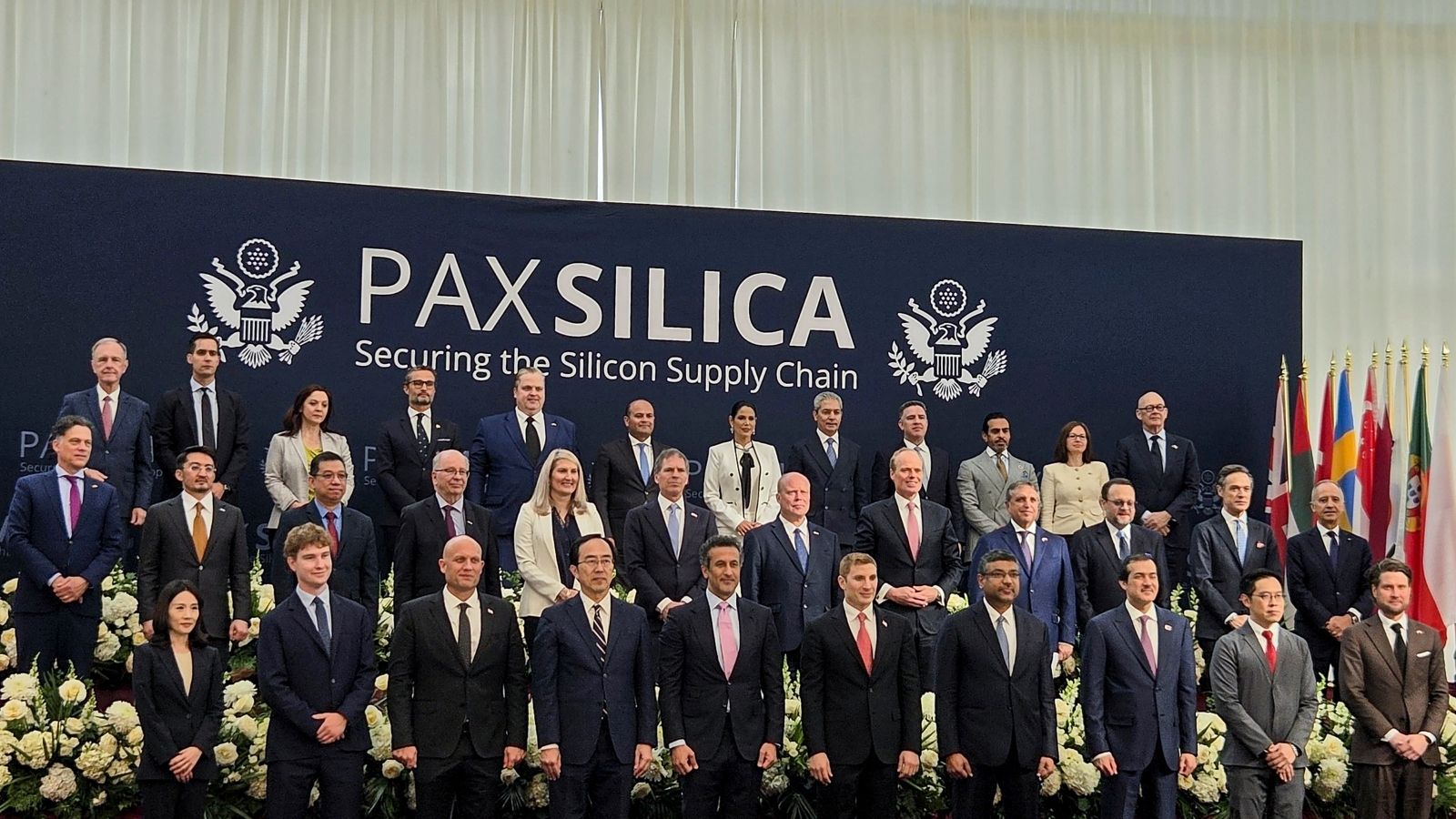
Regulating code isn't how you win the global technology race. Building hardware capacity is. That basic truth took center stage at the second Pax Silica Summit in Washington, where 35 nations aligned behind a strategy that completely shifts the global conversation around artificial intelligence.
Led by the United States and heavily backed by major tech economies like India, this coalition signed the Joint Statement on AI Opportunity. It's an agreement that sidesteps the usual bureaucratic urge to restrict software. Instead, it focuses directly on the physical engine room of the next century: the infrastructure, the hardware, and the supply lines that keep the chips flowing.
The Shift From Software Rules to Hardware Power
For the last few years, international tech meetings focused almost entirely on safety rules, ethical frameworks, and copyright battles. This summit flipped that script. The core idea driving the new declaration is that security doesn't come from writing restrictive laws first. It comes from building capacity faster than your rivals.
We're talking about a massive, coordinated effort to secure the tangible elements of the tech ecosystem. If you don't control the raw computing power, the energy grids, and the silicon, your safety policies don't matter anyway.
The expanding coalition added heavyweight economies during this session, including Germany, the Netherlands, Argentina, Chile, and the European Union. This isn't just a political talking shop. It functions as an economic and national security pact designed to build a tech ecosystem entirely independent of supply lines controlled by geopolitical adversaries.
What India Brings to the Table
India didn't just show up to sign a paper. The country joined the Pax Silica framework back in February during meetings in New Delhi, but this Washington summit solidified its role as a key manufacturing and design anchor. S Krishnan, Secretary of India's Ministry of Electronics and Information Technology, led a delegation that went deep into the weeds with US officials and private industry heads.
The discussions focused on three main vulnerabilities:
- Semiconductor Fabrication: Moving chip assembly and packaging away from single-point-of-failure regions.
- Critical Minerals: Finding alternative sources for the rare earth elements needed for high-performance magnets and batteries, an area where China currently holds a near-monopoly.
- Compute Infrastructure: Setting up data corridors that handle massive AI workloads safely across allied borders.
India's strategy here matches its domestic push to become a global hardware hub. The nation isn't looking to buy off-the-shelf components forever; it wants to build them. By embedding itself into this 35-nation trade bloc, India secures long-term access to critical western intellectual property while offering massive scaling capacity in return.
Fast Lanes and Training Grounds
Two practical tools came out of this summit that move the agreement from high-level diplomacy into real-world business operations.
First is an initiative called Pax Pass, backed by an initial $50 million in US foreign assistance funding. It's essentially an expedited border control system for tech hardware. Launched as a pilot project for shipping high-value supply chain goods through Panama, Pax Pass uses cargo verification and automated risk assessments to clear shipments fast. It strips away the customs friction that slows down components moving between partner nations.
Second is the Foundry School. Created in partnership with Stanford University, this program focuses entirely on workforce development. It connects engineers, entrepreneurs, and factory managers across the member economies to train them in advanced manufacturing techniques.
The Geopolitical Reality of Innovation Sovereignty
The phrase running through the summit corridors was "innovation sovereignty." It's a recognition that relying on an adversary for the base components of your economy is a massive strategic risk. No country wants a reality where every supply line can be used as a political pressure point or a weapon.
This agreement acts as a direct response to that vulnerability. The 35 nations involved are actively trying to decouple from monopolistic supply chains. They're trying to create a massive free-market zone where companies can invest, scale, and trade critical components without worrying about sudden export bans or geopolitical blackmail.
If you're managing a tech stack or investing in infrastructure, your next moves should reflect this shifting map. Look at where your hardware originates. Diversifying your component sourcing toward Pax Silica nations isn't just an exercise in corporate compliance anymore. It's a fundamental step to protect your business from the inevitable supply line shocks ahead.