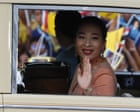
Thailand has lost its most accomplished royal. The Bureau of the Royal Household confirmed that Princess Bajrakitiyabha Narendiradebyavati passed away peacefully at King Chulalongkorn Memorial Hospital in Bangkok. She was 47.
The announcement ends years of quiet anxiety across the nation. Known affectionately to locals as Princess Pa or Princess Bha, she never regained consciousness after collapsing while training her dogs in Nakhon Ratchasima province. For over three years, her life was sustained by advanced medical machinery.
Her death isn't just a personal tragedy for the royal family. It upends the delicate calculations surrounding the Thai throne. She wasn't just a ceremonial figurehead waving from golden balconies. She was a Cornell-educated lawyer, a former diplomat, and a military general who many royalists hoped would secure the future of the Chakri dynasty.
The Long Medical Battle in the Shadows
The public has spent years parsing sparse palace bulletins for clues about her health. Her medical crisis started with a severe cardiac arrhythmia triggered by a mycoplasma infection affecting her heart. That initial shock left her completely dependent on life support to sustain her lung and kidney functions.
The final decline was brutal. Doctors battled an abdominal infection caused by severe inflammation of the large intestine. The complications cascaded into low blood pressure, erratic heart rhythms, and dangerous blood clotting disorders. The specialized medical team worked around the clock, but her major organ systems eventually gave out.
The palace says her body will lie in state at the Phiman Rattaya Throne Hall inside the Grand Palace. The state funeral rites will carry the highest traditional honors. Thais are expected to line the streets to pay their respects, marking the end of an era for a woman who was uniquely positioned to bridge the gap between ancient tradition and modern governance.
A Legal Minds Work Beyond the Palace Walls
Most foreign royals stick to ribbon-cutting. Princess Bajrakitiyabha took a different path, building a legitimate professional career that commanded genuine respect.
After earning a doctorate in law from Cornell University, she didn't hide inside royal residences. She put her degree to work as a prosecutor in the Thai Office of the Attorney-General. She famously referred to herself as a "hybrid" — part prosecutor, part criminal lawyer, and part diplomat.
- She served as Thailand's ambassador to Austria, Slovenia, and Slovakia.
- She championed prison reform, specifically targeting the harsh conditions faced by incarcerated women.
- She initiated the Kamlangjai project, providing crucial prenatal care and support to pregnant inmates and their children.
- She led the global advocacy campaign that convinced the United Nations General Assembly to adopt the "Bangkok Rules" for treating female offenders.
Her focus on penal reform was a deliberate choice. Thailand has historically maintained some of the highest female incarceration rates in the world, often driven by rigid drug laws. By using her immense royal status to shine a light on women inside the prison system, she gave a voice to people the rest of Thai society preferred to ignore.
The Succession Crisis Nobody is Allowed to Publicly Discuss
Here is the reality that standard news broadcasts won't say plainly. Her passing throws Thailand's royal succession into deep uncertainty. King Maha Vajiralongkorn is 73 and has not yet named an official heir to the throne.
The math of the royal family is complicated. The king has married four times and has seven children, but only three hold formal royal titles that put them in line for succession.
- Prince Dipangkorn Rasmijoti: The 20-year-old youngest son is the presumed heir by traditional male-preference custom. However, persistent reports regarding his learning difficulties have long raised questions among the ruling elite about his ability to rule unsupported.
- Princess Sirivannavari Nariratana: The 38-year-old fashion designer daughter who occupies a high-profile cultural role but lacks the administrative and legal background of her older sister.
- The Estranged Sons: Four older sons from the king's second marriage were stripped of their titles and exiled in 1996. While they made unexpected visits to Thailand recently, they claimed they were blocked from entering the country, keeping them firmly on the periphery.
Princess Bajrakitiyabha was the stabilizing force everyone counted on. Even though Thai custom traditionally favors a male monarch, a 1974 constitutional amendment opened the door for a woman to take the throne. Many political insiders and royalists envisioned a future where she either became the country's first reigning queen or acted as a powerful regent guiding her younger brother.
That plan is gone. The palace must now navigate this vacuum under the watchful gaze of the public, but without the benefit of open national dialogue. Thailand's strict lèse-majesté law carries penalties of up to 15 years in prison for a single charge of criticizing or insulting the monarchy. This effectively outlaws any public debate regarding who will rule next.
Navigating the Shift
The days ahead will be defined by meticulous ritual and silent political maneuvering. For citizens and observers trying to understand what happens next, watch these specific spaces.
Pay attention to how the palace positions Prince Dipangkorn during the extensive funeral ceremonies. His public duties and the prominence given to him during these rites will offer the clearest signal of the king's current thinking on succession.
Keep an eye on the political influence of the Royal Security Command. The late princess held the rank of general and served as a chief of staff within her father's personal security apparatus. How those military responsibilities are reassigned among the remaining royal circle will reveal who is gaining trust within the inner sanctum of the court.