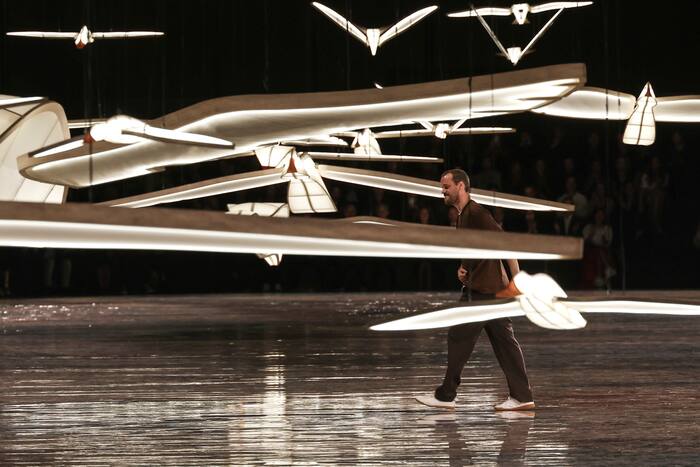
The lazy consensus of fashion journalism reads like a breathless press release drafted by an exhausted publicist. Every season, the narrative machine grinds into motion to tell us that a celebrity-soaked finale or a stunt-heavy runway featuring hovering concept cars means an industry has gone out on a high. Nicole Kidman in custom Balenciaga, Zendaya working a meticulously curated archival look, and a viral gimmick designed exclusively for TikTok feeds are treated as empirical proof of cultural vitality.
It is a comforting delusion. If you enjoyed this post, you should check out: this related article.
I have watched brands burn millions on atmospheric smoke and celebrity front rows while their actual sell-through rates crater in regional markets. The spectacle is not a sign of health; it is a smoke screen. When Paris Fashion Week wraps up with a collective sigh of relief over star power and viral stunts, it usually means the clothes themselves stopped mattering three days ago.
Let us dismantle the fiction. For another look on this development, refer to the latest coverage from Variety.
The Celebrity Distraction Machine
The presence of A-list actors in the front row is not an endorsement of sartorial genius. It is a calculated transaction designed to mask structural stagnation. When you measure success by earned media value rather than garment craftsmanship or supply chain integrity, you incentivize the circus over the craft.
Look closely at what dominated the coverage. It was not the cut of a tailored wool coat or the innovation of a new sustainable textile weave. It was who wore what to dinner, who sat next to whom, and whether a motorized vehicle could successfully navigate a indoor runway without hitting a lighting rig.
This is not high fashion. This is high-budget marketing theater designed for a demographic that largely cannot afford the primary line anyway. The houses trade on heritage while relying on fragrance sales and logo-stamped accessories to keep the lights on, treating the runway as a glorified commercial break.
The Fallacy of the Viral Stunt
Hovering cars and gravity-defying props belong in a sci-fi blockbuster, not a presentation meant to dictate what human beings wear to navigate their daily lives. When a brand feels the need to introduce heavy machinery or absurd special effects to hold an audience's attention, the underlying collection has already failed its primary test.
Clothes must function in three dimensions under natural light. They must move with a body walking down a city street, sitting on a subway, or standing in a boardroom. If a design requires a darkened warehouse, flashing strobe lights, and a Hollywood starlet to look compelling, it is not clothing. It is costume design for an audience that consumes reality through a five-inch screen.
The industry loves to talk about pushing boundaries, but mechanical gimmicks are the ultimate safe harbor. They provide an easy headline for editors who lack the vocabulary to analyze garment construction and a quick dopamine hit for consumers scrolling through their feeds at midnight.
What the Coverage Misses Entirely
The deeper crisis facing contemporary fashion is not a lack of spectacle. It is a profound crisis of relevance. While editors swoon over star-studded arrivals in the French capital, independent designers producing genuinely disruptive work are being squeezed out of existence by exorbitant production costs and consolidated retail monopolies.
The real story of Paris Fashion Week is one of extreme bifurcation. A handful of legacy conglomerates generate astronomical profits by selling mass-produced aspirational goods to global middle-class buyers, while the artisanal core that once justified Paris's reputation as a creative capital gasps for air.
Pretending that a celebrity cameo or a futuristic prop constitutes a triumphant finale ignores the economic reality of the people supposed to buy the clothes. It is an insular echo chamber celebrating its own reflection, terrified that if the music stops and the stunts vanish, someone might notice the emperor has traded his new clothes for a marketing budget.
Stop buying the narrative that flash equals substance. Real luxury is about longevity, material honesty, and structural integrity. Everything else is just noise designed to distract you from the fact that the clothes stopped speaking for themselves years ago.