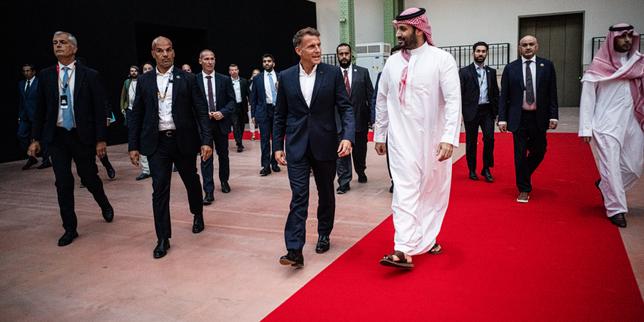
When French President Emmanuel Macron and Saudi Crown Prince Mohammed bin Salman stood side by side at the Grand Palais in Paris, they weren't just watching teenagers play video games. They were flexing international influence.
The closing ceremony of the 2026 Esports World Cup marked a massive shift. For the first time, this massive competition moved outside Riyadh, landing right in the heart of France. With a jaw-dropping prize pool topping $75 million, the tournament is a cornerstone of modern statecraft.
Let's look past the flashing lights and gaming rigs. What actually happened at the Grand Palais tells a much bigger story about diplomacy, money, and cultural power.
The Strategy Behind the Controllers
Saudi Arabia didn't stumble into competitive gaming by accident. Crown Prince Mohammed bin Salman launched the Esports World Cup initiative to diversify the nation's economy and project modern influence globally.
Traditional diplomacy usually happens behind closed doors or at quiet summit tables. This approach trades suits for streaming audiences. Over seven weeks, more than 2,000 professional players representing 200 clubs competed across 25 different titles. Millions of viewers tuned in worldwide.
By bringing the finale to Paris, the organizers proved their model can travel. It's no longer just an event confined to the Gulf. It's a mobile entertainment empire.
Why Paris Said Yes
France has its own reasons for rolling out the red carpet. Hosting the climax of the tournament allowed Macron to cement ties with a crucial Middle Eastern partner. Trade agreements, energy talks, and regional security were all on the table during this high-profile state visit.
Critics raise eyebrows at these grand spectacles, pointing out the complex political backdrops and ongoing human rights concerns surrounding visits from figures like MBS. Yet, economic pragmatism often wins. France wants investments, and Saudi capital is flowing heavily into global entertainment and infrastructure sectors.
When Macron handed the $7 million grand prize trophy to team AG.AL—who topped the standings with 5,300 points—he wasn't just acting as a sports fan. He was signaling that Paris is open for business with Riyadh's new economic era.
What This Means for the Future of Entertainment
Gaming is now too big to ignore. Nations that control the infrastructure of digital entertainment hold immense sway over younger generations.
Saudi Arabia is setting the blueprint. With future mega-events like Expo 2030 and the 2034 FIFA World Cup on their horizon, competitive gaming serves as the warm-up act. It tests logistics, streaming capabilities, and international hospitality on a massive scale.
The tournament returns to Riyadh next year. Paris proved that the concept works on foreign soil, but the financial gravity will pull it back to the Kingdom. Watch how other Western nations react as soft power shifts further away from traditional cultural exports and into the hands of digital platforms.