European regulators set out to eliminate greenwashing and clean up global forestry supply chains, but the resulting administrative machinery threatens to swallow small presses and independent commercial printers whole.
European Union lawmakers crafted a series of environmental mandates—the Packaging and Packaging Waste Regulation (PPWR), strict updates to Extended Producer Responsibility (EPR), and the European Deforestation Regulation (EUDR)—with massive multinational corporations in mind. The core premise was simple enough: force producers to account for the physical footprint of their materials. Yet, as implementation rollouts unfold, the reality on the ground in print shops from Leipzig to Bologna looks vastly different from the vision discussed in Brussels legislative halls.
The regulatory apparatus creates a structural divide that rewards capital-rich operations while punishing smaller operators who lack dedicated legal and compliance departments.
The Traceability Illusion
Consider a standard hardback book. To an author, it is a creative asset. To the EUDR, it is a complex assembly of wood-derived components—text block paper, endpapers, binder's board, and printed jacket—each carrying individual legal liabilities. Under the regulation's initial scope, every single raw element demanded precise GPS coordinates pinpointing the exact plots of land where the source timber was harvested.
While late structural carve-outs shifted direct EUDR reporting for finished printed books primarily back onto raw material sourcing and pulp production, the operational ripple effects remain severe. Paper mills must now maintain granular tracking data for every batch of pulp they process. That data flows downstream to the printers, who must verify compliance to avoid importing illegal or untraceable fiber into the single market.
Large European paper mills invested millions to upgrade their enterprise software, integrating satellite mapping layers directly into their resource planning databases. Independent regional printers, however, face a wall of manual paperwork. When a client requests a specialized paper stock sourced from a boutique mill outside the EU, the burden of proving that fiber’s origins falls back onto the print operator. If a non-EU mill cannot or will not supply compliant polygon data for its timber source, that stock becomes legally toxic overnight.
Raw Timber Plot (GPS Mapping) ➔ Pulp Processing Mill ➔ Paper Merchant Verification ➔ Press Operator Audit ➔ Final Distributor
This tracking chain sounds efficient on paper, but in practice, timber mixed at the pulping stage breaks traditional batch lineage. Mills often aggregate wood from dozens of private micro-parcels across Eastern Europe or Scandinavia. Forcing a mill to guarantee that zero percentage of a 50-ton batch of pulp touches land converted after the EU cutoff date requires exhaustive due diligence. Small printers who cannot absorb these administrative overheads are quietly paring down their paper catalogues, killing off niche paper types in favor of standard, pre-certified commercial stocks controlled by a handful of giant paper conglomerates.
The Hidden Cost of Packaging Rules
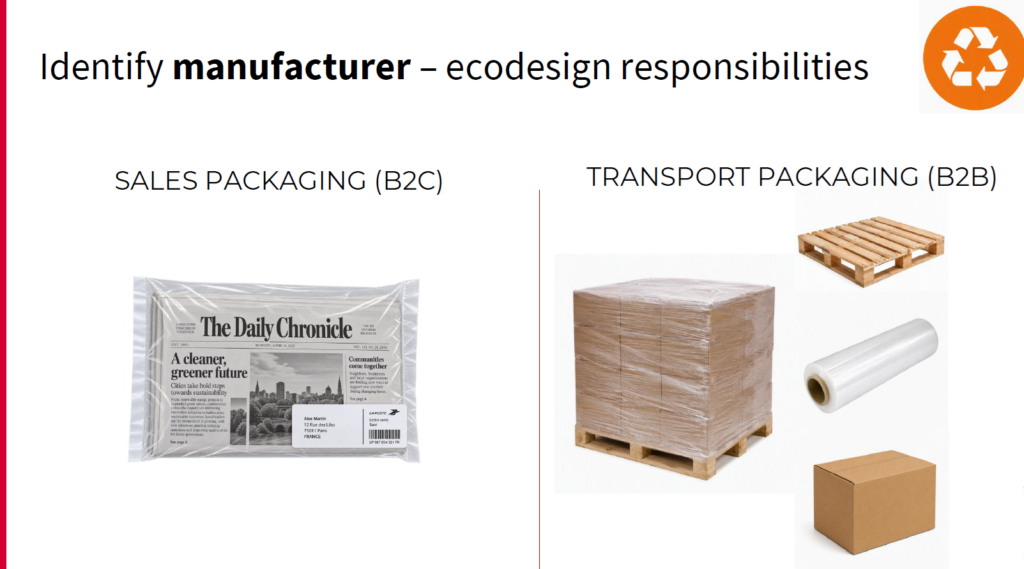
While deforestation rules dominate headline debates, the Packaging and Packaging Waste Regulation hits print shop floors daily. Applied directly across member states, PPWR dictates strict limits on packaging weight, volume, and material composition. It targets both the primary packaging that sits on store shelves and the secondary transit packaging used to move pallets of books and commercial print collateral.
For e-commerce publishers and print-on-demand networks, the immediate challenge lies in proving that transit boxes contain minimal empty space. The days of packing a single volume into a standard-sized box padded with excessive paper fill are ending. Packaging must be optimized to fit the precise dimensions of the goods inside, forcing printers to purchase custom box-making machinery or stock dozens of distinct carton dimensions.
Concurrently, ink formulations face intense scrutiny under recycling mandates. Regulations push for de-inkability guidelines that limit heavy coverage or require specialized water-based formulations to facilitate high-yield paper recycling.
| Regulatory Area | Core Mechanism | Operational Impact on Printers | Primary Financial Vulnerability |
|---|---|---|---|
| EUDR | Forest-of-origin tracking and Due Diligence Statements | Paper stock selection restricted to fully certified mills | Supply chain delays, border seizures of non-compliant stock |
| PPWR | Mandatory packaging reduction and recyclability targets | Re-engineering transit packing and altering ink formulas | Capital expenditure for custom box-making hardware |
| EPR | Market-by-market producer responsibility fees | Country-specific registration and volume reporting | Cross-border administrative overhead and legal consulting |
| Green Claims | Ban on unsubstantiated environmental marketing | Removal of vague "eco-friendly" or "carbon neutral" labels | Legal exposure and third-party audit fees |
The financial stress deepens when layer-upon-layer of Extended Producer Responsibility rules are added. EPR schemes demand that whoever places packaging onto a market pays for its eventual collection and end-of-life processing. Because EPR is enforced on a national level without absolute standardization across the EU, a publisher shipping direct-to-consumer orders across seven European borders must navigate seven distinct registration portals, fee structures, and reporting thresholds.
Marketing Claims Face Legal Landmines
For decades, the print industry defended itself against the digital transition by leaning hard into environmental credentials. Promotional materials routinely featured green leaf icons, claims of "100% carbon-neutral production," and vague statements about planting trees for every job completed.
That loose branding approach is now illegal under strict anti-greenwashing directives.
The regulatory stance is uncompromising: generic claims like "eco-friendly," "green," or "climate-positive" are banned outright unless backed by verified, science-based lifecycle assessments. Claiming carbon neutrality based on unverified carbon offset schemes is specifically targeted. If a publisher claims a book is printed sustainably because the text pages use recycled paper, but the cover uses virgin synthetic laminate, the entire statement can trigger heavy regulatory fines for misleading consumers.
Even visual design choices—such as using green color palettes, leaf imagery, or unvalidated private eco-badges—can trigger regulatory audits if they create a false impression of environmental net-benefit.
Publishers must scrub marketing collateral clean of cheap sustainability slogans. If a press wants to advertise environmental attributes, it must present third-party certified metrics covering the entire production lifecycle, from raw pulp harvest through press-room power consumption and ink formulation to delivery logistics. For small publishers, paying for third-party lifecycle audits costs more than any sales boost the green label could ever generate.
The Consolidation Machine
The ultimate consequence of this regulatory wave will not be a sudden end to printing. Paper remains a durable, culturally vital, and fundamentally renewable medium. The true consequence is market consolidation.
Large printing groups absorb compliance overhead with relative ease. They hire specialized environmental officers, deploy automated enterprise software to aggregate timber tracking data, and negotiate bulk rates on certified paper stocks directly with major mills.
Small independent print shops cannot afford dedicated compliance staffs. When an independent operator must spend fifteen hours a week filling out member-state packaging portals, cross-referencing paper lot certifications, and checking ink formulas against changing hazardous chemical registries, profit margins vanish.
Many family-owned printers will simply sell out to consolidated regional conglomerates. The European printing sector will emerge cleaner, certainly, but it will also be smaller, more homogeneous, and dominated by major players who can afford to turn legal compliance into a competitive moat.
Press operators must stop treating these mandates as temporary political shifts that can be ignored until an auditor knocks on the door. Map every raw material supplier today, audit your packaging workflows for volume inefficiencies, and strip unverified green claims from your product lines immediately.