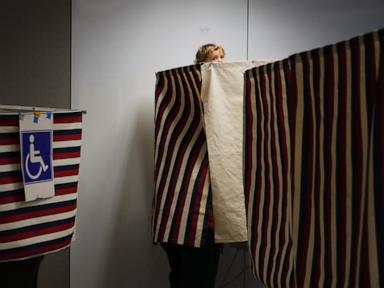
Modern electoral administration no longer peaks on a single Tuesday; it functions as an extended, multi-week logistical pipeline where early voting volumes dictate Election Day bottlenecks, verification latencies, and institutional trust. When early turnout surges and domestic and international observers deploy across precincts, the primary challenge shifts from basic ballot collection to managing asymmetric processing loads and maintaining transparent chain-of-custody protocols.
Conventional reporting treats high early voting and intense poll observation as isolated human-interest storylines. In reality, they represent two interlocking variables in a complex operational system. Understanding how these forces interact requires breaking down electoral execution into its core structural components: front-loaded demand elasticity, precinct-level queuing theory, the mechanics of independent observation, and the reconciliation latency between mail-in and in-person tallies.
The Structural Shift from Single-Day Events to Multi-Week Pipelines
Historically, election infrastructure was designed for a single-day spike in demand, operating much like a seasonal retail surge. The expansion of no-excuse mail-in ballots and extended in-person early voting windows has fundamentally altered this distribution curve. Instead of a uniform wave on Election Day, election administrators now manage a bimodal distribution: a prolonged, steady intake of pre-Election Day ballots followed by a compressed, high-intensity sprint at physical polling locations.
This shift introduces immediate operational trade-offs:
- Fixed Cost Amortization vs. Variable Labor Strain: Extended voting windows allow jurisdictions to spread fixed equipment costs over weeks, yet they require staffing temporary workers for longer durations, increasing burnout and attrition before the final day arrives.
- Inventory and Ballot Allocation: Administrators must dynamically forecast how many voters remain in the active pool by Tuesday morning. Overestimating remaining in-person demand leads to idle poll workers and wasted precinct capacity; underestimating it triggers severe localized shortages of provisional ballots and paper stock.
- Voter Pool Cannibalization: A surge in early voting does not automatically guarantee a proportional increase in total net turnout. Frequently, early voting cannibalizes the traditional Election Day electorate, pulling high-propensity voters out of Tuesday lines and leaving behind a demographic mix that behaves differently at the polls.
When high-propensity voters cast ballots early, the remaining Election Day cohort often contains a higher concentration of infrequent voters, first-time registrants, and individuals requiring address updates or provisional adjudication. This demographic shift increases the average transaction time per voter at the check-in desk, meaning a polling place can experience long lines even when total Tuesday foot traffic is lower than in previous cycles.
Queuing Theory and Precinct-Level Bottlenecks
To evaluate whether an election is running smoothly, analysts must look past raw turnout numbers and examine service rates. In operations research, polling locations operate as multi-server queuing systems. Congestion occurs not merely because arrival rates are high, but because the variance in processing times disrupts the flow.
Three primary friction points govern Election Day throughput:
- Electronic Poll Book Synchronization: When early voting continues right up until the weekend before Election Day, election management systems face tight deadlines to update voter rolls across all precincts. If a voter casts a ballot late in the early voting window, their status must be flagged across the network to prevent double voting. Any latency in database synchronization forces poll workers to rely on manual lookups or issue provisional ballots, multiplying transaction times by a factor of five or more.
- Ballot Length and Cognitive Load: Down-ballot initiatives, judicial retentions, and constitutional amendments directly dictate how long a voter occupies a privacy booth or ballot-marking device. A two-page ballot doubles booth occupancy time compared to a single-page ballot. When booth capacity is constrained, lines back up at the check-in table regardless of how fast poll workers verify identification.
- Tabulator Throughput and Paper Jams: Optical scan tabulators process ballots at fixed speeds. High humidity, folded mail-in ballots fed into precinct scanners, or stray ink marks cause mechanical rejections. Each rejection requires poll worker intervention, temporarily halting the exit flow of the precinct and creating a domino effect back to the entrance.
Administrators attempt to mitigate these bottlenecks by reallocating resources based on early voting data. If a specific precinct shows depressed early turnout relative to historical baselines, managers deploy extra technical support and contingency ballots to that location before polls open. Conversely, precincts with heavy early participation require robust back-office teams to process incoming mail ballots rather than excessive front-line booth capacity.
The Architecture of Poll Observation and Transparency
As participation surges and margins tighten, the presence of poll observers—ranging from partisan challengers to nonpartisan civic monitors and international delegations—becomes a critical variable in institutional legitimacy. However, public narratives often conflate distinct roles under the generic umbrella of "watchers," obscuring the strict legal boundaries that govern their presence.
Effective observation relies on a clear taxonomy of access and authority:
- Credentialed Partisan Observers: Appointed by political parties or candidates, these individuals operate under statutory rules that permit them to observe check-in procedures, verify that ballot boxes are empty prior to opening, and monitor the closing of polls. Crucially, they do not have the authority to interact directly with voters, handle ballots, or issue directives to poll workers. Any challenge to a voter's eligibility must be routed formally through the presiding precinct judge.
- Nonpartisan Domestic Monitors: Organizations focused on voting rights and administrative compliance station observers outside polling places—beyond the statutory buffer zone—or inside where state law permits. Their objective is systemic auditing: tracking line lengths, documenting equipment failures, and ensuring uniform application of identification laws across different socioeconomic neighborhoods.
- International Election Observation Missions: Bodies such as the Organization for Security and Co-operation in Europe (OSCE) deploy methodologies grounded in international commitments. They assess the entire electoral ecosystem, including media access, campaign finance transparency, and legal frameworks, rather than focusing solely on isolated precinct disputes.
The presence of observers introduces a classic operational tension: transparency versus friction. Open observation deters misconduct and builds an evidentiary record that can debunk false claims of fraud. Yet, aggressive or poorly trained observers can inadvertently degrade precinct efficiency. When observers repeatedly interrupt check-in clerks to question routine administrative procedures, service rates drop, queues lengthen, and voter frustration escalates.
Jurisdictions manage this friction through spatial zoning and standardized challenge protocols. By designating specific observation zones that preserve line-of-sight to critical processes without encroaching on voter privacy or worker pathways, election officials balance openness with throughput. Furthermore, requiring challenges to be submitted in writing with specific statutory citations prevents frivolous disruptions while creating an auditable paper trail for post-election review.
Adjudication Latency and the Counting Curve
The most misunderstood phase of a high-turnout election occurs after polls close. A surge in early voting—specifically mail-in and absentee ballots—fundamentally alters the speed at which results are reported. In-person ballots cast on Election Day are tabulated instantly at the precinct level, yielding rapid initial returns. Mail-in ballots, by contrast, require a multi-step verification pipeline before they ever touch a scanner.
This pipeline consists of four sequential gates:
- Intake and Sorting: Envelopes are logged, scanned for tracking barcodes, and sorted by precinct.
- Signature and Credential Verification: Election workers compare the signature or identification number on the outer envelope against the voter's registration file. Discrepancies trigger a "cure" process, notifying the voter to verify their identity within a statutory window.
- Extraction and Flattening: Once verified, outer secrecy envelopes are sliced open, ballots are extracted to preserve anonymity, and folded sheets are flattened so they do not jam high-speed central tabulators.
- Adjudication: Ballots with ambiguous marks—such as circled names instead of filled-in ovals, or stray pen marks—are flagged by scanners and routed to bipartisan adjudication teams to determine voter intent according to written state standards.
The timing of when states allow workers to begin steps one through three dictates the reporting timeline. Jurisdictions that permit pre-processing weeks before Election Day can release massive batches of early vote totals minutes after polls close. Jurisdictions that prohibit opening envelopes until Election Day morning face an inevitable mathematical bottleneck: millions of paper ballots must be manually opened, flattened, and verified while the public expects instantaneous results.
This structural delay creates predictable shifts in apparent vote margins—often referred to as "red mirages" or "blue shifts." These fluctuations are not anomalies; they are the direct result of reporting sequence bias. When urban centers with high volumes of mail-in ballots take longer to process than rural precincts using instant-read in-person scanners, the statistical composition of the reported vote changes over time. Analysts who fail to weight incoming returns by ballot type and geographic origin routinely misinterpret normal administrative sequencing as sudden electoral swings.
Systemic Vulnerabilities and Strategic Limits
No electoral architecture eliminates all risk; every optimization creates secondary vulnerabilities. Expanding early voting relieves pressure on Tuesday infrastructure but extends the window during which cyber threats, physical security incidents, or misinformation campaigns can disrupt operations. Increasing observer access enhances perceived fairness for skeptical factions, yet over-saturating small precincts with competing monitors increases the probability of interpersonal conflict and administrative paralysis.
Similarly, strict signature verification rules protect against unauthorized ballots, but aggressive rejection thresholds disproportionately disenfranchise younger voters, elderly citizens with changing handwriting, and individuals with disabilities. Conversely, relaxing verification standards accelerates counting speeds at the expense of auditability and public confidence among skeptics. Election administration is an exercise in constrained optimization, where policymakers must explicitly choose which type of error—administrative friction or security vulnerability—they are more willing to tolerate.
Operational Imperatives for Election Stakeholders
To navigate high-turnout cycles without degrading institutional credibility, election administrators, campaign strategists, and media analysts must abandon reactive reporting and adopt disciplined operational frameworks:
- For Election Administrators: Decouple ballot pre-processing from Election Day tabulations wherever statutory authority allows. Reallocate technical support teams dynamically based on real-time early voting cannibalization rates, shifting resources toward precincts with high concentrations of infrequent voters who require longer check-in adjudication.
- For Political Campaigns and Observer Programs: Invest heavily in pre-election legal training for credentialed watchers. Deploy observers specifically to high-variance bottlenecks—such as central mail-processing facilities and precincts with new electronic poll book deployments—rather than clustering them in low-risk, high-visibility locations.
- For Media and Data Analysts: Cease reporting raw, unweighted vote totals during the initial hours after poll closings. Model expected outcomes by separating returns into distinct streams—early in-person, mail-in absentee, and Election Day precinct votes—and benchmark incoming batches against historical baseline compositions for each specific stream before projecting winners.