Most rural schools close because the kids grow up and leave. Alicudi did the opposite. For twenty years, the tiny volcanic rock in the Aeolian archipelago off Sicily operated without a single enrolled student of primary school age. Then, a single family decided to stay put while the rest of the world looked for convenience elsewhere, and local authorities had to unlock the doors of a shuttered classroom.
Communities don't die all at once. They thin out. People migrate toward cities for jobs, healthcare, and reliable high-speed internet. Islands like Alicudi present an extreme version of this modern migration. Life here relies on ferry schedules that get canceled when the sea gets moody, and grocery shopping involves hauling bags up steep stone staircases where cars cannot go. When you choose to raise a child in that environment, you are fighting a decades-long current of depopulation.
The Reality of Isolation on Alicudi
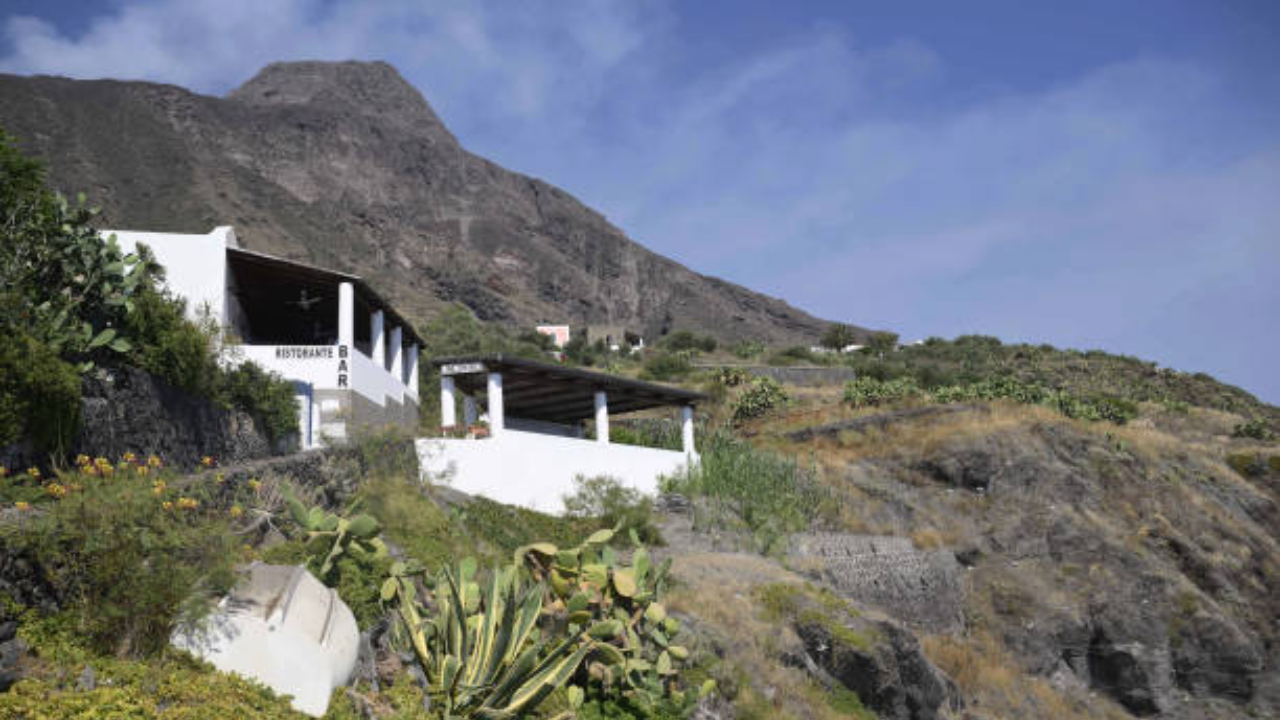
Alicudi sits on the western edge of the Aeolian chain, the least populated and most rugged of the seven islands. It is basically the top of an extinct volcano rising straight out of the Tyrrhenian Sea. There are no paved roads. Mules carry goods from the port to the upper slopes. Electricity and running water came late, and the winter winds can isolate the island for days at a time.
When young families look at a place like this, they usually see a vacation spot. They see the steep black cliffs, the crystal-clear water, and the dramatic sunsets over Filicudi. Living there year-round is an entirely different matter. Winters are damp, quiet, and lonely. For a long time, the year-round population hovered below a hundred people, mostly retirees and a handful of fishermen who refused to abandon ancestral stone houses.
Schools are the absolute canary in the coal mine for rural isolation. Once the local school shuts down, young couples stop coming. They know they will face a heartbreaking choice when their kids hit school age: either pack up and move to the mainland or split the family apart. That is what makes the reopening of Alicudi's school such a fascinating anomaly. It wasn't the result of a massive government economic revitalization grant or a trendy remote-work village scheme. It was just one family holding their ground.
How a Closed Classroom Came Back to Life
The school building had sat quiet for two decades. Desks gathered dust. Teaching materials from the late nineties sat in cupboards. The local municipality of Lipari, which administers the smaller Aeolian islands, kept ownership of the building, treating it like a ghost monument to a community that used to be.
When the child reached school age, the parents faced the Lipari school district head-on. Italian law dictates that education must be provided, but maintaining a dedicated teacher for a single student defies standard bureaucratic logic. Instead of forcing the family to commute via unreliable hydrofoils to a larger island like Lipari or Salina, the regional educational authorities made an exception. They appointed a teacher.
Suddenly, a multi-decade streak of empty hallways broke. Photos of the single student sitting at a pristine wooden desk surrounded by an otherwise empty room went viral across Italian media. People romanticized it as a triumph of rural resistance.
Yet, teaching a single student presents bizarre pedagogical challenges. There is no playground chatter, no group projects, and no competition over math quizzes. Socialization has to be manufactured by walking the steep stone paths to find neighbors, or by interacting closely with the adult islanders who treat the child like everyone's kid. It is a hyper-concentrated form of education. Every single lesson is a direct one-on-one tutorial.
The Wider Trend of Italian Micro-Island Depopulation
Alicudi's story highlights a broader crisis across the Mediterranean. Italy's smaller islands are turning into open-air retirement communities. Municipalities have tried everything to reverse the trend. You have seen the famous one-euro home schemes in Sicilian hill towns, and similar efforts to lure remote workers to isolated islands with cheap housing and tax incentives.
Most of those programs attract digital nomads who stay for six months, write a blog post about slow living, and then leave when the winter Wi-Fi drops or the grocery store runs out of fresh produce. True depopulation reversal requires people who are economically tied to the soil or the sea—fishermen, artisans, small-scale farmers, or people running essential local services.
The family that kept Alicudi's school open didn't arrive with a venture capital mindset. They integrated into the existing rhythms of the island. They understood that living in a place like Alicudi means accepting inconvenience as a baseline tax on beauty and peace.
What This Means for the Future of Rural Communities
Don't expect a sudden demographic boom on Alicudi. A single reopened school does not reverse twenty years of demographic decline. The island still lacks the infrastructure to support a sudden influx of young families, even if people were willing to endure the isolation. There is no hospital, no high school, and limited year-round employment outside of seasonal tourism and traditional fishing.
What the reopened school actually proves is that human presence in marginal places hangs by a very thin thread. It takes just one stubborn household to keep a public service alive, and just one local government willing to bend the rigid rules of scale to make it happen.
If you ever find yourself hiking up the rugged stone steps of Alicudi, past the terraced caper fields and the whitewashed houses clinging to the volcanic rock, look for that small schoolhouse. It represents a rare victory against the creeping anonymity of modern life. It shows that sometimes, holding the line doesn't require a movement. It just requires refusing to leave.