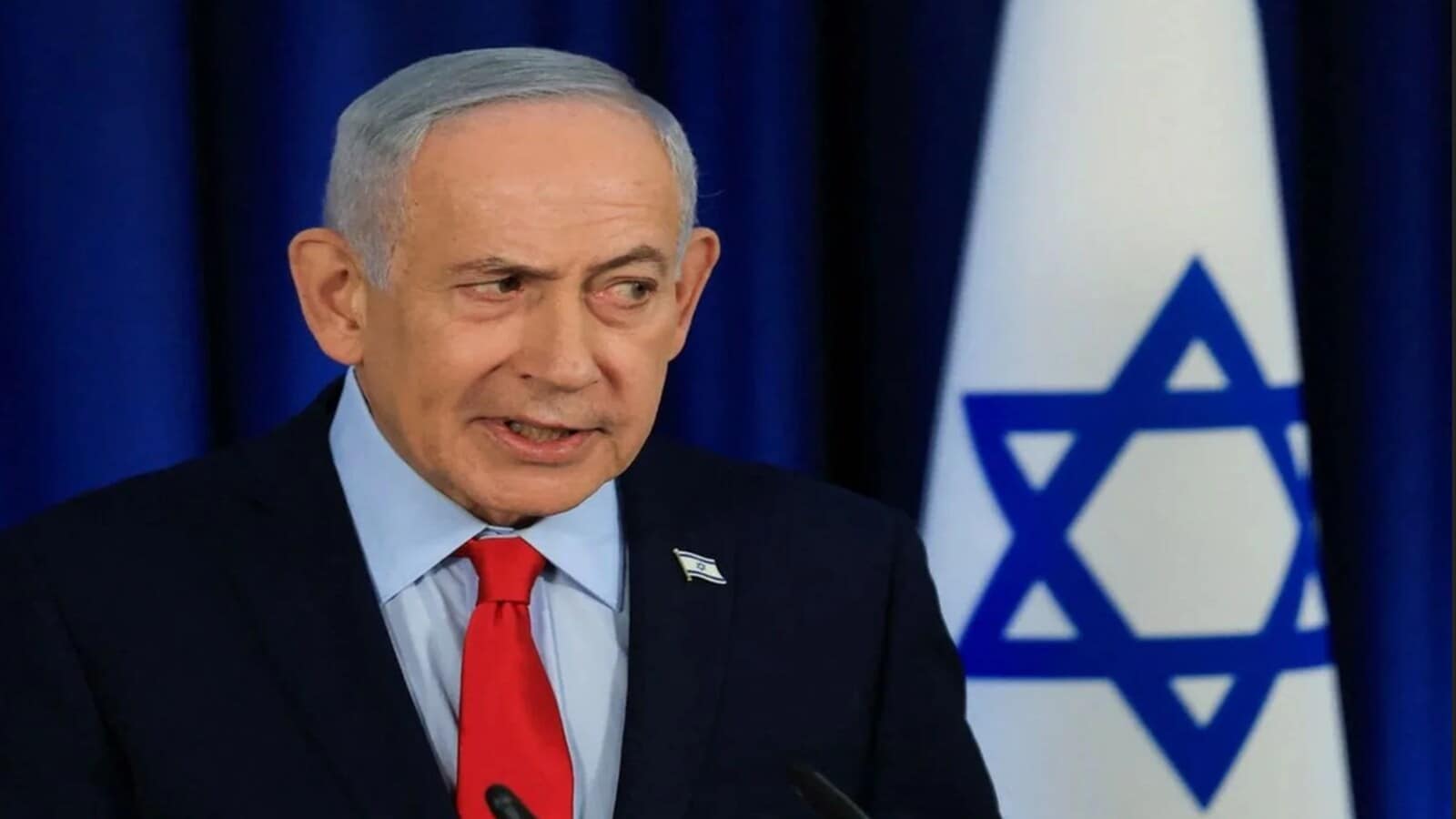
Conventional wisdom says a catastrophic security failure ends a prime minister's career. In Israel, that assumption is dangerously incomplete. While October 7 shattered the myth of invincibility that Benjamin Netanyahu spent decades cultivating, it has not automatically guaranteed his defeat at the ballot box.
Voters do not cast ballots in a vacuum; they vote within a rigid parliamentary system where coalition arithmetic, demographic shifts, and deep ideological tribalism often outweigh individual accountability. To understand whether October 7 will finally unseat Israel's longest-serving leader, you have to look past the immediate outrage and examine the machinery of Israeli politics.
The Architecture of Survival
Israeli elections are not referendums on a single leader. They are battles between blocs. Under Israel's proportional representation system, citizens vote for party lists rather than individual candidates, and a party needs only to clear a 3.25 percent electoral threshold to enter the 120-seat Knesset.
This structure rewards consolidation on the right and punishes fragmentation in the center and left. Netanyahu's primary political skill has never been broad popularity across the entire electorate. His genius lies in holding together a disciplined bloc of right-wing, nationalist, and ultra-Orthodox parties that see no viable alternative to his leadership.
For years, opponents assumed that a major crisis would fracture this alliance. Yet time and again, the constituent parts of his coalition have calculated that their survival depends on staying together. Ultra-Orthodox parties prioritize state funding for religious institutions and military draft exemptions for yeshiva students. Far-right factions focus on West Bank settlement expansion and judicial overhaul. Neither group sees a path to achieving those goals under a centrist or left-wing government. As long as Netanyahu remains the only figure capable of uniting them into a governing majority, his partners have little incentive to pull the plug prematurely.
Historical Precedent and the Slow Burn of Accountability
History offers a sobering corrective to anyone expecting an instant political reckoning. Following the intelligence failures of the 1973 Yom Kippur War, Prime Minister Golda Meir and her Labor Party actually won the election held just two months later in December 1973.
The public was furious. Protests erupted across the country. Yet voters hesitated to change leadership while the nation was still in the grip of existential uncertainty and active military negotiations.
The real political earthquake did not happen until 1977—nearly four years later—when Menachem Begin and the Likud party swept into power, ending nearly three decades of Labor dominance. That shift required more than anger over 1973. It demanded a credible, unified opposition, persistent economic grievances, and the rise of an entire demographic—Mizrahi Jews—who felt marginalized by the ruling establishment.
October 7 carries far heavier emotional and societal weight than 1973, largely because the casualties were overwhelmingly civilians murdered in their homes rather than soldiers on distant fronts. Even so, the timeline of political consequence rarely moves as fast as public grief. Anger needs a political vehicle to translate into seats, and building that vehicle takes time.
The Blame Distribution Problem
One of the central reasons October 7 has not cleanly destroyed Netanyahu's electoral prospects is the fierce battle over who owns the failure. A security disaster of this magnitude does not happen because of one decision; it is the result of systemic breakdown across political and military echelons.
Netanyahu and his allies have worked relentlessly to frame October 7 as an intelligence and operational collapse by the Israel Defense Forces and the Shin Bet security agency. By highlighting the failure of military brass to anticipate Hamas's breach of the Gaza border fence, his camp shifts the focus away from his government's long-standing policy of containing Hamas and allowing Qatari funds into Gaza to maintain quiet.
At the same time, critics point out that the prime minister sets strategic doctrine. For over a decade, Netanyahu operated on the premise that the Palestinian issue could be managed rather than resolved, keeping Hamas weak enough to deter major war while strong enough to prevent the Palestinian Authority from establishing a unified state.
For undecided voters, this creates a fog of competing narratives. When military chiefs accept responsibility and resign while the political leadership refuses to establish a state commission of inquiry until the war ends, accountability becomes blurred. Voters who already distrust the state bureaucracy or the media are primed to accept the argument that the security establishment failed the prime minister, rather than the other way around.
Where the Real Battleground Lies
If October 7 is going to unseat Netanyahu, it will not be because lifelong Likud voters suddenly embrace the political left. It will happen because of subtle shifts among a narrow slice of soft-right and center-right voters—people who care deeply about national security, economic stability, and military service.
The Burden-Sharing Fault Line
Perhaps the most corrosive issue for Netanyahu's coalition is not Gaza itself, but the question of who bears the burden of defending the country. Months of protracted reserve duty have placed immense strain on secular and national-religious families, small business owners, and the high-tech sector.
Against this backdrop, the ongoing effort by Netanyahu's ultra-Orthodox coalition partners to codify broad exemptions from mandatory military service has struck a raw nerve. Even among traditional right-wing voters, the sight of the government pushing through draft exemptions while tens of thousands of reservists serve repeated tours feels like a breach of the basic social contract. This issue cuts directly into Likud's base in a way that abstract debates over judicial reform never could.
The Economic Hangover
Wars are expensive, and Israel's economy has absorbed massive shocks from defense spending, evacuated communities in the north and south, and credit rating downgrades. As the immediate crisis gives way to higher taxes, budget cuts, and elevated living costs, pocketbook issues will inevitably return to the forefront.
Netanyahu built much of his reputation in the 2000s and 2010s as "Mr. Economy," the steady hand who liberalized markets and oversaw a booming tech sector. If voters begin to associate his government with prolonged stagnation, rising debt, and international isolation, his core brand suffers permanent damage.
The Opposition's Structural Dilemma
A prime minister cannot lose an election to nobody. For Netanyahu to fall, an opposition bloc must assemble at least 61 seats in the Knesset—and that math remains treacherous.
Any viable anti-Netanyahu coalition must stretch across deep ideological divides. It has to include center-right hawks who oppose a Palestinian state, centrist pragmatists, remnants of the secular left, and potentially Arab parties. Holding such a diverse group together proved nearly impossible during the short-lived Bennett-Lapid government of 2021–2022, which collapsed after barely a year under the weight of its own contradictions.
Suppose a hypothetical election yields 58 seats for the current opposition parties and 54 for Netanyahu's bloc, leaving eight seats held by Arab parties. If the center-right members of the opposition refuse to rely on Arab parties for a majority, and the ultra-Orthodox refuse to break with Netanyahu, the country lands straight back in political deadlock.
Voters remember the paralysis of five elections between 2019 and 2022. Paradoxically, fear of returning to that chaos can work in an incumbent's favor, persuading hesitant voters to stick with a known quantity rather than risk another fragile, squabbling coalition.
Demographics and the Long-Term Tilt
Beneath the daily headlines lies a demographic reality that consistently favors the Israeli right. Higher birth rates among ultra-Orthodox and national-religious populations mean that each passing election cycle adds tens of thousands of young voters who lean heavily conservative.
Polling consistently shows that younger Israeli Jewish voters are significantly more right-wing than their parents or grandparents. Shaped by the Second Intifada, recurring rounds of rocket fire from Gaza, and now the trauma of October 7, many young Israelis view territorial compromise not as a path to peace, but as an existential gamble.
This demographic momentum acts as a structural safety net for Netanyahu and his ideological heirs. Even when dissatisfaction with his personal leadership spikes, a large portion of the electorate refuses to cross over to parties they perceive as soft on security. Instead, dissatisfied right-wing voters tend to look for alternatives within their own camp—figures like Naftali Bennett or Avigdor Lieberman—who promise tougher security policies without abandoning nationalist principles.
The Wartime Rally and the Shifting Calendar
Timing is everything in parliamentary politics. In the immediate aftermath of October 7, polling showed a catastrophic collapse for Netanyahu and Likud, with projections suggesting his coalition could lose twenty or more seats.
As months passed without an immediate election, however, political gravity began to reassert itself. Military operations against Hamas leadership, strikes against Hezbollah in Lebanon, and direct confrontations with Iran allowed Netanyahu to recast himself as a resolute wartime leader standing firm against regional enemies and international pressure alike.
Every major tactical success on the battlefield gives his campaign material to argue that only he possesses the experience and toughness to navigate a hostile world. Whether that framing holds depends entirely on what the reality on the ground looks like when voters finally enter the booth—whether hostages have been returned, whether northern communities can safely go home, and whether the country feels secure or trapped in a forever war.
What Actually Decides the Ballot
October 7 will hang over the next Israeli election like a storm cloud, shaping every debate, campaign ad, and kitchen-table argument. It has permanently altered how Israelis view their military, their borders, and their political class.
Yet anger alone does not count seats in the Knesset. Netanyahu's fate will ultimately hinge on three cold, mechanical realities: whether a credible right-of-center challenger emerges to siphon away disillusioned Likud voters, whether the ultra-Orthodox draft dispute breaks his coalition from within, and whether the opposition can present a unified governing alternative capable of reaching 61 seats without tearing itself apart. Until those pieces lock into place, counting Benjamin Netanyahu out remains the most dangerous bet in Middle Eastern politics.