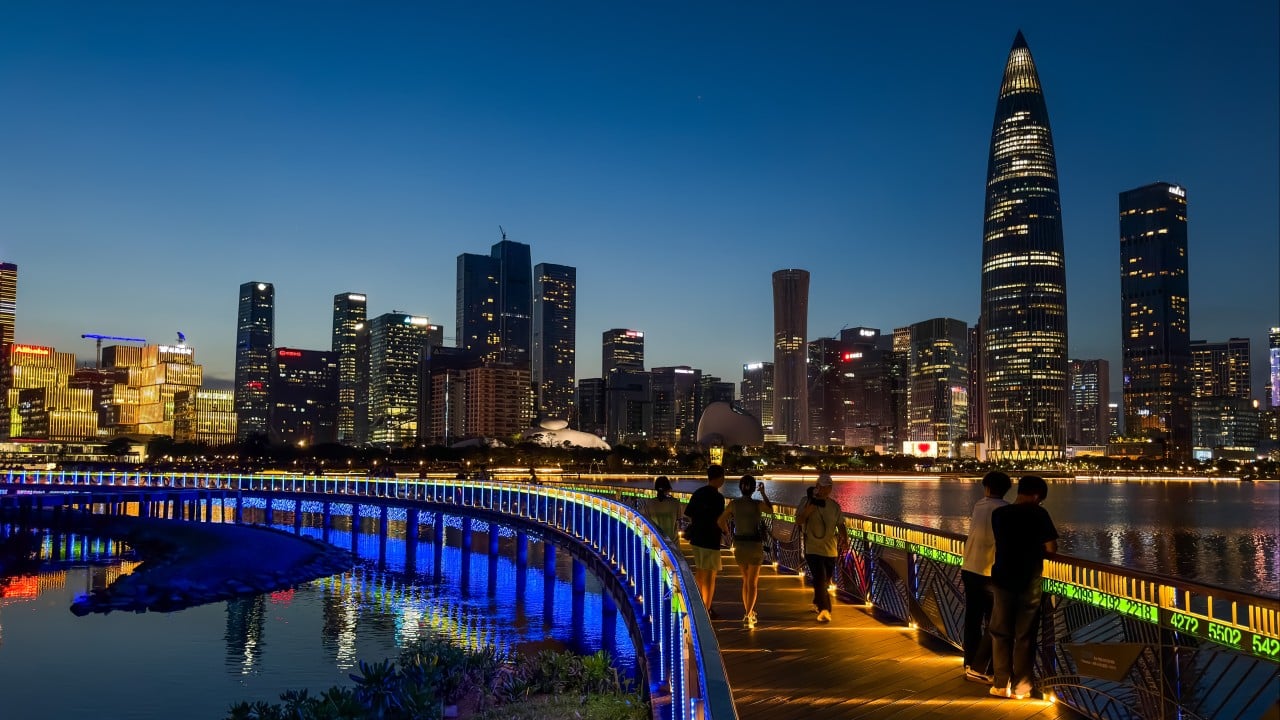
For decades, a hard border separated Hong Kong’s foreign residents from the massive economic and cultural playground just a few miles north. If you held a foreign passport, crossing into Shenzhen meant dealing with expensive multi-entry visas, long lines at manual immigration counters, and the constant hassle of filling out paper arrival cards.
Everything changed when China introduced the Mainland Travel Permit for Hong Kong and Macao Residents (Non-Chinese Citizens). It’s an electronic card that grants five years of multiple-entry access with stays up to 90 days per trip. More importantly, it gives you access to the biometric e-Channels at the border. Don't forget to check out our recent post on this related article.
The physical barrier didn't just move; the psychological barrier between Hong Kong and the mainland completely vanished. Foreign permanent residents are now flooding across the border for weekend dinners, cheap grocery runs, golf trips, and spa days, completely redefining what it means to live in Hong Kong.
The Death of the Friction Border
Before this policy, a casual Saturday trip to Shenzhen wasn't really a thing for expats. You had to plan it. You had to look at your passport pages, calculate visa costs, and mentally prepare for the agonizing wait at the manual immigration lanes while your colleagues with Home Return Permits zipped through the automated gates in seconds. If you want more about the history here, AFAR offers an in-depth summary.
Now, the experience is identical. Once you register your fingerprints and facial data at a mainland checkpoint like Futian or Shenzhen Bay, you scan your card, step through the glass gates, and you're in.
It takes less time to cross from Lok Ma Chau into Shenzhen than it does to take the MTR from Central to Sha Tin. This elimination of friction turned a major international border crossing into the equivalent of a suburban commuter line. It’s altered the geography of the city. Hong Kong residents no longer view the New Territories as the edge of the world, but rather as the middle of a massive, interconnected megalopolis.
The Shenzhen Weekend Lifestyle Shift
Why are people going? Honestly, it comes down to a mix of extreme convenience, curiosity, and massive cost differentials. Hong Kong is famously one of the most expensive cities on earth. Shenzhen offers premium experiences at a fraction of the price.
High End Spa Days and Massages
In Hong Kong, a decent 90-minute massage at a reputable mid-range spa easily sets you back 800 to 1,200 HKD. Across the border, massive, multi-story luxury wellness complexes offer full-body massages, private lounge areas, free fruit buffets, and access to saunas for a third of that price. Expats are now organizing group spa days in Futian the way they used to organize brunches in Sai Ying Pun.
The Sam’s Club and Costco Craze
If you walk through West Kowloon station or the Lo Wu checkpoint on a Sunday afternoon, you'll see crowds of people hauling giant, insulated wheeled bags. They're returning from Sam’s Club or the newer Costco in Shenzhen. Foreign residents who used to pay exorbitant prices for imported goods at high-end Hong Kong supermarkets are now buying bulk cheese, meats, and household items across the border, saving thousands of dollars a month.
Culinary Exploration Beyond Dim Sum
Hong Kong has incredible food, but its dining landscape can get repetitive, and space is always tight. Shenzhen offers massive, theatrical dining experiences. Whether it's high-end Hunan cuisine, tech-driven hotpot spots, or artisanal coffee shops operating out of cavernous converted warehouses, the sheer scale of the culinary scene has turned the mainland into a premier dining destination for Hong Kong’s international community.
The Hidden Headaches of the Application Process
While the card itself feels like magic, getting your hands on it requires navigating a uniquely bureaucratic gauntlet. Many expats underestimate the paperwork involved and end up making multiple trips to the processing centers.
First, you can't just show up at China Travel Service (CTS) with your passport and Hong Kong Identity Card (HKID). You must first request a specific document from the Hong Kong Immigration Department called the "Notice of Application for Access to Information." This letter officially states your nationality and confirms your legal status as a non-Chinese permanent resident. It takes about a week to arrive by mail, and you cannot proceed without the original copy.
Second, the photo requirements are notoriously strict. Don't bother uploading a random passport photo online. It’s far safer to pay the 50 HKD to use the official, barcoded photo booths inside the CTS centers.
The entire process takes about 20 working days from your appointment date, and it costs 260 HKD for the initial issue. It’s an investment of time, but considering a standard multi-entry visa can cost upwards of 1,000 HKD annually depending on your nationality, it pays for itself almost immediately.
What You Can and Cannot Do with the Permit
It's crucial to understand that this card is a travel authorization, not a work visa. The mainland authorities created this specifically to stimulate tourism, business exchanges, and cross-border investment.
- Allowed Activities: Leisure travel, family visits, attending seminars, negotiating business contracts, examining investments, and cultural exchanges.
- Banned Activities: You absolutely cannot accept employment on the mainland, study at a Chinese academic institution, or engage in professional news reporting.
Another detail people often overlook is the police registration requirement. Under mainland law, all foreign nationals must register their temporary residence with the local police within 24 hours of arrival. If you stay at a standard hotel, the front desk automatically handles this for you during check-in. But if you’re staying with friends, renting an apartment, or using certain short-term rentals, you need to register at the local police station or use an official municipal WeChat mini-program to log your stay. Don't skip this step; the immigration authorities do keep track, and failing to register can lead to fines or complications when you try to renew the card.
Step by Step to Your Five Year Freedom
If you're a permanent resident and haven't started this process yet, you're missing out on the biggest lifestyle upgrade Hong Kong has seen in a decade. Here is the exact checklist to get it done right the first time.
- Get your residency proof: File an application with the Hong Kong Immigration Department for the Access to Information letter. Wait for the physical copy to hit your mailbox.
- Fill out the online application: Head to the China Travel Service website, enter your passport and HKID details accurately, and upload a digital photo for the initial screening.
- Book your counter appointment: Once the online system clears your data, pick a convenient CTS location. The Central and Kowloon Bay offices tend to book out quickly, so look at Shatin or Mong Kok if you need a faster slot.
- Bring the correct documents: Show up with your physical passport (must have at least six months validity), your permanent HKID, the original Access to Information letter, and the printed application confirmation.
- Collect and activate: Pick up your physical card after 20 working days. On your very first trip across the border, use the manual immigration lane. Once you cross into the mainland side, look immediately for the e-Channel registration office right next to the gates. Give them your fingerprints, sign the form, and your card is fully activated for automated crossing from that moment forward.