It sounds like a lawnmower trapped inside a tin shed.
That is the first thing you notice. Not the explosion. Not the sirens, which often lag behind the reality of modern airspace by fatal minutes. It is that low, persistent, infuriatingly mundane buzz vibrating through the windowpane at three in the morning.
Listen.
You hear it? It is the sound of a two-stroke engine—the exact kind of mechanical heart you might find powering a recreational paraglider or a cheap moped—carrying fifty kilograms of high explosive across six hundred miles of dark forest, frozen riverbeds, and sleeping provincial towns.
For years, the geography of the Russian interior offered a psychological armor thicker than any concrete bunker. The sheer scale of the country, spanning eleven time zones and millions of square kilometers, meant that war was always something that happened over there. It happened at the margins. It happened on television screens in Moscow kitchens while the kettle boiled.
That psychological boundary is gone. Every night, dozens of Ukrainian long-range unmanned aerial vehicles launch from hidden clearings, flying low beneath the curvature of standard radar horizons, navigating by inertial guidance and terrain-contour matching toward the industrial arteries of the Russian state.
Most of them never make it. Air defense batteries shoot them down over empty fields. Electronic warfare units scramble their navigation, sending them spiraling harmlessly into birch forests. The morning briefings from the Ministry of Defense read like an accounting ledger of successful interceptions: forty-two destroyed over Bryansk, eighteen over Kursk, a dozen more neutralized near Oryol.
The statistics suggest an impenetrable shield. The reality on the ground tells a much more complicated story. Because in the math of asymmetric warfare, the defender has to get lucky every single time. The attacker only has to get lucky once.
The Arithmetic of Exhaustion
Consider a hypothetical night shift at a regional oil refinery—let us call it the Kstovo facility, though it could be any of the dozens of petrochemical complexes dotting the Volga basin.
Let us introduce a character to stand in for the thousands of technicians working these plants: Alexei, a forty-six-year-old shift supervisor who has spent half his life monitoring pressure gauges and catalytic cracking units. For twenty years, Alexei’s biggest professional nightmare was a faulty valve or a sudden drop in ambient temperature freezing a pipeline. He understood the physics of his plant. Heat, pressure, refinement, profit.
Now, Alexei spends his shifts staring out the reinforced glass of the control room at the black sky, waiting for the buzz.
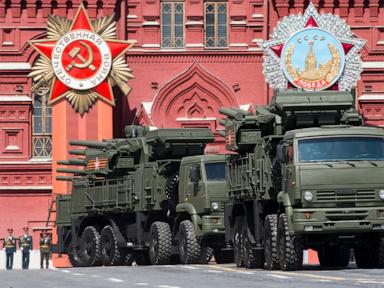
To understand why Alexei is awake at three in the morning, you have to understand the economics of modern air defense. Think of a traditional air defense network—systems like the S-300 or the Pantsir-S1—as a master swordsman standing guard outside a castle gate. The swordsman is extraordinarily skilled, equipped with a blade forged from decades of metallurgical science. He can deflect almost anything thrown at him.
Now, imagine throwing a thousand pebbles at him at once.
A single long-range Ukrainian drone, such as the Liutyi or the modified Aeroprakt A-22 Foxbat—literally a sport plane converted into a flying bomb—costs somewhere between fifty thousand and two hundred thousand dollars to assemble. By contrast, a single interceptor missile fired from a high-end Russian air defense battery can cost upwards of a million dollars. Worse, those missiles cannot be manufactured overnight. They require specialized microchips, precision-milled titanium, and complex solid-fuel propellants.
When fifty drones cross the border in a single night, they are not all meant to hit a target. Many are decoys, cheap plywood and foam airframes fitted with radar reflectors designed to look identical to heavy strike drones on an operator’s screen. Their entire purpose is to force the swordsman to swing his blade, exhausting his stamina and emptying his scabbard before the real threat arrives.
Alexei does not need a degree in military economics to grasp this. He sees it in the column of black smoke rising from the distillation tower three miles away—the one unit out of twelve that a single surviving drone managed to strike after twenty others were blown out of the sky.
One hit. Ten percent of Russia’s refining capacity temporarily knocked offline across a season of sustained strikes. You do not need to destroy every building in a factory to shut it down; you only need to break the one irreplaceable piece of Western-made machinery inside the cracking unit that sanctions prevent you from easily replacing.
Navigating the Blind Spots
How does a slow, propeller-driven aircraft fly eight hundred miles through the most heavily defended airspace on earth without being swatted out of the sky within the first ten minutes?
The answer lies in the physics of radar and the sheer, unmanageable vastness of the terrain.
Radar waves travel in straight lines. The Earth, inconveniently for air defense commanders, is curved. This creates what military planners call the radar horizon. A ground-based radar station can spot a high-altitude bomber from hundreds of miles away, as clear as a seagull against a blue sky. But if an object flies at an altitude of fifty meters—just skimming the tops of the pine trees—the curvature of the earth hides it until it is practically on top of the radar dish.
To see low-flying targets across a border stretching over a thousand miles, a nation needs flying radar stations—Airborne Warning and Control System aircraft, or AWACS—constantly patrolling the skies, looking down. Russia possesses a limited fleet of these A-50 aircraft, and after losing several to high-profile ambushes, their operational tempo has become noticeably more cautious.
Without that eye in the sky, defending the Russian interior becomes an exercise in plugging holes in a leaking dam with bare hands.
Consider the trajectory of a typical strike package. Ukrainian engineers plan these routes like water flowing downhill, seeking the path of least resistance. They use commercial satellite imagery, open-source intelligence, and signals intelligence gathered by allied reconnaissance aircraft over the Black Sea to map the exact locations of Russian air defense batteries.
Then, they program the drones to fly through the gaps.
The drones follow river valleys where radar returns bounce unpredictably off water and steep banks. They fly directly over major highways, using the electromagnetic noise and metallic clutter of thousands of civilian trucks to mask their own tiny radar signatures. They change altitude, they circle back, they approach targets from the north or the east—directions the local air defense crews were never trained to watch.
I remember speaking with an aviation engineer years ago who worked on early autonomous navigation systems. He explained that the hardest part of teaching a machine to fly without GPS wasn't the aerodynamics; it was teaching it how to recognize where it was when the enemy was actively lying to it.
Russia operates the most dense and sophisticated electronic warfare network in the world. Systems like the Krasukha-4 and Zhitel flood the electromagnetic spectrum with garbage data, spoofing GPS signals so a drone thinks it is hovering over the middle of the Atlantic Ocean when it is actually approaching an airfield in Rostov.
For a time, this invisible wall worked brilliantly. Drones simply lost their bearings, ran out of fuel, and crashed.
So the machines evolved. Modern Ukrainian long-range drones no longer rely solely on satellite navigation. They use optical navigation systems—cameras mounted on the belly of the fuselage that look down at the ground, comparing the crossroads, bridges, and river bends below against a pre-loaded digital map stored in their onboard memory. You cannot jam a camera looking at a river. You cannot spoof the physical reality of a railway junction.
The Weight of the Unseen
When you live under a sky that has ceased to be neutral, your relationship with ordinary sound changes forever.
If you have never experienced prolonged aerial bombardment, it is easy to imagine it as a cinematic spectacle—a constant roar of thunder and flashes of orange light. The reality is far more insidious. It is a war of attrition waged against the human nervous system.
In towns like Belgorod, Kursk, and increasingly in suburbs hundreds of miles further north—places like Tula, Ryazan, and even the fringes of Moscow—the psychological toll is measured in lost sleep and hyper-vigilance.
The air defense network works. Statistically, it works remarkably well. If one hundred drones are launched and ninety are intercepted, any military analyst will call that a decisive tactical victory for the defender.
Except a drone intercepted over a populated city does not vanish into thin air.
Physics is unforgiving. An object weighing two hundred kilograms, traveling at a hundred miles an hour, hit by a surface-to-air missile at an altitude of five hundred feet, turns into thousands of jagged pieces of shrapnel, burning aviation fuel, and unexploded warhead fragments. Gravity pulls all of it straight down onto apartment roofs, parked cars, and playgrounds.
This is the hidden cost that never makes it into the triumphant morning tally of "targets neutralized." For the resident standing on their balcony in Voronezh at two in the morning, watching a bright streak of light arc upward to meet a faint buzzing sound in the dark, the distinction between a successful interception and a direct hit becomes academic the moment the shockwave shatters their living room window.
Fear is a heavy currency. Even when the damage is localized, the disruption cascades outward. Airports in Moscow and St. Petersburg routinely enact the "Carpet" plan—a protocol that grounds all civilian flights the moment an unidentified flying object is detected within a hundred miles. Thousands of passengers sit stranded on tarmacs for hours, staring at departure boards that have turned entirely red, reminded viscerally that the conflict they thought was contained to a distant front line now dictates when they can see their families or close a business deal.
The Shifting Geography of Vulnerability
Look at a map of western Russia and trace a circle with a radius of one thousand kilometers centered on the Ukrainian border.
Inside that circle lies the industrial, financial, and demographic heart of the Russian Federation. More than half of the country's major oil refineries. Its primary steel mills. Its critical railway hubs. Its most densely populated cities.
Two years ago, the idea that Ukraine—a nation without a functional navy and with a fraction of Russia’s air force—could routinely project lethal force across that entire circle would have been dismissed as fantasy. Today, it is a nightly weather report.
This transformation did not happen because of a single wonder weapon. It happened through relentless, iterative engineering born out of existential necessity. Denied permission for months to use Western-supplied long-range missiles against targets deep inside Russian territory, Ukrainian engineers built their own. They took off-the-shelf commercial components, civilian light aircraft engines, carbon-fiber molds, and open-source flight controllers, and they scaled production in distributed, underground workshops that couldn't be targeted by a single Russian missile strike.
They turned manufacturing into a guerrilla operation.
And in doing so, they forced the Russian military into an impossible strategic dilemma. To protect its refineries, ammunition depots, and airfields, Russia must pull air defense systems away from the front lines in Ukraine, leaving its ground troops more vulnerable to tactical strikes. Yet even if it deploys every available battery across its interior, the territory is simply too vast to cover completely.
A shield stretched too thin inevitably tears.
What Remains in the Dark
It is easy to get lost in the technical jargon of this conflict—the megahertz frequencies of jamming pods, the payload capacities of delta-wing airframes, the burn rates of solid-fuel boosters. Numbers offer a comforting illusion of control. They allow us to look at a war from thirty thousand feet, where explosions are just pixels on a satellite map and percentages tell a tidy story of success or failure.
Down on the ground, there are no percentages.
There is only the cold air of a November night. There is the watchman standing outside a fuel depot in Saratov, pulling his coat tighter around his shoulders, his breath pluming white in the beam of a sodium vapor lamp. He isn't thinking about radar horizons or the unit cost of a Pantsir interceptor. He is listening.
Up above the low cloud ceiling, invisible to the naked eye, thirty machines are flying in the dark. Twenty-eight of them are already doomed—marked by algorithms, tracked by phased-array radars, destined to end their journeys in brief, violent flashes of white light over empty fields.
The watchman tilts his head back, straining his ears against the wind, waiting to find out if tonight is the night the twenty-ninth one slips through.