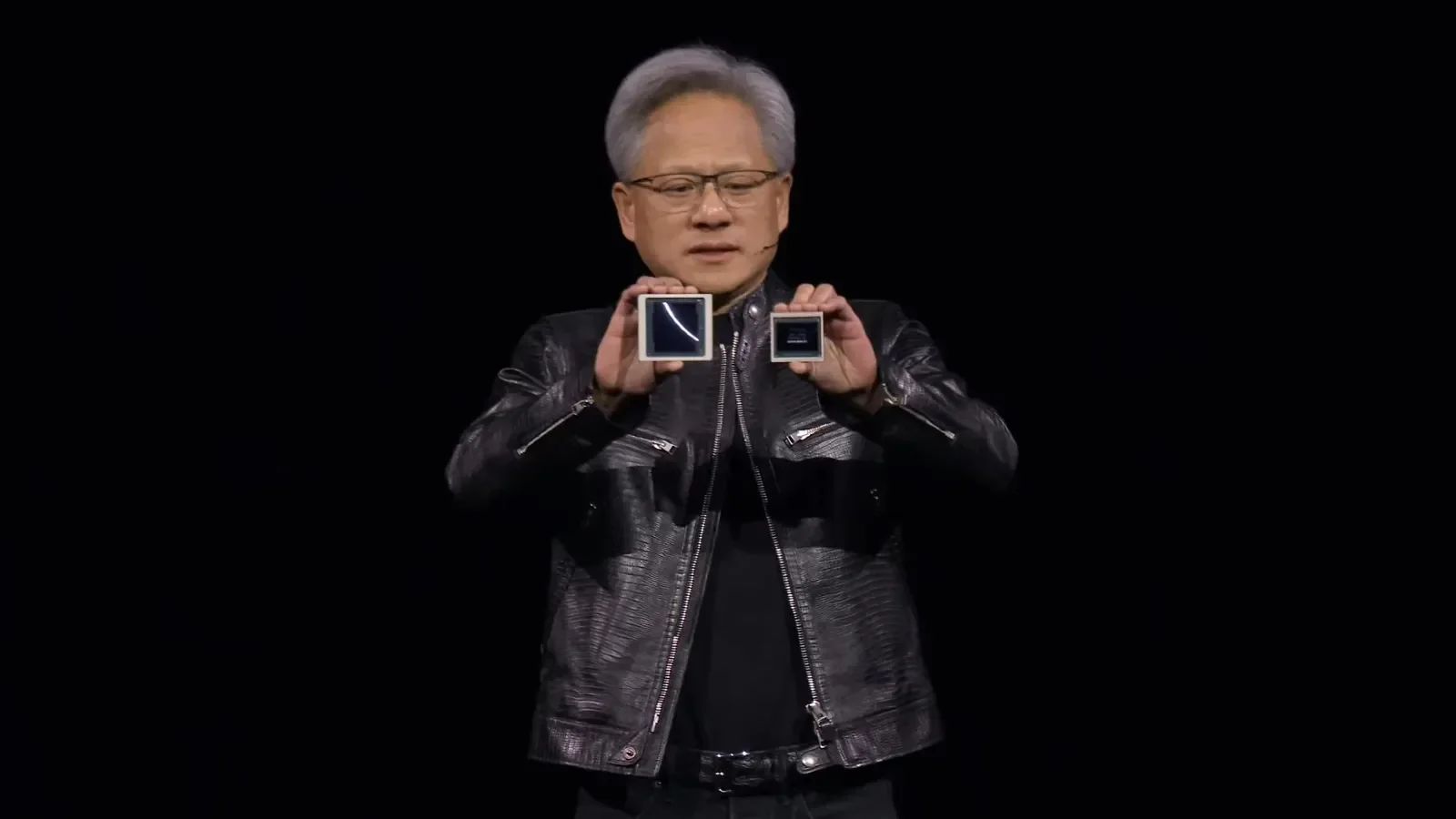
Silence.
Not the polite, air-conditioned quiet of an executive boardroom, nor the rehearsed hush that falls over a keynote auditorium right before the house lights dim, but the heavy, suffocating stillness of a server farm running at half capacity while billions of dollars in global infrastructure wait for a single phone call from Santa Clara.
To understand what happened when Jensen Huang stepped back to the helm of Nvidia, you first have to stop looking at stock tickers and start looking at a fifty-four-year-old data center engineer named Marcus. Marcus is a composite—a hypothetical figure built from the real anxieties of thousands of hardware architects across North America and Europe—and on the morning the news broke, he was sitting in a windowless room in Northern Virginia staring at a rack of liquid-cooled GPUs that cost more than his entire neighborhood. For weeks, rumors of corporate restructuring, regulatory friction, and an unexpected leadership vacuum had frozen procurement budgets from Frankfurt to Tokyo. Nobody wanted to sign a nine-figure purchase order when the architect of the modern computing era seemed suddenly untethered from the machine he built.
Then came the statement.
"With greatest humility and renewed commitment."
Seven words. Simple, almost understated, stripped of the chest-thumping bravado that usually leaks out of tech press releases when a founder reclaims the wheel. Yet within forty-eight hours of Jensen Huang’s reinstatement as chief executive officer, the paralysis evaporated, and the hidden truth about modern artificial intelligence became impossible to ignore: we have spent a decade pretending that compute is a commodity, when in reality, the entire global economy is tethered to the obsession of one man who still remembers how to solder a circuit board by hand.
The Architecture of an Unlikely Monolith
If you have never stood inside a modern AI training cluster, it is almost impossible to grasp what Nvidia actually sells. Most people still think of graphics cards—the whirring, glowing rectangles tucked inside custom gaming rigs—or they imagine abstract clouds of software floating effortlessly above the earth.
That is a comfortable illusion. The reality is brutal, physical, and ferociously hot.
Consider a highway system built not for sedans, but for ten million freight trains moving simultaneously at the speed of light, where a single misaligned rail doesn't just cause a delay—it melts the steel. That is the difference between traditional central processing units and the parallel-processing architecture Huang bet his company on back in 1993, sitting in a booth at a Denny’s in East San Jose over endless pots of lukewarm coffee. When Nvidia launched CUDA in 2006, Wall Street punished the company ruthlessly. Investors hated the margin compression. Analysts called it a science project. For years, Huang walked into quarterly earnings calls carrying the weight of a strategy that looked, to every spreadsheet jockey in Manhattan, like pure stubbornness.
I remember covering Silicon Valley hardware cycles in the late 2010s, walking the show floors of trade conventions where Nvidia’s booth was wedged between motherboard vendors and cooling-fan manufacturers. Even then, the atmosphere around Huang felt different from the polished, PR-managed CEOs of legacy software giants. He didn't speak in quarterly abstractions. He talked about thermal design power, memory bandwidth, and the physics of moving electrons across silicon wafers etched at the atomic scale. When you build a company around the laws of physics rather than the whims of ad-tech algorithms, your leadership isn't interchangeable. You cannot simply swap out the pilot mid-flight when the aircraft was designed around his exact reflexes.
What Really Happens When the Founder Steps Away
To see why Jensen Huang’s reinstatement sent shockwaves through every boardroom on earth, look at history’s graveyard of founder-led empires.
In 1985, Apple pushed Steve Jobs out the door and replaced him with seasoned, conventional corporate operators who understood supply chains, market segmentation, and quarterly predictability. Within twelve years, the company was ninety days from bankruptcy, bloated with dozens of nearly identical beige computers and stripped of its soul. In 2000, Howard Schultz stepped down as CEO of Starbucks, convinced the machine could run on operational momentum; eight years later, he had to rush back to close thousands of stores on a single afternoon just to teach baristas how to pull a proper shot of espresso again.
Companies are not clockwork toys that you wind up and leave on a shelf. They are living organisms held together by institutional memory and moral authority.
When word first surfaced that Huang was stepping back amid boardroom friction and governance scrutiny, the immediate reaction from conventional financial commentators was strangely sanguine. Nvidia, they argued, had an insurmountable moat. Its software ecosystem was entrenched. Its hyperscale customers—Microsoft, Meta, Google, Amazon—had already committed hundreds of billions of dollars in capital expenditure. Surely, the argument went, a three-trillion-dollar titan could coast on its own inertia.
They were wrong. Completely, dangerously wrong.
Because Nvidia’s real moat was never just the silicon. It was the terrifying velocity at which Huang forced the company to obsolete its own products before competitors could even reverse-engineer the previous generation. Under a caretaker executive, risk aversion creeps in like dampness through a cracked foundation. Engineers stop proposing moonshots because the middle managers protecting their bonuses demand predictable roadmaps. Suddenly, a twelve-month product cadence stretches to eighteen, then twenty-four. Meanwhile, hyperscalers quietly accelerate their in-house custom silicon programs, sensing hesitation at the top.
Marcus, our hypothetical engineer in Virginia, felt that hesitation immediately. Before the reinstatement, his team had paused a massive cluster expansion, debating whether to diversify toward custom ASICs rather than double down on next-generation Nvidia racks. The risk wasn't that Nvidia’s current chips would stop working; the risk was that without Huang pacing the factory floors in Taiwan and pushing TSMC executives to bend the limits of lithography, the next leap wouldn't arrive on time.
Inside the Seven Words
Look closely at the phrasing of Jensen Huang’s first words after his reinstatement: "With greatest humility and renewed commitment."
In an era where tech moguls routinely posture like emperors, treat regulatory oversight as a personal insult, and dismiss critics from private jets, the word humility lands like a clap of thunder. Why would the most consequential hardware executive of the twenty-first century choose humility as his opening chord?
Because survival at the frontier of computing requires admitting how close you always are to irrelevance.
Huang has famously told audiences for years that Nvidia is perpetually "thirty days from going out of business." To outsiders, that sounded like false modesty from a billionaire in a custom Tom Ford leather jacket. To anyone who has ever lived through a semiconductor downturn, it is simple arithmetic. Fab capacity is booked years in advance. A single architectural miscalculation, a yield flaw on a new packaging process, or a misjudgment in interconnect bandwidth can turn a multi-billion-dollar bet into scrap metal before the first server ships.
His reinstatement was not a victory lap. It was a recognition—both by the board and by the market—that the stakes of the AI infrastructure buildout have grown too large for polite, committee-driven stewardship. Governments are treating compute capacity as a matter of national sovereignty. Power grids are being redesigned around gigawatt-scale training facilities. Pharmaceutical companies are simulating molecular folding on clusters that draw enough electricity to light a mid-sized city.
When Huang spoke of renewed commitment, he wasn't addressing day traders looking for a bump before the closing bell. He was speaking directly to the engineers inside Santa Clara who had spent weeks wondering if the company’s relentless, flat-hierarchy culture was about to be sanitized into a typical corporate bureaucracy. He was telling the foundry partners in Hsinchu that the handshakes they made over late-night dinners still carried the full weight of the company’s balance sheet.
The Vulnerability Behind the Machine
Let’s be honest about something that financial analysts rarely admit: this level of concentration is terrifying.
If you feel uneasy knowing that the trajectory of global artificial intelligence, sovereign defense infrastructure, and trillions of dollars in retirement portfolios hinges disproportionately on the stamina and judgment of a single sixty-something engineer, your instincts are sound. That unease is rational. It is the exact reason corporate boards push for succession plans and why institutional investors preach the gospel of governance over personality.
I have wrestled with this contradiction myself. On paper, relying on a singular founder violates every rule of resilient institutional design. Great enterprises are supposed to outlive their creators, transitioning smoothly from visionary chaos to repeatable systems. Yet when you examine the actual mechanics of deep-tech breakthroughs, the textbook theory collapses against human nature.
You cannot committee your way to a new computing architecture. Committees optimize for consensus, and consensus always favors incremental improvements over terrifying leaps into the dark. When Huang returned to his post, he didn't solve the long-term succession paradox—nobody can—but he acknowledged it in the only honest way possible: by refusing to pretend the job was finished, and by anchoring his return in humility rather than ego.
Consider what happens next in the supply chain because of that single shift:
- Foundry alignment snaps back into focus. Packaging bottlenecks—the intricate, microscopic stacking of high-bandwidth memory beside logic dies—require constant executive negotiation across continents. With Huang back in direct command, allocation priorities regain their razor edge.
- Software-hardware co-design accelerates again. Nvidia’s true secret weapon is that its teams write the compilers, networking protocols, and simulation libraries simultaneously with the chip blueprints. Reinstating the chief architect restores the single point of accountability where software friction gets resolved in days instead of quarters.
- Enterprise buyer confidence stabilizes. Chief information officers who had frozen multi-year AI roadmaps suddenly have certainty about architectural continuity through the end of the decade.
The Heat of the Server Room
Back in Northern Virginia, Marcus got the internal memo at 6:14 AM Eastern Time.
He didn't cheer. He didn't check his stock app. He simply picked up his tablet, approved the stalled procurement ticket for four hundred next-generation GPU nodes, and walked down the echoing aisle between the server cabinets where the cooling pumps had already begun to hum at a higher pitch.
Outside the reinforced concrete walls of that facility, commentators will spend months dissecting boardroom politics, governance structures, and market valuations. They will write thousands of words about leadership transitions and shareholder sentiment.
Inside, where the air smells faintly of ozone and deionized water, none of that abstraction matters. All that matters is that the lights on the racks are blinking green, the electrons are moving, and the man in the black leather jacket is back on the floor—hands dirty, sleeves rolled up, building tomorrow before anyone else has finished explaining why it cannot be done.


