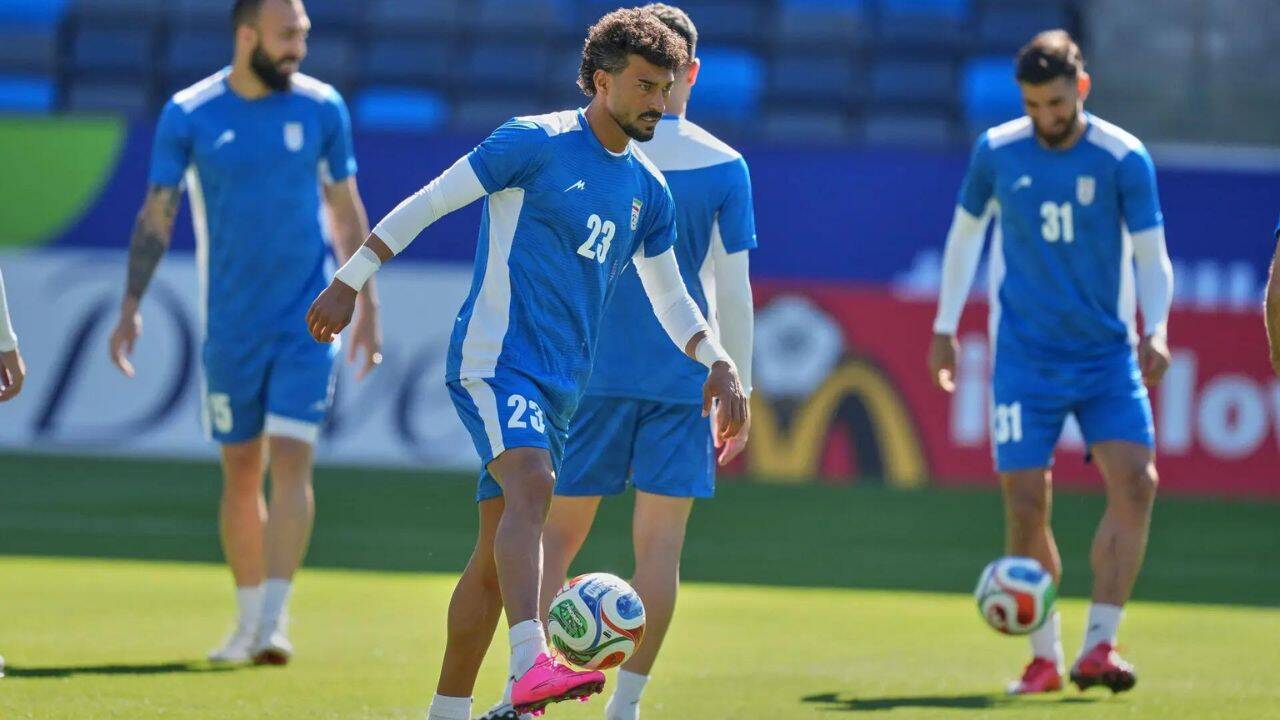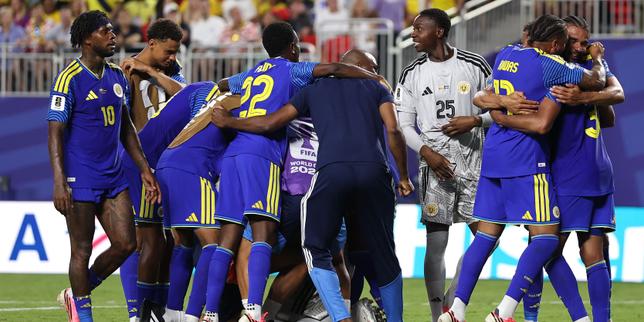
The air inside the locker room tasted of deep-heat rub, stale copper, and the damp, heavy scent of men who had just run themselves into the absolute earth. It is a specific smell. Anyone who has ever stepped onto a pitch knows it. It is the scent of survival.
On the tiled floor, discarded tape lay like shed skin. Outside, the roar of the stadium was fading into a low, rhythmic hum, but inside these four concrete walls, the silence was bursting. Nobody moved. Nobody wanted to break the spell. A tiny island nation, a dot on the global map often relegated to postcard fantasies of white sand and turquoise water, had just held a footballing titan to a dead lock on the world's biggest stage.
A draw.
To the casual observer looking at a tournament bracket, a draw is a footnote. A single point. A sterile statistic to be sorted by goal difference. But to the eleven men collapsing onto wooden benches, their lungs burning, their muscles screaming in protest, that draw was an earthquake. It was validation. It was history written in sweat.
Then, the heavy security door clicked open.
The security detail didn't enter with weapons drawn, but their presence was instantly felt—stiff suits, coiled earpieces, the unmistakable gravity of state power. The players froze. A few reached for towels to cover their bare, mud-flecked shoulders. The door swung wider, and in walked a man who looked entirely out of place, yet entirely at home.
King Willem-Alexander of the Netherlands.
He did not look like a monarch in that moment. His tie was slightly askew. His jacket was unbuttoned. His face bore the flushed, manic energy of a supporter who had spent the last ninety minutes screaming into the wind. For a fraction of a second, the complex, knotted history of colonialism, kingdom politics, and modern identity hung in the air. Curaçao is a constituent country of the Kingdom of the Netherlands, a relationship defined by treaties, legal frameworks, and centuries of complicated shared memory.
But football does not care about treaties.
The King took two steps into the damp heat of the room, threw his arms wide, and let out a roar that shattered any remaining pretense of royal protocol.
The Geography of the Underdog
To understand why a European monarch was grinning like a schoolboy in a humid locker room in the middle of a World Cup tournament, you have to understand the sheer scale of the improbability.
Consider the numbers. Curaçao has a population that could comfortably fit inside a couple of major European stadiums. Their football infrastructure has historically been stitched together with passion, duct tape, and the sheer willpower of volunteers. When their national team steps onto a pitch, they aren't just playing against an opponent; they are playing against the crushing weight of structural anonymity.
Every player on that squad knows the look. It is the polite, patronizing smile from officials at international airports. It is the commentators who stumble over the pronunciation of their names. It is the underlying assumption that they are simply there to make up the numbers, to be the colorful background characters in someone else’s triumphant documentary.
Imagine standing in the tunnel before kickoff. To your left stand athletes whose transfer values look like phone numbers. They play in pristine, hyper-modern facilities. They are backed by sports science departments that analyze their sleep cycles down to the microsecond.
Then look at your own shirt. You play for the love of a rock in the Caribbean Sea.
But the real magic of the game lies in its beautiful, stubborn refusal to follow the script. The grass is exactly the same length for everyone. The ball is just as round. When the whistle blows, all the money in the world cannot buy you an extra yard of pace if your heart isn't in the sprint.
Ninety Minutes of Pure Defiance
The match itself had been a masterclass in tactical suffering.
From the opening kickoff, the opposition moved the ball with an ominous, mechanical precision. They clipped passes into the spaces behind the Curaçao defense, testing the resolve of a backline that was supposed to crumble by the thirty-minute mark. Every attack felt like rising water.
But the breakthrough never came.
Instead, the world witnessed something primal. Players throwing their bodies into the path of speeding leather. A goalkeeper performing acrobatics that defied the laws of anatomy, tipping balls over the crossbar with the very tips of his fingernails. It was ugly. It was beautiful. It was a exhibition of collective defiance.
With every passing minute, the pressure mounted. The favorites grew frustrated. Their passes lost their crispness. Their body language turned sour. They began to realize that they weren't playing against a tactical system; they were playing against an entire island's pride.
When the final whistle blew, the scoreboard read zero-zero.
The opposition walked off the pitch with their heads bowed, looking as though they had just been robbed in broad daylight. The Curaçao players fell to their knees. They weren't celebrating a trophy. They were celebrating the fact that they had stood in the path of a hurricane and refused to be moved.
When Protocol Melts Away
Which brings us back to the locker room.
A King entering a sports locker room is usually a highly choreographed public relations exercise. Handshakes are practiced. Photographers are positioned to capture the perfect angle of royal benevolence. It is cold. It is sterile.
This was none of those things.
Willem-Alexander bypassed the team officials. He didn't wait for introductions. He went straight to the players, grasping muddy hands and pulling defenders into rib-crushing hugs. He was shouting in Dutch, shouting in Papiamento, his voice hoarse from the stands.
The players looked at each other, the initial shock giving way to a wild, infectious laughter. Here was the head of state, the man whose face is stamped on coins, celebrating a draw as if it were the final of the tournament itself.
Consider what happens next: a player hands the King a match-worn jersey. It is damp with sweat and stained with grass. A protocol expert would have flinched. The King didn't hesitate. He held it up, his smile stretching from ear to ear, completely indifferent to the moisture soaking into his expensive tailored suit.
In that small, crowded room, the heavy layers of history and status were momentarily stripped away. There were no subjects and no rulers. There was only a group of people who had just witnessed something miraculous and wanted to hold onto the feeling for just a few minutes longer.
The beautiful game is often criticized for its excesses. We talk about the corruption, the astronomical wages, the soul-crushing commercialization that threatens to turn every match into a corporate marketing campaign. It is easy to become cynical. It is easy to believe that the soul of the sport has been bought and sold a thousand times over.
But then you see a locker room in the belly of a stadium, filled with the smell of liniment and sweat, where a King and a group of islanders are jumping up and down in unison because a ball didn't cross a white line.
You realize the soul is still there. It's just hiding in the places where nobody expects to find it.