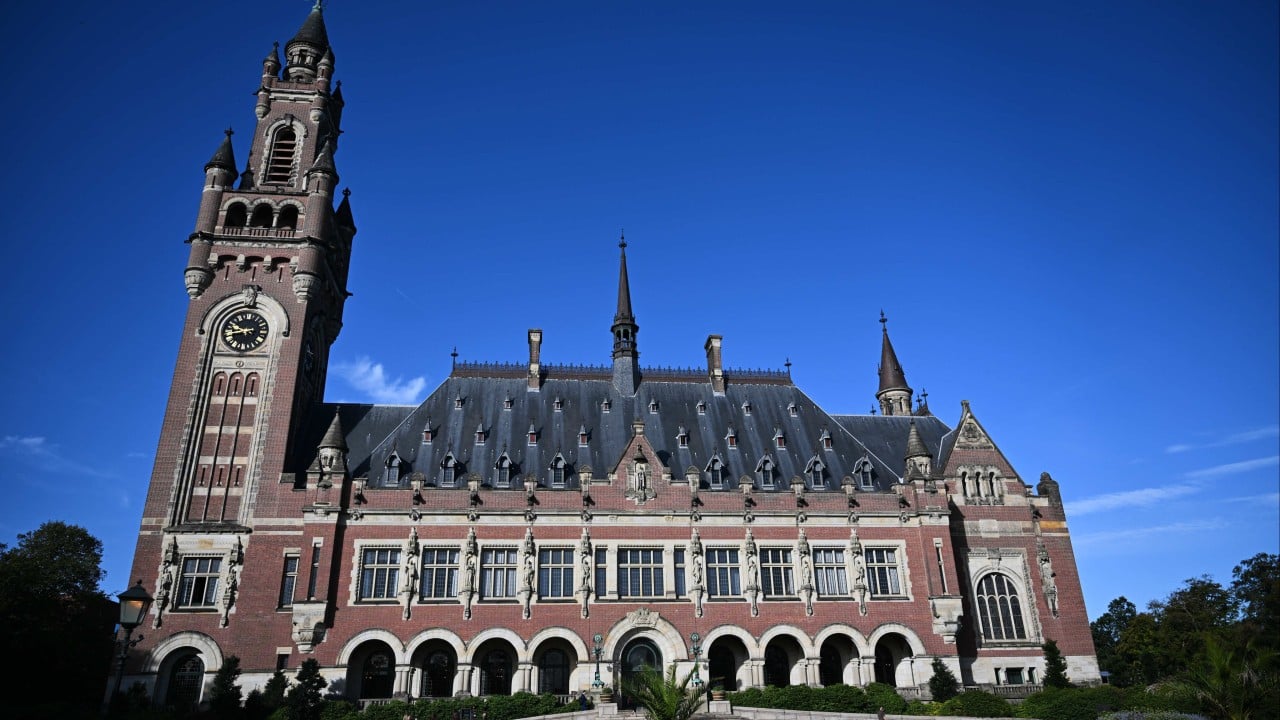
Everybody loves a courtroom David versus Goliath story. Strip away the legal jargon, and the headlines surrounding Nicaragua dragging Germany before the International Court of Justice read like a moral thriller. Nicaragua accuses Berlin of facilitating genocide in Gaza by supplying arms and defunding UNRWA. The lazy consensus in global media treats this as a righteous accountability check, a small state standing up to Western complicity through pure judicial heroism.
It is nothing of the sort.
I have spent years watching states use international tribunals not as instruments of justice, but as expensive, theatrical stages for domestic and geopolitical branding. Nicaragua versus Germany is not a genuine pursuit of human rights enforcement. It is an exercise in diplomatic jujitsu, weaponizing human suffering for rhetorical leverage while exploiting structural loopholes in international law that everyone in the diplomatic corps knows are toothless.
Let us look past the moral posturing and examine what is actually happening.
The Jurisdictional Shell Game
To understand why this case is a farce, you have to look at the mechanics of the Genocide Convention of 1948. Under international law, proving genocide requires establishing a specific intent to destroy, in whole or in part, a national, ethnical, racial, or religious group. That is the dolus specialis standard. It is notoriously difficult to prove even against a direct perpetrator. Trying to establish that a secondary actor—Germany, which provides military equipment and diplomatic cover to Israel—possesses the specific intent to destroy Palestinians is a bridge too far for any serious jurist.
Nicaragua’s legal team knows this. They are not stupid. They are litigating for the cameras, not the bench.
By filing proceedings against Berlin rather than Washington—the primary arms supplier to Israel—Nicaragua picked a target vulnerable enough to haul into court under specific jurisdictional clauses, yet distant enough to avoid severe economic retaliation. The United States does not accept the compulsory jurisdiction of the International Court of Justice for disputes involving military activities and national security. Germany does, subject to specific reservations, making it a convenient proxy target for a broader political grievance.
This is performative litigation. It transforms the highest judicial organ of the United Nations into a megaphone for regimes that have abysmal domestic human rights records of their own.
The Hypocrisy of the Accuser
When a government with a documented history of crushing domestic dissent, shuttering independent media, and dismantling democratic institutions lectures a European democracy on international humanitarian law, pause for a reality check.
International relations realists understand that hypocrisy is the currency of the realm. Every state acts out of self-interest. But there is a distinct difference between realpolitik and weaponized hypocrisy. Nicaragua’s Ortega regime faces sweeping international condemnation for authoritarian crackdowns at home. Launching a high-profile international lawsuit against a major Western power is a classic distraction playbook maneuver. It shifts the domestic news cycle, rallies anti-imperialist allies, and burnishes revolutionary credentials on the global stage without costing the regime a single cordoba in actual humanitarian aid for Gaza.
Meanwhile, Berlin is caught in its own historical trap. Germany’s foreign policy is shackled by its Staatsräson—the foundational doctrine that the security of Israel is a core national interest due to the horrors of the Holocaust. This creates a paralyzing policy rigidity. German diplomats are forced into contortions trying to justify unconditional military exports while simultaneously claiming adherence to international humanitarian law.
Germany's defense before the court essentially boiled down to an administrative shrug: We vet our export licenses rigorously, and most of what we send isn't even combat weaponry.
That defense is bureaucratic whitewashing. If you supply spare parts for tanks operating in an urban combat zone with staggering civilian casualties, claiming you didn't press the firing button is moral cowardice. Berlin's refusal to halt arms exports isn't a principled stand for international law; it is a desperate attempt to avoid admitting that its historical guilt has trapped it into backing a military campaign it can no longer ethically defend.
The Toothless Teeth of International Law
The International Court of Justice is built on quicksand. It has no police force, no bailiffs, and no enforcement mechanism. When the court issued provisional measures ordering Germany to halt actions that violate the Genocide Convention, legal analysts swooned.
They shouldn't have.
Provisional measures are the judicial equivalent of a strongly worded memo. They urge compliance without the backing of physical consequence. Germany calmly noted that the court ultimately rejected Nicaragua’s request for emergency orders to suspend arms exports—because the court found insufficient evidence at that preliminary stage to mandate an immediate halt.
Media outlets declared this a victory for Germany. They missed the forest for the trees. The real victory belongs to neither state. It belongs to the erosion of international jurisprudence itself.
When courts are dragged into political disputes they have no power to resolve, the institution loses credibility. Every time a case like this is filed, collapses under its own evidentiary weight, or results in unenforced declarations, international law looks less like a universal standard and more like an elite debating society where rules bend based on geopolitical gravity.
The Uncomfortable Reality We Ignore
If you genuinely want to protect civilians in conflict zones, stop looking to the International Court of Justice to perform miracles it was never designed to achieve.
Courts do not stop bullets. Treaties do not deter desperate military commands backed by existential dread. Real accountability requires economic leverage, diplomatic isolation, and domestic political costs borne by leaders making war. Everything else is theater.
Nicaragua got its headlines. Germany got its legal vindication on technicalities while maintaining its weapons pipeline. And the people in Gaza got nothing.
Stop pretending this lawsuit is a triumph of global justice. It is a distraction, funded by taxpayers, starring cynical actors playing a game with real lives.