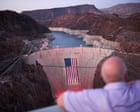
Forty million people rely on a shrinking ditch. The Colorado River is dying, and the federal government just offered a Band-Aid to fix a severed artery.
The U.S. Bureau of Reclamation released its long-awaited framework to manage the collapsing Colorado River basin. California, Arizona, and Nevada face immediate mandatory reductions under the plan. Colorado, Utah, New Mexico, and Wyoming escape mandatory cuts for now. Everyone is breathing a sigh of relief. They shouldn't be.
This ten-year federal blueprint is a temporary truce. It kicks the can down a dry road while the reservoirs that feed the American West inch closer to dead pool status. If you live west of the Rockies, your water bill, your lawn, and your electricity are about to undergo a very painful reality check.
The Lower Basin Takes the Hit
Lower Basin states must curb their water usage significantly over the next two years. We are looking at a combined reduction of roughly 20 percent. That equals about 3.2 million acre-feet of water kept in reserve.
To put that in plain terms, it is enough liquid to fill 1.5 million Olympic swimming pools. Sounds like a lot. It isn't enough.
Arizona takes the brunt of the punishment. The Central Arizona Project canal system faces historical cutbacks. Cities will pass those costs directly to homeowners. Farmers will leave hundreds of thousands of acres of productive farmland fallow. Groundwater pumping will skyrocket as a desperate substitute, draining underground aquifers that took millennia to fill.
The Interior Department structured this framework with two-year check-ins. Officials claim this provides flexibility. It actually highlights chronic indecision. The states had years to forge a permanent pact. They failed. Bureaucrats stepped in with a rotating door of short-term fixes because politicians refuse to tackle the root problem.
Why the Upper Basin Gets a Pass
Upper Basin states—Colorado, Utah, New Mexico, and Wyoming—avoided mandatory cuts in this announcement. That exemption infuriates downstream water managers.
Upper Basin officials argue their supply depends entirely on natural snowpack and erratic rainfall. They point out they have no massive storage lakes like Mead or Powell to buffer dry years. When snow doesn't fall in the Rockies, their taps and ditches run low automatically. They claim they shouldn't shoulder the burden of filling reservoirs for downstream mega-cities and industrial farms in the desert.
They have a legal point. They also have a blind spot. Climate change is reducing overall river flows year after year. Pretending that upper states can keep pulling historic volumes while the basin cooks is magical thinking. Voluntary conservation targets of 200,000 acre-feet for the Upper Basin are toothless.
The Math Never Worked
The fundamental flaw dates back to 1922. The original Colorado River Compact divided up water that simply never existed. Negotiators allocated water based on wet historical cycles. They promised more water than the river delivers during normal years, let alone during a twenty-first-century megadrought.
Add twentieth-century dams to nineteenth-century legal doctrines, and you get a recipe for structural failure. Lake Mead and Lake Powell hit record lows recently. Inflows this year dropped to a fraction of average demand.
Scientists warn that a couple more dry winters could crash the entire system. If water levels drop past the intake pipes, hydroelectric turbines at Glen Canyon Dam stop spinning. That cuts off cheap electricity for millions of homes across multiple states.
What You Should Do Right Now
Waiting for state governments to fix this is a losing bet. If you live in the Southwest, treat water like the finite, expensive commodity it has become.
- Rip out non-functional turf grass. Municipal turf rebates cover significant costs in places like Nevada and Arizona. Take advantage of them before funding runs out.
- Audit your home for leaks immediately. A single running toilet wastes hundreds of gallons daily.
- Track local utility district announcements. Tiered pricing structures mean your summer water bill will spike drastically as district-level cuts take effect.
- Diversify your household efficiency. Invest in graywater recycling systems if local building codes permit them.
The federal government bought the West a little more time. The crisis didn't disappear. It just got rescheduled.


