The humidity hits you first. It wraps around your collar, thick and equatorial, smelling faintly of salt spray and hot asphalt. You are standing on Sentosa, Singapore’s engineered playground of monorails and faux-palm beaches, watching the afternoon sky turn the color of bruised plums.
A few yards away, glass doors slide open with a soft hiss. Don't miss our previous article on this related article.
Inside, it is cold. It smells faintly of fresh cardboard, vinyl, and the sharp, clean scent of air conditioning. Shelves stretch upward in meticulous rows, packed not with clothes or groceries, but with uniform foil bags sealed tight against the light.
Boxes. Thousands of them. All hiding the exact same secret. If you want more about the context of this, The Motley Fool provides an excellent summary.
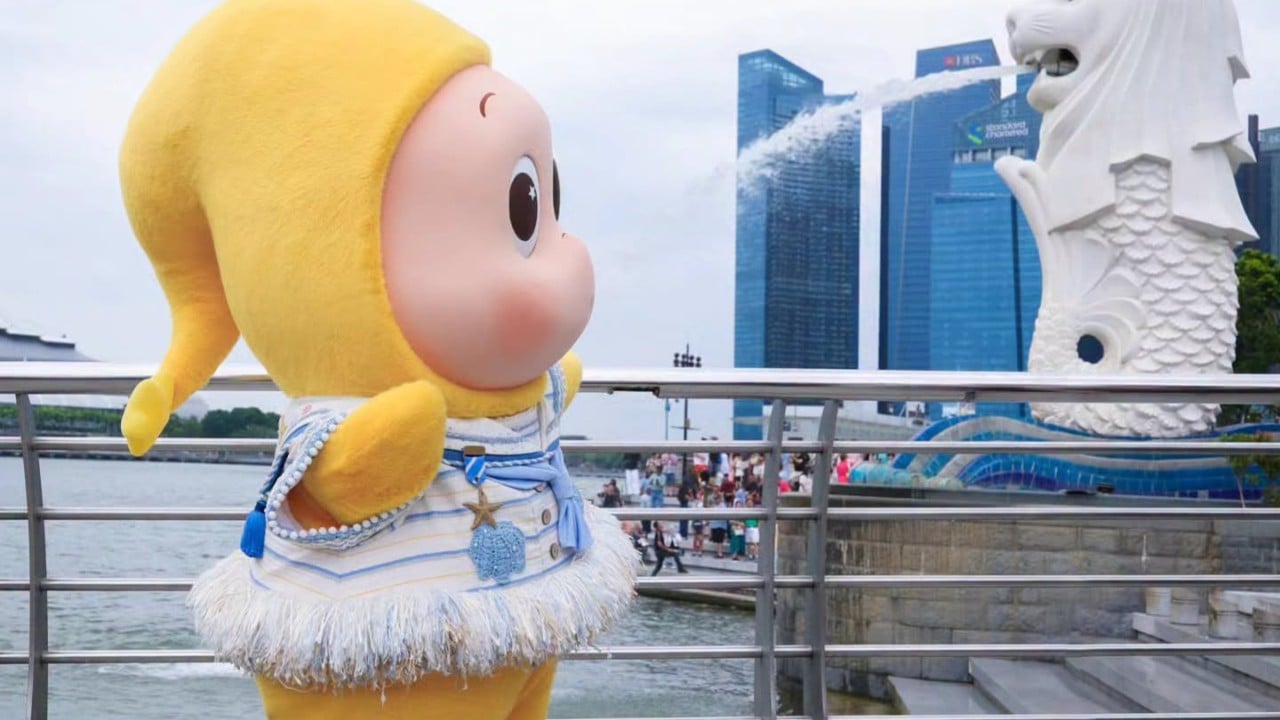
This is the newest storefront for Pop Mart, the Chinese toy giant that turned the simple act of buying a plastic figurine into an adrenaline sport. But to understand why this store matters—why a company born in the alleyways of Beijing is planting a flag on a resort island south of downtown Singapore—you have to look past the shiny display cases. You have to look at the numbers flickering on trading screens thousands of miles away.
Domestic sales back home are slowing. The frantic rush of the post-pandemic boom in China has cooled into something more cautious, more deliberate. Consumers there are tightening their grip on their wallets, asking harder questions about where their money goes.
So, what does a retail empire do when its home market draws a deep breath and pauses?
It leaps across the water.
Imagine a twenty-four-year-old graphic designer named Chloe. We will use her as a lens, a hypothetical composite of the thousands who crowd these aisles on a Saturday afternoon.
Chloe lives in a tiny apartment near the fringe of Singapore’s central business district. Her rent eats up half her salary. Her commute is a crush of elbows on the MRT train. Her days are defined by spreadsheets, Slack notifications, and the quiet, persistent dread of an uncertain economic forecast.
When Chloe walks into this Sentosa store, she isn't looking for art. She is looking for a sure thing.
For about fifteen Singapore dollars, she can pick up a foil-wrapped blind box. She takes it to the counter, pays, and carries it to a small bench outside where the cicadas hum in the tropical trees. She tears the foil. She pulls open the cardboard flap.
Inside sits a tiny, big-eyed character—maybe a melancholy astronaut or a rabbit wearing a space helmet, part of the popular Skullpanda or Labubu series. It is glossy. It is perfectly molded. And for thirty seconds, the rent, the spreadsheets, and the global supply chain cease to exist.
That is the product. It is not plastic. It is certainty wrapped in surprise.
The expansion into Sentosa is not a random roll of the dice. It is a calculated chess move executed with surgical precision.
Singapore is a crossroads. It is a dense, affluent city-state where capital flows like current through a copper wire. More importantly, it is a sponge for regional tourism. Tourists from Indonesia, Malaysia, Vietnam, and Australia stream through its airports and onto Sentosa’s cable cars every single day. By planting a flagship presence in a leisure hub rather than just a traditional suburban mall, Pop Mart is executing a classic retail pivot.
They are following the eyeballs. And more importantly, they are following the disposable income of a broader Southeast Asian middle class that is still eager to spend on small luxuries.
Consider what happens when a domestic market matures. Companies face a choice: optimize or wander. Optimization means cutting costs, trimming fat, and squeezing more margin out of existing customers. Wandering means building bridges to new shores.
Pop Mart chose to wander.
Yet, the gamble is real. Retail space in Singapore is among the most expensive real estate on planet Earth. Every square foot of air-conditioned floor must pull its weight, paying tribute to landlords through steep leases and relentless foot traffic. If the tourists don't buy, if the local collectors suffer from fatigue, the shiny glass facade turns quickly from a monument of ambition into an expensive anchor.
Back on the bench, Chloe holds her new figurine up to the late-afternoon sun.
The paint catches the light. It is flawless. Mass-produced by the million in automated factories across Guangdong, yet it feels intensely personal in her palm. She snaps a photo on her phone, uploads it to a collector forum where thousands of strangers instantly weigh in on her "pull," and tucks the box safely into her tote bag.
The store behind her hums with the electric drone of cooling systems, pumping artificial winter into the tropical heat. Outside, the tide pulls back from the Sentosa shore, leaving wet sand that mirrors the fading neon of the evening sky.