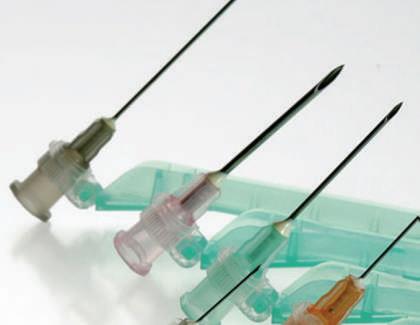
The plastic wrapper of a syringe makes a distinct, sharp snap when it is peeled open. In a quiet clinic, that sound is supposed to mean safety. It is the sound of a sterile boundary being drawn between a patient and the microscopic dangers of the world.
But in the dusty heat of Ratodero, a small sub-district in Pakistan’s Sindh province, that snap was replaced by silence.
Instead of the crisp tear of new plastic, there was only the dull clink of glass and plastic being dropped into a pan of lukewarm water, rinsed hurriedly, and filled again. One needle. Five children. Ten children. A hundred children. Day after day, the metal slid beneath the skin of toddlers, carrying vitamins, antibiotics, and an invisible, lethal passenger.
By the time the panic settled over the town, the damage was done. Hundreds of crying toddlers, burning with unyielding fevers, were testing positive for HIV. Children who had barely learned to walk were suddenly facing a lifelong chronic virus traditionally associated with adult behaviors.
This was not a tragedy born of a natural disaster or a rare mutation. It was a man-made catastrophe, built dollar by dollar on a foundation of poverty, ignorance, and a healthcare system that had rotted from the inside out.
The Clinic at the Edge of the World
To understand how a disaster of this scale happens, you have to look past the sterile walls of modern hospitals. You have to stand in the suffocating humidity of rural Sindh, where the air smells of exhaust and baked earth.
Imagine a mother. Let us call her Shahida. Her two-year-old son, Ali, is lethargic. His skin is hot to the touch, and a persistent cough has kept him awake for nights. Shahida does not have a car. She does not have health insurance. Her husband earns a meager daily wage in the nearby rice fields.
When Ali gets sick, Shahida does not travel hours to a government hospital in the city. She goes to the local quack.
In Pakistan, these unauthorized practitioners are known as "street doctors" or informal healthcare providers. They operate out of small, dimly lit storefronts lined with expired medicine bottles. To the community, they are a lifeline. They are cheap, they are always open, and they do not ask for complicated paperwork.
But their cheapness comes at a catastrophic cost.
When Shahida brings Ali into the clinic, she expects an injection. In rural Pakistan, there is a deeply ingrained cultural belief that an intravenous drip or an injection is vastly superior to a simple pill. A pill feels passive; a needle feels like immediate medicine. If a doctor refuses to give an injection, the patient often feels cheated and takes their business elsewhere.
The practitioner, eager to please and desperate to save pennies, reaches into a drawer. He pulls out a syringe that has already been used on three other children that morning. He does not change the needle. He does not wipe the port. He simply draws the fluid and pushes it into Ali’s arm.
In that single, fleeting second, a death sentence is passed.
The Investigation That Shocked the Nation
The nightmare began unraveling in early 2019. A local pediatrician, Dr. Imran Arbani, noticed an alarming trend that defied all medical logic. Children were coming to his private clinic with opportunistic infections—the kind of severe illnesses that usually only strike people with severely compromised immune systems.
He began ordering HIV tests. The results were terrifying.
Cluster after cluster of positive results came back. The numbers climbed from a dozen to fifty, then into the hundreds. The provincial government was forced to step in, setting up massive screening camps in the sweltering heat.
Thousands of panicked parents lined up outside tents, holding their whimpering children. The atmosphere was thick with terror and confusion. HIV was a word most of these families had never heard, or if they had, it was spoken of in hushed, shameful whispers, associated exclusively with moral failings and social stigma.
When the final tallies of the outbreak were analyzed, the scale was staggering. Over a thousand people tested positive, and more than 80 percent of them were children under the age of 15.
The investigation quickly pointed its finger at a local pediatrician who was alleged to have been reusing syringes systematically. He was arrested, though he denied the charges, claiming he had never knowingly infected anyone.
But focusing on a single villain misses the larger, more terrifying truth. The doctor was not a lone anomaly. He was a symptom of a systemic plague.
The Supply Chain of Contagion
How does a society reach a point where medical professionals reuse needles? The answer lies in economics and a complete lack of regulatory oversight.
Pakistan uses billions of injections every year. Statistics show that the country has one of the highest rates of injection use per capita in the world, with the average person receiving nearly ten injections annually. The vast majority of these are medically unnecessary.
This hyper-demand creates a massive market for cheap medical supplies. It also fuels a dark, unregulated underbelly of counterfeit and recycled medical waste.
In many parts of the country, scavengers raid hospital waste bins, collecting used plastic syringes. These dirty needles are not incinerated. Instead, they are washed in dirty water, repackaged in makeshift factories, and sold back to informal clinics at a fraction of the cost of legitimate supplies.
To a poor practitioner running a clinic on razor-thin margins, a cheap box of syringes is too tempting to pass up. They convince themselves that a quick rinse is enough. They tell themselves that the children are tough.
The human body is resilient, yes, but it is no match for the efficiency of a blood-borne pathogen. When a needle is reused, a microscopic amount of blood remains trapped inside the hollow bore. When that same needle is inserted into the next patient, that blood is injected directly into their bloodstream. If the previous patient was HIV-positive, the virus finds a new home with absolute certainty.
The Weight of the Secret
The medical devastation is only the first wave of the tragedy. The social aftermath is a slower, quieter poison.
In rural Sindh, an HIV diagnosis is often treated as a social death sentence. Because the virus is heavily stigmatized, families who discovered their children were positive suddenly found themselves cast out by their neighbors.
Spouses blamed one another. Mothers were accused of infidelity or bringing a curse upon the household. Children were banned from playing with their cousins. In some heartbreaking instances, families stopped feeding the infected children, viewing them as already dead, hoarding their scarce resources for the siblings who still had a future.
Consider the psychological burden on a parent who brought their child to a clinic to cure a simple fever, only to walk out with a permanent, life-altering diagnosis. The guilt is an invisible weight that crushes the chest. They trusted the man with the stethoscope. They paid him their hard-earned rupees. And in return, he broke their child’s life.
The World Health Organization and local NGOs scrambled to establish antiretroviral therapy (ART) clinics in the region. These medications are miraculous; they can suppress the virus to undetectable levels, allowing infected children to grow up, go to school, and live long, normal lives.
But getting the medication is only half the battle. Maintaining it is the real war.
An ART regimen requires strict, daily adherence. For a family living in a remote village, traveling to a city clinic every month to collect free medication is an immense financial burden. It means missing a day of work in the fields. It means paying for a bus ticket instead of buying flour. If a child misses their doses, the virus mutates, grows resistant, and the window of survival begins to close.
Shifting the Tide
The crisis in Sindh serves as a grim warning for the global healthcare community. It proved that you cannot eliminate a disease by focusing solely on adult transmission vectors while ignoring the basic hygiene of the medical systems themselves.
Since the outbreak, there have been aggressive pushes to reform the system. Pakistan passed legislation mandating the use of auto-disable syringes—needles that automatically lock after a single use, making it physically impossible to depress the plunger a second time.
If you cannot change the behavior of the practitioner, you must change the physics of the tool they use.
Education campaigns have also attempted to dismantle the cultural obsession with injections. Standardized posters now hang in some rural clinics, advising patients that pills work just as fast as a needle.
Yet, changing a deeply embedded cultural belief takes generations. Laws are only as good as the police officers who enforce them, and in the remote corners of the province, the clink of glass and the reuse of plastic still happen behind closed doors when the inspectors are gone.
The Echoes in the Dust
Today, the media trucks have long since packed up and left Ratodero. The sensational headlines have faded from the international news cycle. But in the quiet homes of Sindh, the consequences of those reused needles remain a daily reality.
The children who survived the initial outbreak are now growing into teenagers. They take their bitter pills every morning, swallowed with a gulp of water, often without fully understanding why their bodies require this daily ritual.
They carry a secret that they must never tell their friends, a shadow that follows them under the blinding Pakistani sun.
The true tragedy of Sindh was never the virus itself. The virus is just a machine, a collection of proteins looking for a cell to copy. The tragedy was the systemic failure of empathy—the choice to value the fraction of a cent saved on a piece of plastic over the entire future of a child.