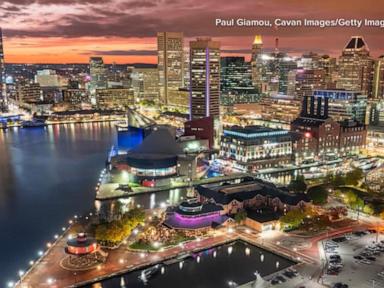
Every autumn, the travel industrial complex drops its annual list of the "best" places to visit for the upcoming year. National Geographic rolls out its glossy video montage. Drones sweep over emerald fjords, untouched coastlines, and smiling local artisans. Viewers hit share, open a new browser tab, and start pricing flights.
Here is the cold reality that the editors in Washington won't tell you. The moment a destination lands on a major legacy media "Best Of" list, its peak era is officially over. You aren't looking at a curated guide to the world's greatest experiences. You are looking at an obituary for local authenticity, dressed up in high-definition B-roll.
For over fifteen years, I have worked on the operational side of international tourism, advising regional hospitality boards and watching the aftermath of viral press coverage from the ground up. I have seen fragile coastal economies buckle under the weight of a single twelve-second video clip. The lazy consensus in travel media is that shining a spotlight on "undiscovered" or "sustainable" destinations spreads tourism dollars evenly and saves local communities. In practice, it triggers a speculative real estate boom, prices out the locals who actually create the culture, and turns quiet towns into homogenized theme parks within eighteen months.
The Economics of the "Hidden Gem" Fallacy
When legacy publications compile their annual rosters, they rely heavily on public relations pitches from national tourism boards and luxury hotel conglomerates. A country doesn't end up on a top-twenty list purely because its mountains are pretty. It ends up there because a ministry of tourism spent millions on international press junkets, flew editors out on business-class tickets, and timed the campaign to coincide with new direct flight routes.
This creates a massive distortion in how travelers perceive value. You are told you are discovering a "hidden gem" or participating in "regenerative travel." Let's define regenerative travel accurately, because marketing departments have completely hijacked the term. True regenerative tourism requires a destination's ecological and social infrastructure to be measurably healthier after a visitor leaves than before they arrived. Simply flying five thousand miles to stay at an eco-resort with bamboo toothbrushes does not regenerate anything. It just shifts your carbon footprint to a prettier zip code.
Consider what happens economically when a mid-tier destination receives the "Best of 2026" stamp of approval:
- The Short-Term Rental Squeeze: Within ninety days of a major list dropping, institutional investors and wealthy remote workers buy up residential housing stock to convert into vacation rentals. Long-term rents spike, forcing local teachers, mechanics, and restaurant workers to commute from two hours away.
- Menu Homogenization: Restaurants that used to serve cheap, complex regional food to locals pivot to serving $24 avocado toast and watered-down cocktails to tourists who want an aesthetic backdrop for their photos.
- Infrastructure Collapse: Small islands and mountain towns built for ten thousand residents suddenly face fifty thousand seasonal visitors. Sewage systems overflow, groundwater dries up, and waste management fails.
Look at what happened to places like Tulum, Reykjavik, or the Faroe Islands over the past decade. Every single one was championed by glossy magazines as a pristine, forward-thinking alternative to mass tourism. Today, Tulum is a cautionary tale of cartel-backed real estate speculation and raw sewage leaking into cenotes. The Faroe Islands literally had to shut down to tourists for maintenance weekends just to repair the hiking trails trampled by list-chasers.
The Overtourism Funnel and the "Bucket List" Trap
Travelers think they are exercising free will when they book a trip based on a curated list. You aren't. You are being herded into a high-margin funnel.
Airlines and global hotel chains hate unpredictability. They need guaranteed load factors on new routes and high occupancy rates in newly built properties. By concentrating global demand into twenty-five pre-approved destinations every year, travel media solves a massive logistics problem for the aviation and hospitality industries. Everybody goes to the exact same places during the exact same shoulder seasons.
This phenomenon destroys the very concept of carrying capacity—a foundational metric in environmental science and urban planning that measures the maximum population an environment can sustain indefinitely without degradation. When a publication tells millions of readers to visit a small archipelago or a fragile desert basin in the same calendar year, it deliberately ignores carrying capacity in favor of click-through rates.
Imagine a scenario where three million people watch a sixty-second video praising a quiet fishing village in northern Spain or a remote valley in Japan. Even if just one percent of those viewers actually book a ticket, that is thirty thousand new visitors descending on a community that might only have four hundred hotel beds. The math never works in the traveler's favor. You end up paying double the price to stand in line behind other people who watched the exact same video.
Dismantling What Travelers Actually Ask
If you look at search trends every time a major destination list goes live, people immediately start asking the wrong questions. They try to optimize a broken premise rather than changing how they travel.
"What is the best month to visit these top destinations to avoid crowds?"
There is no secret off-season anymore. Because every travel blog and algorithm pushes the exact same "shoulder season" advice—telling everyone to go in May or October instead of July—those months are now just as congested as peak summer. Furthermore, visiting a seasonal destination in the dead of winter often means half the locally owned businesses are closed, leaving you at the mercy of international corporate chains.
"Are these lists actually vetted for sustainability?"
Mostly, no. Sustainability in travel journalism is usually self-reported by the hotels and tour operators pitching the story. Without third-party verification from bodies like the Global Sustainable Tourism Council (GSTC), labels like "eco-friendly" and "community-led" are pure marketing theater. A lodge can claim to be sustainable because it banned plastic straws while simultaneously draining the local aquifer to keep its infinity pools full.
"Where should I go instead if I want an authentic experience?"
Stop looking for a "where" and start focusing on a "how." Authenticity isn't a geographic coordinate; it is a byproduct of friction. If a place is easy to book, requires zero language effort, has seamless airport transfers, and features heavily in international media, it has already been sanitized for mass consumption.
The Contrarian Playbook for Smarter Travel
If you want to actually experience the world without getting gouged or contributing to the destruction of local cultures, you have to invert the entire travel-planning process.
- Read the "Worst Of" and Overtourism Reports: Look at the destinations currently implementing tourist taxes, cruise ship bans, or visitor caps—places like Venice, Amsterdam, or parts of the Balearic Islands. Then, look at the neighboring regions just across the administrative border that share the exact same geography, climate, and culinary heritage, but lack the international airport hub. Go to the neighboring valley, not the headline city.
- Follow Infrastructure, Not Influencers: Instead of reading lifestyle magazines, look at regional rail expansion maps and domestic ferry schedules. When a country builds a new high-speed regional train line connecting secondary industrial cities, those cities are where real culture is thriving without the tourist markup.
- Embrace Second-Tier Cities: Everybody flies to Kyoto, Paris, or Lisbon. Almost nobody spends a week in Kanazawa, Lyon, or Coimbra. Second-tier cities possess world-class museums, fierce culinary pride, and intact local economies where tourism is a minor side note rather than the entire reason the town exists.
- Book Direct and Slow Down: Stop trying to hit four countries in ten days. Every time you move, you burn money on transit and skim the surface. Stay in one neighborhood for two weeks. Rent from an actual local resident rather than a corporate property management firm running fifty units.
The Uncomfortable Downsides of Going Off-Grid
I won't pretend this approach is effortless. Traveling against the current comes with real friction, and most casual vacationers hate it.
When you skip the vetted "Best Of" lists, you lose the safety net of English-speaking concierges, curated tour buses, and predictable Western amenities. You will miss trains because the timetable wasn't translated properly. You will order food off a handwritten menu and get something you don't recognize. The Wi-Fi might drop out, the museum hours might be erratic, and nobody is going to curate a tidy, photogenic itinerary for you.
If your goal is a stress-free, predictable resort holiday where everything runs on time and looks great on social media, stick to the National Geographic list. Pay the premium, stand in the queue, and enjoy the show.
But if you actually want to see the world before it gets paved over and franchised, treat every "Best Destinations" list as a quarantine zone. Print it out, tape it to your wall, and book a flight anywhere else.


