Say "Naoero," not "Nauru." And pronounce it closer to Now-ero than the clipped Now-roo outsiders got used to saying.
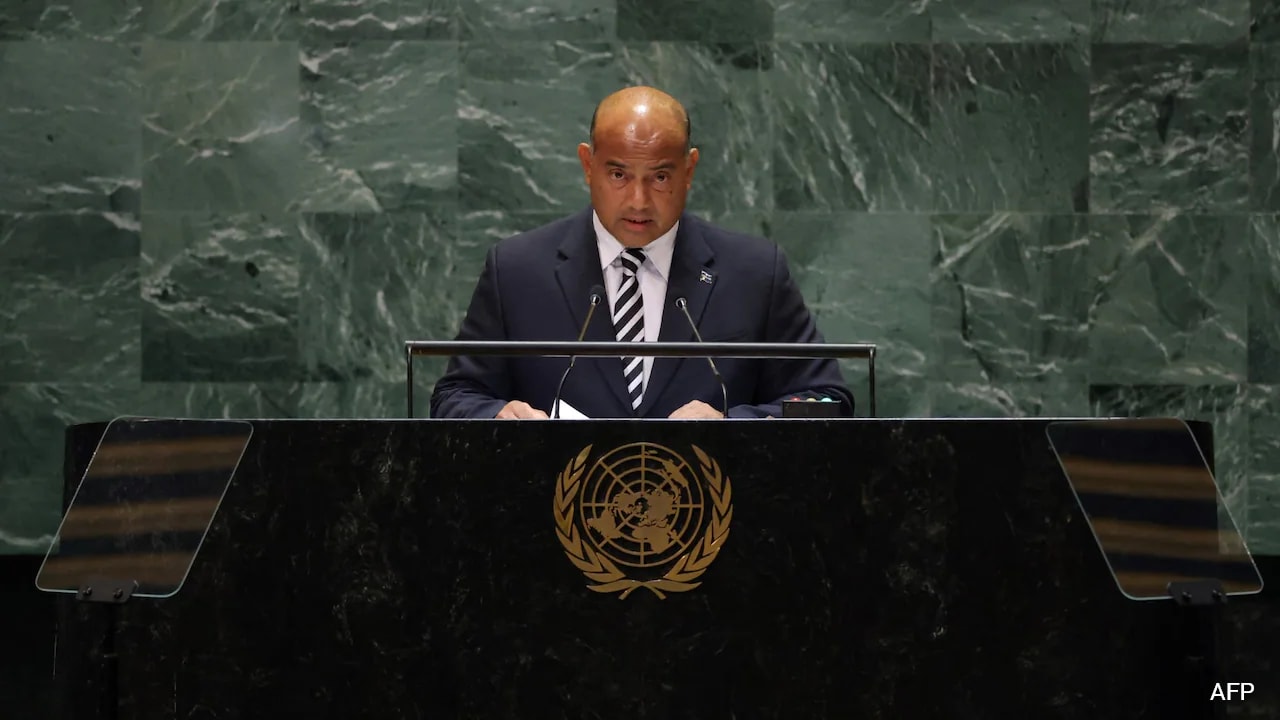
For decades, a tiny 21-square-kilometre Pacific island of roughly 12,000 people has watched foreign maps, airline schedules, and diplomatic cables spell and sound its name the way outsiders found convenient. In 2026, lawmakers passed a constitutional amendment making Naoero official in English to match the indigenous language, notified the United Nations in June, and saw President David Adeang bring that push straight to the UN General Assembly floor in September with a blunt closing line: "Say our name."
Honestly, people who treat country name changes as mere PR stunts miss the whole point. A name isn't wallpaper you swap out when you're bored of the color. When a small state reclaims how its own people say its name, it's pushing back against a century of linguistic shortcuts written by outsiders who didn't bother asking how locals actually spoke.
Why Naoero matters more than a spelling tweak
At first glance, switching from Nauru to Naoero looks small. Just a couple of letters, a shift in vowel cadence, and a new three-letter international code moving from NRU to NRO.
Yet size makes the stakes sharper, not smaller. Naoero is the world's third-smallest sovereign nation by land area after Vatican City and Monaco, and roughly the third-smallest by population. Small states don't get the luxury of being taken seriously by default in global rooms. When diplomats, journalists, or search engines get your name wrong—or flatten your pronunciation because it feels unfamiliar—it subtly signals that your voice is secondary.
As President Adeang framed it before world leaders in New York, Nauru was how the name sounded to outsiders who found the real thing harder to say, and the outside world simply kept it. Restoring Naoero isn't inventing a shiny new brand out of thin air. It's pulling an existing truth back into the light.
And it isn't happening in isolation. Around the globe, countries have spent years pushing back against colonial exonyms, awkward transliterations, or English-language habits that obscure local identity. Think of Türkiye pressing for international recognition of its own spelling, or Eswatini returning to its traditional name. Each case is different in law and politics, of course, but the underlying impulse is remarkably consistent: stop flattening us to suit your tongue.
A century of outsiders naming the island
To understand why getting the name right hits a nerve, you have to look at what happened to the island after outsiders arrived.
Before European powers carved up the Pacific, Naoero had its own rhythm, clans, and language. Westerners initially dubbed it "Pleasant Island," a label that tells you far more about visiting sailors than the people who lived there. Later came German annexation in 1888, followed by administration involving Britain, Australia, and New Zealand, wartime occupation, and UN trusteeship before independence arrived in 1968.
Along the way, colonial administration cemented "Nauru" as the standard outside label, and that label stuck long after independence. Even more consequential than the spelling was what outsiders extracted from the ground. Once high-grade phosphate deposits were identified around the turn of the twentieth century, mining stripped vast stretches of the central plateau—known as Topside—leaving behind jagged limestone pinnacles and ecological scars that reshaped the island's economy and environment.
That history explains why language feels urgent rather than nostalgic. When a small island nation has spent generations dealing with outsiders taking resources, drawing borders, or speaking on its behalf, reclaiming its own name and demonym—shifting citizens from Nauruans to dei-Naoero—is an act of basic ownership.
Language survival and real-world friction
Here is where things get complicated, and where an honest look matters more than cheerleading.
Reclaiming a name on paper is one thing. Keeping a language alive in daily life is much harder. The indigenous language, dorerin Naoero, is classified by UNESCO as severely endangered. A constitutional amendment can update official titles and UN directories, and lawmakers have moved toward bringing indigenous language instruction into schools, yet a name change alone cannot reverse decades of linguistic pressure in a tiny population.
There are practical growing pains, too. Updating passports, government portals, international codes, airline branding, and newsroom style guides costs money and takes time. Some observers outside—and plenty of regular people trying to remember new spellings—grumble whenever country names shift.
- Style guide lag: Major institutions update at different speeds, leaving readers staring at "Nauru" in one tab and "Naoero" in the next.
- Pronunciation habits: Old habits die hard, especially when English speakers default to familiar phonetic shortcuts.
- Bigger existential pressures: A country name can affirm dignity, yet it doesn't solve rising sea levels, economic vulnerability, or long-term climate adaptation by itself.
Acknowledging those limits doesn't undercut the move. If anything, it makes it more credible. Leaders in Naoero aren't pretending a spelling fix cures every structural headache; they're insisting that dignity and accuracy shouldn't wait until every other problem is solved.
What writers, travelers, and readers can do right now
If you write about world affairs, plan travel, or simply care about getting facts straight, you don't need a diplomatic title to respect how a nation names itself.
- Use Naoero in current references: When writing about the country today, use Naoero (or Republic of Naoero formally), and note formerly Nauru briefly when historical context calls for it.
- Slow down on pronunciation: Make a real effort to say Now-ero rather than rushing through a familiar shortcut. Saying a place's name carefully takes two extra seconds and shows basic respect.
- Look past the headline: Whenever a small nation makes news over a name or symbol, dig into the history behind it—colonial legacies, language health, and present-day pressures—instead of treating it like a quirky trivia item.


