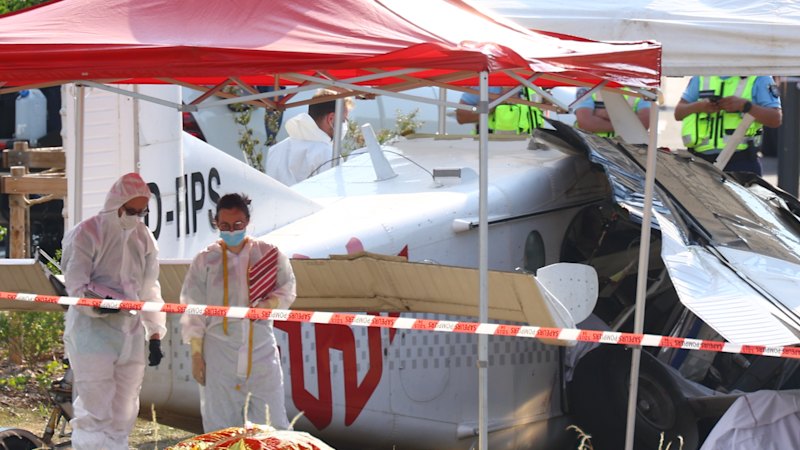
A plane engine stops mid-air. Then a terrifying silence, followed by a sickening crunch. On a regular Sunday morning in the quiet town of Tomblaine, located in northeastern France, that exact nightmare became a reality. What was supposed to be a celebratory day of tandem skydiving ended in absolute catastrophe, leaving 11 people dead and families shattered.
The crash occurred just before midday on June 28, 2026. It marks France's deadliest aviation accident involving skydiving in roughly three decades. But beyond the immediate shockwave of the tragedy lies a devastating human story and a pressing technical question about the rugged aircraft thousands of skydivers trust every single weekend.
A Gathering of Colleagues Ends in Horror
This wasn't a random collection of thrill-seekers. Five of the passengers were local self-employed nurses from nearby Nancy. They had booked the jump together as a group outing to unwind from their high-stress jobs, especially during the oppressive heatwave gripping the region.
They brought their families along to share the excitement. Parents, spouses, and friends gathered on the edge of the Nancy-Essey aerodrome, holding up smartphones, ready to film the moment their loved ones jumped from the clouds.
Instead, they watched the plane drop out of the sky.
The aircraft, a single-engine Pilatus PC-6 Turbo Porter, took off for its third flight of the day. Less than a minute into its ascent, something went catastrophically wrong. Flight tracking data from Flightradar24 shows the aircraft banking sharply to the left before plummeting almost vertically.
Local resident John Curaku was in his garden when the engine sound abruptly cut out. He rushed to the scene on a nearby bike path just 300 meters from the runway. There were no signs of life. The impact killed all 11 people on board instantly: the pilot, five skydiving instructors, and the five nurses.
Regional prefect Yves Séguy pointed out how incredibly close the disaster came to being even worse. The plane crashed into a grassy area on the edge of a densely populated neighborhood. If it had drifted just a few dozen meters further, it would have plowed directly into residential homes or a nearby shopping center.
The Workhorse in the Crosshairs
Investigators from air transport gendarmerie units are currently combing through the crumpled wreckage in Tomblaine. While French Interior Minister Laurent Nunez and Transport Minister Philippe Tabarot have refused to speculate on the exact cause, the spotlight is naturally turning toward the aircraft itself.
The Pilatus PC-6 is a legendary machine in the aviation world. Known for its Short Takeoff and Landing (STOL) capabilities, it can operate out of tiny, unpaved runways that would wreck standard planes. It's built like a tank and has been a favorite for skydiving clubs worldwide for decades because it gets jumpers up to altitude fast.
But aviation experts know the PC-6 is a highly demanding machine. Pierre-Yves Eugène, president of the National Parachutists' Union, noted that these aircraft face strict regulations, including comprehensive mandatory inspections every two years.
Because the plane fell straight down without any indication that the pilot tried an emergency landing, investigators are looking closely at two main angles:
- Total Power Loss During Critical Ascent: A sudden, complete engine failure at a low altitude gives a pilot almost zero time to glide or recover, particularly during a steep climb.
- Atmospheric and Weight Factors: The region had just broken temperature records the previous day. Extreme heat thins the air, which lowers engine performance and decreases lift. When you combine thin air with a maximum capacity load of 11 people, the margin for error shrinks to nothing.
Navigating the Aftermath
The Paris prosecutor's office has taken the lead on the judicial investigation to determine if mechanical failure, maintenance oversight, or pilot error caused the crash. For the skydiving community, the loss of five experienced instructors is a massive blow. For the healthcare community in Nancy, losing five dedicated nurses leaves a massive void.
If you are a skydiver or are planning a first-time tandem jump, it's natural to feel anxious after an event like this. While commercial aviation remains incredibly safe, general aviation and utility flying carry inherent risks. You can actively audit your dropzone's safety standard by checking their certifications, asking about the specific maintenance logs of their aircraft, and verifying that they operate under the direct oversight of national federations like the Fédération Française de Parachutisme (FFP) or the United States Parachute Association (USPA).