You can smell the salt long before you see the water. It is a thick, primordial scent, heavy with decaying organic matter, wet mud, and the unmistakable metallic tang of the open bay. To anyone standing on the edge of a coastal highway, zipping past in an air-conditioned cabin, a salt marsh looks like nothing at all. Just an endless expanse of coarse, yellow-green grass swaying lazily in a brackish breeze, an empty wasteland stretching out toward the horizon.
It looks like nothing. But it is everything.
For decades, we treated these tidal wetlands like inconvenient sponges. We drained them. We filled them. We built parking lots, strip malls, and housing developments over the very kidneys of the coast. We turned our backs on the mud, assuming that solid ground was always better than shifting muck.
Then came the reckoning. Storm surges rose higher. Coastlines chewed inward. And in the quiet corners of our coastal states, a desperate, radical experiment began: restoration ecology. We decided to put the water back.
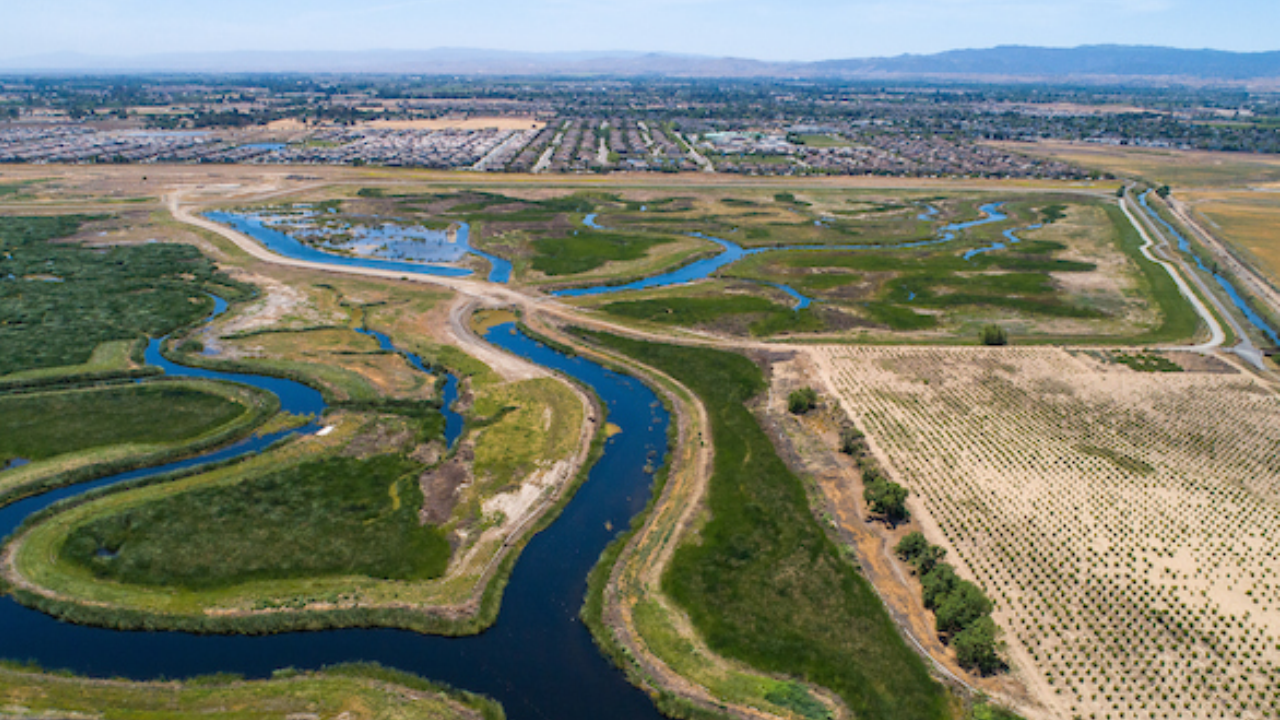
Consider what happens when you slice open a dying dike and let the ocean do what it has done for ten thousand years.
At first, there is panic. The sudden influx of cold, heavy marine water drowns the terrestrial weeds that had taken root during the dry years. The ground turns to soup. For a season or two, it looks worse than it did before—a scarred wasteland of dead stalks and churning grey silt. It feels like destruction.
It is actually resurrection.
Deep within that newly flooded muck, an invisible chemistry awakens. Tidal flows carry nutrients, microscopic plankton, and the relentless pulse of the lunar cycle. The water pushes inland, breathes oxygen into suffocating peat, and unlocks decades of trapped carbon. The marsh wakes up.
And when a marsh wakes up, it does not wake up alone.
Listen.
Right now, if you stood knee-deep in the newly restored peat of a Mid-Atlantic wetland, pushing through the dense stands of cordgrass, you would hear something that biologists have not heard in these numbers for half a century. A sharp, mechanical chatter. Tick-tick-tick-trrrrrr.
It is the call of the marsh wren.
To look at a marsh wren is to look at pure, concentrated attitude packaged in a tiny, cinnamon-colored bird weighing less than a quarter of an ounce. It has a tail that cocks defiantly over its back, a white eyebrow that makes it look perpetually startled, and a voice that sounds like a miniature sewing machine left running in a tin can.
For years, the marsh wren was losing ground. As tidal flows were choked off by human engineering, the high-density stands of cattails and robust cordgrass began to collapse. The wrens, fiercely territorial and utterly dependent on these dense, flooded fortresses to weave their suspended basket nests, vanished from thousands of acres of degraded coastline. They were the canary in the coal mine, or rather, the wren in the mud.
But when scientists and conservationists breached those aging barriers and allowed the natural tides to surge back in, something remarkable happened. The mud responded. The vegetation exploded. And the birds came screaming back.
Recent findings from restoration ecology studies tracking these renewed wetlands reveal a surge in marsh wren populations that has startled even the researchers. It is not a trickle. It is a flood of feathers.
Where there is water, there are insects. Where there are insects, there are insectivores. And where the marsh wren goes, a whole cascading ecosystem follows in its wake. Broader marsh bird populations—swamp sparrows, rails, egrets, and herons—are registering gains that mirror the wrens' resurgence. The system is healing itself. You punch a hole in the concrete wall of human hubris, and life pours through the gap.
We are so used to thinking of conservation as a museum curator’s job. We think of nature as something fragile to be placed behind glass, protected from ourselves, kept static and pristine.
A salt marsh is the exact opposite of a museum piece. It is violent, chaotic, and fluid. It breathes twice a day. It is half land, half sea, refusing to settle down as either.
When restoration ecologists step into these sites with heavy machinery, they aren't painting a masterpiece. They are removing the tourniquet. They are letting the blood flow back into a limb that has been asleep for fifty years.
I remember walking through a restored tidal basin in Delaware a few autumns ago, just as the morning fog was burning off the spartina grass. The mud beneath my rubber boots was a living thing, sucking at my heels with every step, releasing bubbles of ancient methane and fresh oxygen. It smelled like the beginning of the world.
A few yards away, a small brown blur darted through the stems. It paused on a bent reed, vibrated its entire body, threw its head back, and let out that frantic, rattling song. It didn't care about our carbon offset metrics. It didn't care about the peer-reviewed papers being written about its recovery in university labs. It cared about flies, spiders, and a safe place to anchor its woven home against the rising tide.
That is the hidden truth of ecological restoration. We talk about it in clinical terms—biodiversity metrics, hydrological connectivity, vegetative density, avian recruitment rates. We build spreadsheets and geographic information systems to map the recovery.
Yet the real metric is visceral.
It is the return of sound to a silent coast. It is the sudden flash of rust-brown feathers where there was only grey dirt and dying thistle. It is the realization that nature does not need us to manage her; she needs us to get out of her way and give her the water back.
The tides are coming in now. They are pushing past the old property lines, spilling over the sunken foundations of forgotten roads, and reclaiming the edges of the continent. Every wave that creeps up a restored creek channel is a minor miracle of plumbing and persistence.
Stand on the edge of the marsh tonight as the sun dips below the treeline and the water turns the color of hammered lead. Listen to the wind move through the grass. Listen for the rattle of the wren.
The mud remembers. The water has come home. And for the first time in a very long time, the coast is breathing.