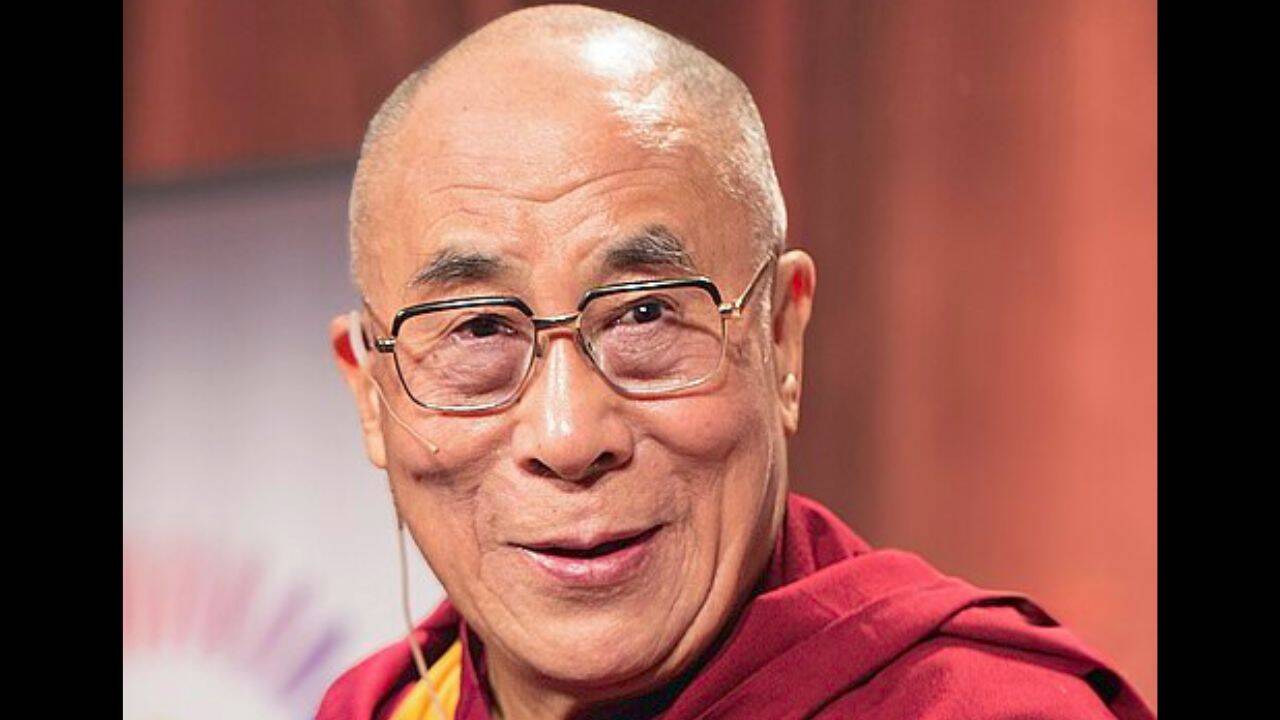
Every morning, millions of people wake up, scroll through their feeds, and nod solemnly at some variation of the Dalai Lama’s famous quote: "Good human qualities… honesty, sincerity, a good heart, cannot be bought with money, nor can they be produced by machines."
It is a beautiful sentiment. It is also an absolute lie.
This cozy piece of spiritual propaganda has escaped serious interrogation for decades because it makes us feel warm inside. It reassures us that our cash-strapped lives and flawed, biological brains possess a monopoly on goodness. But if you strip away the romanticism and look at how human societies actually function, you quickly realize the opposite is true.
Relying on the raw, unassisted human heart to produce honesty and sincerity is a catastrophic strategy. History is a graveyard of societies that tried it. If you want real, scalable, and dependable virtue, you do not look inside the human soul. You build it with cold, hard capital and hardcoded algorithms.
The Expensive Luxury of Having a Conscience
Let us start with the uncomfortable truth about money. We love to pretend that moral purity exists independently of material wealth. We tell stories of the virtuous peasant and the corrupt billionaire to keep ourselves quiet in the face of inequality. But behavioral economics and history tell a much uglier story.
Honesty is a luxury good.
When you are drowning in debt, wondering how to pay rent, or watching your children skip meals, your moral horizon shrinks to the next twenty-four hours. Survival instinct overrides ethical elegance every single time. Evolutionary biologists call this time discounting. When immediate survival is threatened, future consequences—including the social cost of lying or stealing—are discounted to zero.
I spent nearly a decade auditing supply chains in developing markets. I watched countless Western corporations breeze into impoverished regions, waving ethical codes of conduct and demanding "organic honesty" from local suppliers who were operating on razor-thin margins. The result? Pure, unadulterated fraud. The suppliers did not falsify safety audits because they were inherently bad people. They did it because the luxury of honesty would have put their families on the street.
Once those same factories were capitalized, when margins stabilized and workers were paid living wages, the fraud dropped dramatically. Money bought them the breathing room required to care about the truth.
To say that honesty cannot be bought with money ignores the basic mechanics of human desperation. Money buys security. Security buys a long-term perspective. And a long-term perspective is the only soil in which sincere, ethical behavior can consistently grow. If you want a society of honest people, stop preaching mindfulness and start fixing the Gini coefficient.
Why the Biological Heart is a Broken Trust Protocol
We have been conditioned to view the human heart as the ultimate wellspring of sincerity. In reality, the human brain is a highly evolved rationalization engine designed to protect our egos and favor our immediate tribe.
Human sincerity is highly volatile, prone to decay, and completely unscalable. We are honest when it suits us, sincere when we are being watched, and incredibly skilled at rewriting our own memories to make ourselves look like the heroes of our own stories.
The Problem of Tribalism
Human empathy is localized. We are biologically wired to feel deep sincerity and goodwill toward our immediate family and tribe—roughly 150 people, known as Dunbar’s number. Beyond that circle, our capacity for genuine "goodheartedness" drops off a cliff. When we try to scale human goodness to a globalized economy of billions, the biological heart fails. We default to xenophobia, suspicion, and zero-sum thinking.
The Flaw of Cognitive Bias
We suffer from self-serving bias, confirmation bias, and the fundamental attribution error. We judge our own missteps as temporary lapses caused by external circumstances, while we judge the mistakes of others as permanent flaws in their character. A human being can lie to your face while sincerely believing they are doing the right thing.
Relying on "sincerity" as a foundation for business, governance, or global cooperation is like building a skyscraper on quicksand. You cannot audit a vibe. You cannot scale a warm feeling.
The Machine as the Ultimate Ethical Engine
This brings us to the second half of the Dalai Lama’s error: the claim that good qualities cannot be produced by machines.
If we define "honesty" not as a warm, fuzzy feeling in your chest, but as the consistent, reliable alignment of promise and execution, then machines are infinitely better at honesty than humans could ever hope to be.
Consider the invention of double-entry bookkeeping in 15th-century Italy. It was, in essence, a primitive cognitive machine. Before its widespread adoption, trade relied on personal honor, religious oaths, and social status. This limited trade to small, insular networks. The double-entry system—a mechanical, rule-based method of recording transactions—created an objective, auditable reality. It did not require merchants to have "good hearts." It forced them to be honest because the math simply would not balance if they lied.
Today, we have taken this concept to its logical conclusion.
Cryptographic Honesty
Look at open-source smart contracts and cryptographic protocols. These are machines of pure logic. When you execute a transaction on a decentralized ledger, you do not need to trust the sincerity of the counterparty. You do not need to wonder if they have a "good heart." The machine enforces the agreement exactly as written. It cannot be bribed, it cannot experience a lapse in judgment, and it cannot rationalize a lie to protect its ego.
We have replaced the fragile, erratic trust of human relationships with the immutable, mathematical certainty of code. That is not just a technological shift; it is an ethical triumph. The machine has produced perfect, unyielding honesty at a scale that human morality never could.
The Sincerity of Algorithms
Critics argue that a machine cannot feel "sincere." But ask yourself this: would you rather deal with a human loan officer who smiles warmly, expresses deep empathy, and then quietly rejects your application based on unconscious racial bias? Or would you rather deal with an open-source algorithm that evaluates your financial metrics with cold, blind, and absolute neutrality?
The human's sincerity is performative; the machine's neutrality is functional. In the real world, functional neutrality does far more to reduce human suffering than performative warmth.
The Mechanics of Structural Virtue
The fundamental mistake of spiritual teachers is that they view virtue as an internal state that must be cultivated in isolation. They treat the individual as the unit of change. They tell you to meditate, to reflect, and to look inward.
This is a structural error. Virtue is not an internal state; it is an emergent property of well-designed systems.
[Bad System] + [Good Human] = Bad Outcome
[Good System] + [Bad Human] = Good Outcome
If you place a saint in a broken system with misaligned incentives, the system will eventually break the saint. If you place an average, self-interested human in a system where honesty is the easiest and most profitable path, they will behave like a saint.
Machines and financial systems are the scaffolding of these structures. They align self-interest with collective well-being.
The Seatbelt Analogy
For decades, governments tried to convince people to drive safely through moral appeals. They ran bloody public service announcements, appealed to the "good hearts" of parents, and begged drivers to think of others. It did almost nothing to reduce traffic fatalities.
Then, we introduced simple mechanical interventions: seatbelts, crumple zones, and automated speed cameras. We did not change the moral character of the drivers. We did not make them more sincere or caring. We simply built machines that made it physically difficult to die from stupidity. The result was a massive, permanent drop in road deaths.
Was that safety "produced by machines"? Absolutely. And it is worth a billion sermons.
The Cold Reality of Our Tools
It would be intellectually dishonest to present this contrarian view without acknowledging its failure modes. The machine-driven approach to virtue has a glaring, dangerous flaw: it is completely blind to nuance.
When you codify ethics into algorithms and financial incentives, you create a rigid system. It lacks the capacity for mercy. If a system is designed to maximize a specific metric of "honesty" or "efficiency," it will pursue that goal ruthlessly, even if it crushes human lives in the process. We see this in automated credit scoring systems that lock people out of housing based on old, irrelevant data points, leaving no room for human redemption or explanation.
But admitting that machines lack mercy does not mean we should return to relying on the raw human heart. It means we must understand the limits of our tools.
Money and machines provide the infrastructure of trust. They build the floor below which we cannot fall. They handle the heavy lifting of systemic honesty, leaving humans with the far smaller, more manageable task of applying mercy and compassion to the exceptions.
Stop Looking Inward
The romantic belief that virtue is a mystical quality immune to technology and wealth is worse than wrong—it is paralyzing. It encourages us to ignore the material conditions that actually dictate human behavior. It lets us off the hook for building better systems, allowing us to pretend that we can just wish a better world into existence through personal spiritual purity.
We need to stop asking people to find their "good hearts" in a system designed to exploit them.
We need to fund the social safety nets that make honesty affordable. We need to build the cryptographic systems that make corruption impossible. We need to write the code that enforces fairness without bias.
The Dalai Lama had it backward. True human progress does not happen when we finally master our internal spiritual struggles. It happens when we build a world where you do not have to be a saint to survive.