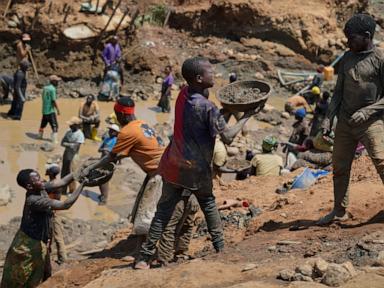
You cannot fight an outbreak in a war zone if you ignore the people holding the pickaxes.
When viral hemorrhagic fevers strike the dense mineral-rich territory of eastern Democratic Republic of Congo, international response teams usually rush to build clinics in major towns. They set up handwashing stations, distribute pamphlets, and wait for patients to walk through the door.
It fails. It fails because the people driving the local economy are miles deep in the rainforest, shifting mud, panning rivers, and living in transient encampments that do not appear on any official government map.
Mobile gold miners in eastern Congo represent one of the most stubborn public health challenges on the planet. They are constantly moving. They distrust state authorities who have historically exploited them. And their physical labor keeps them entirely isolated from formal medical infrastructure.
Let's look at why standard containment protocols break down the moment they hit the mining pits.
The Economics of Extraction Versus Quarantine
If you tell an artisanal gold miner to stop working and stay home for twenty-one days because they might have been exposed to a deadly virus, you are asking them to starve.
Most of these workers live on a daily cash wage. They buy food with the gold they pan that morning. They operate outside the banking system, outside the social safety net, and entirely outside the view of the Ministry of Health.
When Ebola or other dangerous pathogens hit the region, the standard medical playbook relies heavily on voluntary isolation and contact tracing. But tracing contacts among transient miners is almost impossible.
- Miners change sites overnight based on rumors of a new gold strike.
- Camps spring up in remote river valleys with zero road access.
- Workers use false names or nicknames to avoid taxation and police harassment.
You cannot trace a contact who has already packed up his tent and walked twenty miles through the jungle to a different province. The mobility that makes artisanal mining profitable also makes disease surveillance a nightmare.
Why Government Uniforms Scare Miners More Than Viruses
Trust is the currency of outbreak control. Unfortunately, health workers in eastern Congo often arrive trailing armed escorts or state officials.
To an artisanal miner, state officials usually mean extortion, forced taxation, or the threat of site closures. For decades, the eastern provinces have experienced severe conflict involving armed groups, corrupt militias, and heavy-handed government crackdowns.
When a team in biohazard suits shows up backed by police or soldiers, miners do not feel protected. They feel hunted.
Many workers simply flee deeper into the forest when health teams approach. They hide their sick colleagues in makeshift shelters rather than letting them go to a treatment center. They have heard terrifying rumors that treatment centers are where people go to die, or that the disease itself is a political trick invented by outsiders.
Breaking this cycle requires stripping away the armed guards and working through local figures who actually hold credibility on the ground.
The Underground Networks That Spread Infection
Mining camps are cramped, filthy, and entirely lacking in basic sanitation. Workers sleep shoulder-to-shoulder in plastic tarps. They share tools, food bowls, and water sources.
When a miner falls ill with fever, vomiting, or fatigue, his peers assume it is malaria or severe exhaustion. They care for him inside the crowded tent, washing his clothes and wiping his sweat with bare hands.
This is how chains of transmission explode.
By the time the sick miner is too weak to stand and is finally carried out of the forest, dozens of others have already been exposed. Those other miners then scatter to different pits across North Kivu, South Kivu, and Ituri, carrying the pathogen with them.
Traditional burial practices compound the risk. When a miner dies in a remote camp, his companions often try to transport the body back to his home village for a proper funeral. Washing the corpse is a deeply ingrained cultural and religious duty. Handling an infectious body during burial rites guarantees further spread of the virus.
What Real Intervention Looks On the Ground
You cannot solve this with a lecture from a megaphone. Agencies that actually manage to curb outbreaks in mining zones do things very differently.
They hire former miners to lead the awareness campaigns. They pay local youth to manage handwashing stations at the entry points of the pits. They offer immediate financial compensation to miners who agree to stay put and monitor their health, replacing the daily wage they would lose by not working.
They also stop treating artisanal miners as criminals. In regions where local health committees partner directly with mining cooperatives, reporting rates for suspicious fevers improve drastically.
If you want to protect global health, you have to support the people at the bottom of the global supply chain. Ignoring the camps in the eastern jungle is no longer an option. The next outbreak will not wait for the miners to come to town, and neither should we.